 |
eVision C++ API 26.10.0-beta.2.dev
|
|
eVision C++ API 26.10.0-beta.2.dev
|
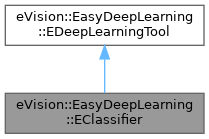
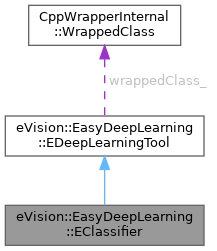
EClassifier allows to train a classifier using an EDataset object and classify new images. More...
#include <eVision/EasyDeepLearning/EasyClassify/EClassifier.h>
Public Member Functions | |
| EClassifier () | |
| Constructs a EClassifier object. | |
| EClassifier (const eVision::EasyDeepLearning::EClassifier &other) | |
| Copy constructor of a EClassifier object. | |
| virtual | ~EClassifier () throw () |
| eVision::EasyDeepLearning::EClassifier & | operator= (const eVision::EasyDeepLearning::EClassifier &other) |
| Assignment operator. | |
| virtual void | SerializeSettings (eVision::ESerializer *serializer) |
| Serializes the classifier settings. | |
| virtual eVision::EasyDeepLearning::EDeepLearningToolType | GetToolType () const |
| Type of the deep learning tool. | |
| void | LoadAsPretrained (const std::string &path) |
| Loads the classifier and use it as a pre-trained model. | |
| void | LoadOnnxModelAsPretrained (const std::string &path) |
| Loads the ONNX model as a pre-trained model. | |
| void | LoadOnnxModel (const std::string &path) |
| Loads the ONNX model for inference. | |
| void | SetUsePretrainedModel (bool usePretrainedModel) |
| Whether to use a pre-trained model when training. | |
| bool | GetUsePretrainedModel () const |
| Whether to use a pre-trained model when training. | |
| bool | HasPretrainedModel () const |
| Whether a pre-trained model for the current configuration can be found. | |
| void | SetWidth (uint32_t width) |
| Width for input images of the classifier. By default, this value will be set to 224 if it wasn't explicitly set before training. | |
| uint32_t | GetWidth () const |
| Width for input images of the classifier. By default, this value will be set to 224 if it wasn't explicitly set before training. | |
| void | SetHeight (uint32_t height) |
| Height for input images of the classifier. By default, this value will be set to 224 if it wasn't explicitly set before training. | |
| uint32_t | GetHeight () const |
| Height for input images of the classifier. By default, this value will be set to 224 if it wasn't explicitly set before training. | |
| void | SetChannels (uint32_t channel) |
| Number of channels for input images of the classifier. The number of channels can be either 1 (monochrome image) or 3 (RGB image). By default, this value will be set from the format of the first image added to the training dataset. | |
| uint32_t | GetChannels () const |
| Number of channels for input images of the classifier. The number of channels can be either 1 (monochrome image) or 3 (RGB image). By default, this value will be set from the format of the first image added to the training dataset. | |
| void | SetEnableAutomaticImageReformat (bool val) |
| Enable automatic image reformat (true by default). | |
| bool | GetEnableAutomaticImageReformat () const |
| Enable automatic image reformat (true by default). | |
| void | SetEnableHistogramEqualization (bool val) |
| Enable histogram equalization of all images passing through the classifier. (false by default). | |
| bool | GetEnableHistogramEqualization () const |
| Enable histogram equalization of all images passing through the classifier. (false by default). | |
| uint32_t | GetMinimumWidth () const |
| Minimum width for input images of the classifier. This value is equal to 1 for standard networks. | |
| uint32_t | GetMinimumHeight () const |
| Minimum height for input images of the classifier. This value is equal to 1 for standard networks. | |
| void | SetCapacity (eVision::EasyDeepLearning::EClassifierCapacity capacity) |
| Capacity of classifier to use. Be aware that changing the classifier capacity will delete the effect of any previous training. The capacity will be translated to the corresponding type (Small, Normal, or Large). | |
| eVision::EasyDeepLearning::EClassifierCapacity | GetCapacity () const |
| Capacity of classifier to use. Be aware that changing the classifier capacity will delete the effect of any previous training. The capacity will be translated to the corresponding type (Small, Normal, or Large). | |
| std::string | GetModelType () const |
| Model type for training. Default: "Normal". | |
| void | SetModelType (const std::string &name) |
| Model type for training. Default: "Normal". | |
| eVision::EasyDeepLearning::EClassificationMetrics | GetTrainingMetrics (int id) |
| Gets the metrics obtained with the training dataset at the given iteration. | |
| eVision::EasyDeepLearning::EClassificationMetrics | GetValidationMetrics (int id) |
| Gets the metrics obtained with the validation dataset at the given iteration. | |
| void | Train (eVision::EasyDeepLearning::EDataset &dataset) |
| Trains the EClassifier with the given dataset for the specified number of iterations. | |
| void | Train (eVision::EasyDeepLearning::EDataset &dataset, const eVision::EasyDeepLearning::EDataAugmentation &dataAugmentation) |
| Trains the EClassifier with the given dataset for the specified number of iterations. | |
| void | Train (eVision::EasyDeepLearning::EDataset &trainingDataset, eVision::EasyDeepLearning::EDataset &validationDataset) |
| Trains the EClassifier with the given dataset for the specified number of iterations. | |
| void | Train (eVision::EasyDeepLearning::EDataset &trainingDataset, eVision::EasyDeepLearning::EDataset &validationDataset, const eVision::EasyDeepLearning::EDataAugmentation &dataAugmentation) |
| Trains the EClassifier with the given dataset for the specified number of iterations. | |
| void | Train (eVision::EasyDeepLearning::EDataset &dataset, int iterations) |
| Trains the EClassifier with the given dataset for the specified number of iterations. | |
| void | Train (eVision::EasyDeepLearning::EDataset &dataset, const eVision::EasyDeepLearning::EDataAugmentation &dataAugmentation, int iterations) |
| Trains the EClassifier with the given dataset for the specified number of iterations. | |
| void | Train (eVision::EasyDeepLearning::EDataset &trainingDataset, eVision::EasyDeepLearning::EDataset &validationDataset, int iterations) |
| Trains the EClassifier with the given dataset for the specified number of iterations. | |
| void | Train (eVision::EasyDeepLearning::EDataset &trainingDataset, eVision::EasyDeepLearning::EDataset &validationDataset, const eVision::EasyDeepLearning::EDataAugmentation &dataAugmentation, int iterations) |
| Trains the EClassifier with the given dataset for the specified number of iterations. | |
| eVision::EasyDeepLearning::EClassificationResult | Classify (const eVision::EBaseROI &img) const |
| Classifies images and returns the complete results as an EClassificationResult object. | |
| eVision::EasyDeepLearning::EClassificationResult | Classify (const eVision::EBaseROI &img, eVision::ERegion &mask) const |
| Classifies images and returns the complete results as an EClassificationResult object. | |
| std::vector< eVision::EasyDeepLearning::EClassificationResult > | Classify (std::vector< const eVision::EBaseROI * > &imgList, eVision::ERegion &mask) const |
| Classifies images and returns the complete results as an EClassificationResult object. | |
| std::vector< eVision::EasyDeepLearning::EClassificationResult > | Classify (std::vector< const eVision::EBaseROI * > &imgList) const |
| Classifies images and returns the complete results as an EClassificationResult object. | |
| eVision::EasyDeepLearning::EClassificationResult | Classify (const eVision::EBaseROI &img, eVision::ERegion &mask, const eVision::EFrame &frame) const |
| Classifies images and returns the complete results as an EClassificationResult object. | |
| std::vector< eVision::EasyDeepLearning::EClassificationResult > | Classify (std::vector< const eVision::EBaseROI * > &imgList, eVision::ERegion &mask, const eVision::EFrame &frame) const |
| Classifies images and returns the complete results as an EClassificationResult object. | |
| std::vector< eVision::EasyDeepLearning::EClassificationResult > | Classify (std::vector< eVision::EImageBW8 > &imgList, eVision::ERegion &mask) const |
| Classifies images and returns the complete results as an EClassificationResult object. | |
| std::vector< eVision::EasyDeepLearning::EClassificationResult > | Classify (std::vector< eVision::EImageBW8 > &imgList) const |
| Classifies images and returns the complete results as an EClassificationResult object. | |
| std::vector< eVision::EasyDeepLearning::EClassificationResult > | Classify (std::vector< eVision::EImageBW16 > &imgList, eVision::ERegion &mask) const |
| Classifies images and returns the complete results as an EClassificationResult object. | |
| std::vector< eVision::EasyDeepLearning::EClassificationResult > | Classify (std::vector< eVision::EImageBW16 > &imgList) const |
| Classifies images and returns the complete results as an EClassificationResult object. | |
| std::vector< eVision::EasyDeepLearning::EClassificationResult > | Classify (std::vector< eVision::EImageC24 > &imgList, eVision::ERegion &mask) const |
| Classifies images and returns the complete results as an EClassificationResult object. | |
| std::vector< eVision::EasyDeepLearning::EClassificationResult > | Classify (std::vector< eVision::EImageC24 > &imgList) const |
| Classifies images and returns the complete results as an EClassificationResult object. | |
| eVision::EasyDeepLearning::EClassificationMetrics | Evaluate (const eVision::EasyDeepLearning::EDataset &dataset) |
| Evaluates the EClassifier using the given EDataset. | |
| eVision::EImageBW8 | GetHeatMap (const eVision::EBaseROI &image, const std::string &label) |
| Gets a heatmap associated with the given label. A heatmap is an image that indicates which pixels in the original image best explain the given label. | |
| eVision::EImageC24 | GetColorizedHeatMap (const eVision::EBaseROI &image, const std::string &label) |
| Gets a colorized heatmap associated with the given label. A heatmap is an image that indicates which pixels in the original image best explain the given label. | |
| eVision::EImageC24A | GetColorizedHeatmapWithTransparency (const eVision::EBaseROI &image, const std::string &label, float minAlpha, float maxAlpha, eVision::EasyDeepLearning::EHeatmapColormap colormap) |
| Colorized heatmap with transparency. | |
| eVision::EImageC24A | GetColorizedHeatmapWithTransparency (const eVision::EBaseROI &image, const std::string &label, float minAlpha, float maxAlpha) |
| Colorized heatmap with transparency. | |
| float | GetOODThreshold () const |
| Out-Of-Distribution (OOD) threshold below which an image is considered to be OOD. | |
| void | SetOODThreshold (float value) |
| Out-Of-Distribution (OOD) threshold below which an image is considered to be OOD. | |
| void | LearnOODParameters (const eVision::EasyDeepLearning::EDataset &trainList, const eVision::EasyDeepLearning::EDataset &valList) |
| Learns OOD parameters using training data. The dataset must correspond to the dataset used to train the classifier. | |
| void | LearnOODParameters (const std::vector< const eVision::EBaseROI * > &trainList, const std::vector< const eVision::EBaseROI * > &valList) |
| Learns OOD parameters using training data. The dataset must correspond to the dataset used to train the classifier. | |
| void | LearnOODParameters (const std::vector< eVision::EImageBW8 > &trainList, const std::vector< eVision::EImageBW8 > &valList) |
| Learns OOD parameters using training data. The dataset must correspond to the dataset used to train the classifier. | |
| void | LearnOODParameters (const std::vector< eVision::EImageBW16 > &trainList, const std::vector< eVision::EImageBW16 > &valList) |
| Learns OOD parameters using training data. The dataset must correspond to the dataset used to train the classifier. | |
| void | LearnOODParameters (const std::vector< eVision::EImageC24 > &trainList, const std::vector< eVision::EImageC24 > &valList) |
| Learns OOD parameters using training data. The dataset must correspond to the dataset used to train the classifier. | |
| bool | HasOODParameters () const |
| Checks whether the OOD parameters have been learned. | |
| void | SetComputeHeatmapWithResult (bool computeHeatmap) |
| Whether to always compute the heatmap along the result when applying the tool. If true, the heatmap is available through EClassificationResult::GetHeatmap. | |
| bool | GetComputeHeatmapWithResult () const |
| Whether to always compute the heatmap along the result when applying the tool. If true, the heatmap is available through EClassificationResult::GetHeatmap. | |
| void | SetComputeOODWithResult (bool computeOOD) |
| Whether to compute the OOD parameters while training. Also determines whether the OOD score is computed alongside the result when applying the tool. If true, the OOD score is available through EClassificationResult::GetOODScore. | |
| bool | GetComputeOODWithResult () const |
| Whether to compute the OOD parameters while training. Also determines whether the OOD score is computed alongside the result when applying the tool. If true, the OOD score is available through EClassificationResult::GetOODScore. | |
| EClassifier (CppWrapperInternal::InternalConstructor) | |
| Public Member Functions inherited from eVision::EasyDeepLearning::EDeepLearningTool | |
| virtual | ~EDeepLearningTool () throw () |
| virtual void | Load (const std::string &filePath) |
| Loads a deep learning tool. The given ESerializer must have been created for reading. | |
| virtual void | Load (eVision::ESerializer *serializer) |
| Loads a deep learning tool. The given ESerializer must have been created for reading. | |
| std::unique_ptr< eVision::EasyDeepLearning::EDeepLearningTool > | Clone () const |
| Clones this tool. | |
| virtual void | Save (const std::string &filePath, bool includeTrainingModel) |
| Saves the settings, inference and training model of the deep learning tool. | |
| virtual void | Save (const std::string &filePath) |
| Saves the settings, inference and training model of the deep learning tool. | |
| virtual void | Save (eVision::ESerializer *serializer, bool includeTrainingModel) |
| Saves the settings, inference and training model of the deep learning tool. | |
| virtual void | Save (eVision::ESerializer *serializer) |
| Saves the settings, inference and training model of the deep learning tool. | |
| void | SerializeInferenceModel (eVision::ESerializer *serializer) |
| Serializes the inference model of the tool. | |
| void | SerializeTrainingModel (eVision::ESerializer *serializer) |
| Serializes the training model of the tool. | |
| void | SaveSettings (const std::string &filePath) |
| Saves the settings of the tool to a file. | |
| void | SaveInferenceModel (const std::string &filePath) |
| Saves the tool's inference model to a file. | |
| void | SaveTrainingModel (const std::string &filePath) |
| Saves the tool's training model to a file. | |
| void | LoadSettings (const std::string &filePath) |
| Loads the settings of a tool. | |
| void | LoadInferenceModel (const std::string &filePath) |
| Loads the tool's inference model. The inference model is required to apply the tool on new images. | |
| void | LoadTrainingModel (const std::string &filePath) |
| Loads the tool's training model. The training model is required to continue a training. | |
| void | UnloadInferenceModel () |
| Unloads the inference model. | |
| void | UnloadTrainingModel () |
| Unloads the training model. | |
| void | UnloadModels () |
| Unloads the inference and training model. | |
| bool | HasInferenceModel () const |
| Whether the inference model is loaded or created when the tool is not yet trained. | |
| bool | HasTrainingModel () const |
| Whether the training model is loaded or created when the tool is not yet trained. | |
| bool | IsTrained () const |
| Tells whether the deep learning tool has been trained. | |
| void | SetEnableGPU (bool enable) |
| Enable the use of a GPU for training and inference of the deep learning tool. If the active engine is not the default engine, EDeepLearningTool::SetEnableGPU will be false even if the active device has a GPU device type. Setting EDeepLearningTool::SetEnableGPU to any value when the active engine is not the default one will throw an exception. | |
| bool | GetEnableGPU () const |
| Enable the use of a GPU for training and inference of the deep learning tool. If the active engine is not the default engine, EDeepLearningTool::SetEnableGPU will be false even if the active device has a GPU device type. Setting EDeepLearningTool::SetEnableGPU to any value when the active engine is not the default one will throw an exception. | |
| void | SetGPUIndexes (const std::vector< uint32_t > &indexes) |
| Indexes of the GPUs to use for computations. | |
| std::vector< uint32_t > | GetGPUIndexes () const |
| Indexes of the GPUs to use for computations. | |
| uint32_t | GetNumGPUs () const |
| Number of detected NVIDIA GPU. | |
| void | SetEngine (const std::string &engineName) |
| Sets the engine with which to execute or train the neural network. | |
| std::string | GetEngine () const |
| Sets the engine with which to execute or train the neural network. | |
| eVision::EasyDeepLearning::EDeepLearningInferencePrecision | GetInferencePrecision () const |
| Inference precision. | |
| void | SetInferencePrecision (eVision::EasyDeepLearning::EDeepLearningInferencePrecision prec) |
| Inference precision. | |
| int | GetNumAvailableDevices () const |
| Available devices for the current EDeepLearningTool::SetEngine. | |
| std::string | GetAvailableDeviceName (int i) const |
| Name of the i-th device of the current engine. | |
| eVision::EasyDeepLearning::EDeepLearningDevice | GetAvailableDevice (int i) const |
| i-th EDeepLearningDevice of the current engine. | |
| std::vector< eVision::EasyDeepLearning::EDeepLearningDevice > | GetAvailableDevices () const |
| Get all available device for the current engine. | |
| int | GetNumActiveDevices () const |
| Gets the number of devices with which to run or train the model. | |
| void | SetActiveDevice (const eVision::EasyDeepLearning::EDeepLearningDevice &device) |
| Sets the device with which to run or train the model. | |
| eVision::EasyDeepLearning::EDeepLearningDevice | GetActiveDevice (int i) const |
| Gets the active device. By default, it returns the first active device. | |
| eVision::EasyDeepLearning::EDeepLearningDevice | GetActiveDevice () const |
| Gets the active device. By default, it returns the first active device. | |
| void | SetActiveDeviceByName (const std::string &name) |
| Sets the device with which to run the model using its name. | |
| void | SetActiveDeviceById (int id) |
| Sets the device with which to run the model using its index in the list returned by EDeepLearningTool::GetAvailableDevices. | |
| std::vector< eVision::EasyDeepLearning::EDeepLearningDevice > | GetActiveDevices () const |
| Devices with which to run or train the model. | |
| void | SetActiveDevices (const std::vector< eVision::EasyDeepLearning::EDeepLearningDevice > &devices) |
| Devices with which to run or train the model. | |
| void | SetActiveDevicesById (const std::vector< int > &ids) |
| Sets the devices with which to run the model using their index in the list returned by EDeepLearningTool::GetAvailableDevices. | |
| eVision::EasyDeepLearning::EDeepLearningExecutionSettings | GetExecutionSettings () const |
| Execution settings of the tool (engine, device(s), inference precision, batch size settings). | |
| void | SetExecutionSettings (const eVision::EasyDeepLearning::EDeepLearningExecutionSettings &settings) |
| Execution settings of the tool (engine, device(s), inference precision, batch size settings). | |
| bool | HasEngineSetupData () const |
| Whether the inference model has engine setup data. | |
| void | ClearEngineSetupData () |
| Clears the engine data saved in the inference model. Use this method when your engine fails. | |
| eVision::EasyDeepLearning::EDeepLearningDevice | GetEngineSetupDataDevice () const |
| Device corresponding to the engine data contained in the tool. | |
| eVision::EasyDeepLearning::EDeepLearningInferencePrecision | GetEngineSetupDataInferencePrecision () const |
| Inference precision corresponding to the engine data contained in the tool. | |
| int32_t | GetEngineSetupDataBatchSize () const |
| Batch size corresponding to the engine data contained in the tool. | |
| bool | GetOptimizeBatchSize () const |
| Indicates whether to optimize the batch size (see EDeepLearningTool::SetBatchSize) to maximize the training and inference speed according to the engine, the device and the available memory. | |
| void | SetOptimizeBatchSize (bool optimize) |
| Indicates whether to optimize the batch size (see EDeepLearningTool::SetBatchSize) to maximize the training and inference speed according to the engine, the device and the available memory. | |
| int32_t | GetBatchSizeForMaximumInferenceSpeed () const |
| Computes the batch size that will maximize the inference speed on NVIDIA GPU. For all other devices, it will return 1. | |
| void | SetBatchSize (int32_t size) |
| Batch size. The batch size is the number of images that are processed together during training and batch inference. | |
| int32_t | GetBatchSize () const |
| Batch size. The batch size is the number of images that are processed together during training and batch inference. | |
| bool | IsTraining () const |
| Indicates whether the object is currently training. | |
| int | WaitForTrainingCompletion (int timeout) |
| Waits until the training is complete or the timeout is expired. A call to this method will block the calling thread for the shortest time between the timeout and the time it takes for the training to complete. | |
| int | WaitForTrainingCompletion () |
| Waits until the training is complete or the timeout is expired. A call to this method will block the calling thread for the shortest time between the timeout and the time it takes for the training to complete. | |
| int | WaitForIterationCompletion () |
| Waits until an iteration is complete. A call to this method will block the calling thread until a training iteration in the training thread is finished. This method returns the number of trained iterations. | |
| int | StopTraining (bool wait) |
| Stops training and returns the last completed iteration. If the parameter 'wait' is set to true, the method will wait for the training thread to completely stop. Otherwise, the method will return immediately. | |
| float | GetCurrentTrainingProgression () const |
| Current training progression as a percentage (between 0 and 1). | |
| uint32_t | GetCurrentTrainingFinishedIterations () const |
| Number of iterations that are already finished in the current training. | |
| uint32_t | GetCurrentTrainingNumIterations () const |
| Total number of training iterations that will be performed during the current training of the deep learning tool. | |
| uint32_t | GetNumTrainedIterations () const |
| Number of iterations that were performed to train this deep learning tool. | |
| int | GetBestIteration () const |
| Iteration at which the minimum validation error was reached. After training, the tool is in the state it was at this best iteration. | |
| void | SetImageCacheSize (uint64_t size) |
| Size in byte of the image cache. The cache is used during training to store reformatted and normalized images. A correctly sized cache can reduce the hard drive accesses and the preprocessing time for each image. | |
| uint64_t | GetImageCacheSize () const |
| Size in byte of the image cache. The cache is used during training to store reformatted and normalized images. A correctly sized cache can reduce the hard drive accesses and the preprocessing time for each image. | |
| std::string | GetPath () const |
| Path of the tool when loaded or saved using EDeepLearningTool::Save or EDeepLearningTool::Load. | |
| std::string | GetInferenceModelPath () const |
| Path of the inference model when loaded or saved using EDeepLearningTool::SaveInferenceModel, EDeepLearningTool::LoadInferenceModel or EDeepLearningTool::SerializeInferenceModel. | |
| std::string | GetTrainingModelPath () const |
| Path of the training model when loaded or saved using EDeepLearningTool::SaveTrainingModel, EDeepLearningTool::LoadTrainingModel or EDeepLearningTool::SerializeTrainingModel. | |
| std::string | GetSettingsPath () const |
| Path of the settings when loaded or saved using EDeepLearningTool::SaveSettings, EDeepLearningTool::LoadSettings or EDeepLearningTool::SerializeSettings. | |
| void | SetAutoSavePeriod (int period) |
| Auto-save period. The auto-save period is the number of training iterations between each automatic save of the model. | |
| int | GetAutoSavePeriod () const |
| Auto-save period. The auto-save period is the number of training iterations between each automatic save of the model. | |
| void | SetLearningRate (eVision::EasyDeepLearning::EDeepLearningLearningRateType type, const std::vector< float > ¶meters) |
| Specifies how the value of the learning rate and how it evolves during training. | |
| eVision::EasyDeepLearning::EDeepLearningLearningRateType | GetLearningRateType () const |
| Learning rate type. | |
| std::vector< float > | GetLearningRateParameters () const |
| Parameters of the learning rate. | |
| void | SetEnableDeterministicTraining (bool enable) |
| Whether to use deterministic training algorithm that allows to repeatable training results. Default value: false. | |
| bool | GetEnableDeterministicTraining () const |
| Whether to use deterministic training algorithm that allows to repeatable training results. Default value: false. | |
| void | SetDeterministicTrainingRandomSeed (int32_t seed) |
| Random seed to use when EDeepLearningTool::SetEnableDeterministicTraining is set to true. The default value is 42. | |
| int32_t | GetDeterministicTrainingRandomSeed () const |
| Random seed to use when EDeepLearningTool::SetEnableDeterministicTraining is set to true. The default value is 42. | |
| void | InitializeInference (int width, int height, eVision::EImageType imageType, int numImages) |
| Initializes the neural network for inference (i.e. making predictions with the neural network). | |
| void | InitializeInference (const eVision::EBaseROI &img) |
| Initializes the neural network for inference (i.e. making predictions with the neural network). | |
| void | InitializeInference (std::vector< const eVision::EBaseROI * > &imgList) |
| Initializes the neural network for inference (i.e. making predictions with the neural network). | |
| void | InitializeInference (std::vector< eVision::EImageBW8 > &imgList) |
| Initializes the neural network for inference (i.e. making predictions with the neural network). | |
| void | InitializeInference (std::vector< eVision::EImageBW16 > &imgList) |
| Initializes the neural network for inference (i.e. making predictions with the neural network). | |
| void | InitializeInference (std::vector< eVision::EImageC24 > &imgList) |
| Initializes the neural network for inference (i.e. making predictions with the neural network). | |
| uint32_t | GetNumLabels () const |
| Number of labels of this tool. If the tool is not trained, the method will throw an exception. | |
| std::string | GetLabel (uint32_t index) const |
| Gets the label from its index. If the tool is not trained, the method may throw an exception. | |
| virtual void | SetLabel (uint32_t index, const std::string &label) |
| Changes a label predicted by the tool. | |
| void | SetLabelWeight (uint32_t index, float weight) |
| Sets the label weight. If the tool is not trained, the label weights are not defined. After training, they are set to the value of the training dataset label weights. | |
| float | GetLabelWeight (uint32_t index) const |
| Gets the label weight. If the tool is not trained, the label weights are not defined. After training, they are set to the value of the training dataset label weights. | |
| void | SetLabelColor (uint32_t index, const eVision::ERGBColor &c) |
| Changes a label color. | |
| eVision::ERGBColor | GetLabelColor (uint32_t index) const |
| Label color. The label colors affect how the results will be displayed. | |
| void | SetLabelOpacity (uint32_t index, uint8_t opacity) |
| Changes a label opacity (between 0 for fully transparent and 255 for opaque color). | |
| uint8_t | GetLabelOpacity (uint32_t index) const |
| Gets the label opacity (between 0 for fully transparent and 255 for opaque color). The label opacities affect with the label colors how the results will be displayed. | |
| int | GetOptimalNumImagesForBatchSize (const eVision::EBaseROI &sampleImage) const |
| Optimal number of images to process together for inference given the batch size and EDeepLearningTool::GetNumPatchesForImage. | |
| int | GetOptimalNumImagesForBatchSize (int imageWidth, int imageHeight) const |
| Optimal number of images to process together for inference given the batch size and EDeepLearningTool::GetNumPatchesForImage. | |
| int | GetNumPatchesForImage (const eVision::EBaseROI &sampleImage) const |
| Number of patches that will be extracted from an input image to perform inference. | |
| virtual int | GetNumPatchesForImage (int imageWidth, int imageHeight) const |
| Number of patches that will be extracted from an input image to perform inference. | |
| virtual void | Clean () |
| Reset the engine and clean CPU and GPU memory allocated for running the model. | |
| EDeepLearningTool (CppWrapperInternal::InternalConstructor) | |
Static Public Member Functions | |
| static std::string | GetAvailableModelTypes (int i) |
| Get the i-th available models to be used with EClassifier::GetModelType. | |
| static int | GetNumAvailableModelTypes () |
| Number of available models for training an EasyClassify tool. | |
| Static Public Member Functions inherited from eVision::EasyDeepLearning::EDeepLearningTool | |
| static std::unique_ptr< eVision::EasyDeepLearning::EDeepLearningTool > | Create (const std::string &path) |
| Factory method to open a deep learning tool. | |
| static std::unique_ptr< eVision::EasyDeepLearning::EDeepLearningTool > | Create (eVision::ESerializer *serializer) |
| Factory method to open a deep learning tool. | |
| static std::unique_ptr< eVision::EasyDeepLearning::EDeepLearningTool > | Create (eVision::EasyDeepLearning::EDeepLearningToolType type) |
| Factory method to open a deep learning tool. | |
| static int | GetNumAvailableEngines () |
| Number of available engines. | |
| static std::string | GetAvailableEngineName (int id) |
| Gets the name of the engine given its id. | |
| static std::vector< std::string > | GetAvailableEngines () |
| Available engines. | |
| static std::vector< eVision::EasyDeepLearning::EDeepLearningDevice > | GetAvailableDevicesForEngine (const std::string &engine) |
| Available devices for the specified engine. | |
Additional Inherited Members | |
| Public Attributes inherited from eVision::EasyDeepLearning::EDeepLearningTool | |
| CppWrapperInternal::WrappedClass | wrappedClass_ |
EClassifier allows to train a classifier using an EDataset object and classify new images.
As required by Deep Learning techniques, the input image of EClassifier must be of the same format (width, height, number of channels). By default, this format will be 224x224xC (which is the format used for pre-training our networks) with C being the number of channel of the first image of the dataset. The format can also be specified by the EClassifier::SetWidth, EClassifier::SetHeight and EClassifier::SetChannels unless its width and height is smaller than the minimum width and height supported by the classifier. In this case, the input resolution will be the minimum resolution supported by the classifier. (See EClassifier::GetMinimumWidth and EClassifier::GetMinimumHeight). methods.
By default, images that don't satisfy the image format of the classifier are automatically reformatted. This behavior can be controlled through the EClassifier::SetEnableAutomaticImageReformat method. When the automatic image reformatting is disabled, training or classifying an image that doesn't satisfy the input image format will result in an exception.
Once trained, the input image format cannot be changed.
License(s): EasyClassify or EasyClassifyInference
| eVision::EasyDeepLearning::EClassifier::EClassifier | ( | ) |
Constructs a EClassifier object.
| eVision::EasyDeepLearning::EClassifier::EClassifier | ( | const eVision::EasyDeepLearning::EClassifier & | other | ) |
Copy constructor of a EClassifier object.
| other | Reference to the EClassifier object that should be copied |
|
virtual | ||||||||||||
| eVision::EasyDeepLearning::EClassifier::EClassifier | ( | CppWrapperInternal::InternalConstructor | ) |
| eVision::EasyDeepLearning::EClassificationResult eVision::EasyDeepLearning::EClassifier::Classify | ( | const eVision::EBaseROI & | img | ) | const |
Classifies images and returns the complete results as an EClassificationResult object.
The method throws an exception if the input image does not fulfill the input specification.
| img | Image to classify |
Classifying a set of images is usually faster than classifying each image sequentially.
To maximize the classification speed on a GPU, EDeepLearningTool::SetBatchSize and the size of the set of input images must be equal to the value returned by EDeepLearningTool::GetBatchSizeForMaximumInferenceSpeed.
| eVision::EasyDeepLearning::EClassificationResult eVision::EasyDeepLearning::EClassifier::Classify | ( | const eVision::EBaseROI & | img, |
| eVision::ERegion & | mask ) const |
Classifies images and returns the complete results as an EClassificationResult object.
The method throws an exception if the input image does not fulfill the input specification.
| img | Image to classify |
| mask | Mask of image to classify |
Classifying a set of images is usually faster than classifying each image sequentially.
To maximize the classification speed on a GPU, EDeepLearningTool::SetBatchSize and the size of the set of input images must be equal to the value returned by EDeepLearningTool::GetBatchSizeForMaximumInferenceSpeed.
| eVision::EasyDeepLearning::EClassificationResult eVision::EasyDeepLearning::EClassifier::Classify | ( | const eVision::EBaseROI & | img, |
| eVision::ERegion & | mask, | ||
| const eVision::EFrame & | frame ) const |
Classifies images and returns the complete results as an EClassificationResult object.
The method throws an exception if the input image does not fulfill the input specification.
| img | Image to classify |
| mask | Mask of image to classify |
| frame | Frame associated with the mask. |
Classifying a set of images is usually faster than classifying each image sequentially.
To maximize the classification speed on a GPU, EDeepLearningTool::SetBatchSize and the size of the set of input images must be equal to the value returned by EDeepLearningTool::GetBatchSizeForMaximumInferenceSpeed.
| std::vector< eVision::EasyDeepLearning::EClassificationResult > eVision::EasyDeepLearning::EClassifier::Classify | ( | std::vector< const eVision::EBaseROI * > & | imgList | ) | const |
Classifies images and returns the complete results as an EClassificationResult object.
The method throws an exception if the input image does not fulfill the input specification.
| imgList | Vector of images to classify |
Classifying a set of images is usually faster than classifying each image sequentially.
To maximize the classification speed on a GPU, EDeepLearningTool::SetBatchSize and the size of the set of input images must be equal to the value returned by EDeepLearningTool::GetBatchSizeForMaximumInferenceSpeed.
| std::vector< eVision::EasyDeepLearning::EClassificationResult > eVision::EasyDeepLearning::EClassifier::Classify | ( | std::vector< const eVision::EBaseROI * > & | imgList, |
| eVision::ERegion & | mask ) const |
Classifies images and returns the complete results as an EClassificationResult object.
The method throws an exception if the input image does not fulfill the input specification.
| imgList | Vector of images to classify |
| mask | Mask of image to classify |
Classifying a set of images is usually faster than classifying each image sequentially.
To maximize the classification speed on a GPU, EDeepLearningTool::SetBatchSize and the size of the set of input images must be equal to the value returned by EDeepLearningTool::GetBatchSizeForMaximumInferenceSpeed.
| std::vector< eVision::EasyDeepLearning::EClassificationResult > eVision::EasyDeepLearning::EClassifier::Classify | ( | std::vector< const eVision::EBaseROI * > & | imgList, |
| eVision::ERegion & | mask, | ||
| const eVision::EFrame & | frame ) const |
Classifies images and returns the complete results as an EClassificationResult object.
The method throws an exception if the input image does not fulfill the input specification.
| imgList | Vector of images to classify |
| mask | Mask of image to classify |
| frame | Frame associated with the mask. |
Classifying a set of images is usually faster than classifying each image sequentially.
To maximize the classification speed on a GPU, EDeepLearningTool::SetBatchSize and the size of the set of input images must be equal to the value returned by EDeepLearningTool::GetBatchSizeForMaximumInferenceSpeed.
| std::vector< eVision::EasyDeepLearning::EClassificationResult > eVision::EasyDeepLearning::EClassifier::Classify | ( | std::vector< eVision::EImageBW16 > & | imgList | ) | const |
Classifies images and returns the complete results as an EClassificationResult object.
The method throws an exception if the input image does not fulfill the input specification.
| imgList | Vector of images to classify |
Classifying a set of images is usually faster than classifying each image sequentially.
To maximize the classification speed on a GPU, EDeepLearningTool::SetBatchSize and the size of the set of input images must be equal to the value returned by EDeepLearningTool::GetBatchSizeForMaximumInferenceSpeed.
| std::vector< eVision::EasyDeepLearning::EClassificationResult > eVision::EasyDeepLearning::EClassifier::Classify | ( | std::vector< eVision::EImageBW16 > & | imgList, |
| eVision::ERegion & | mask ) const |
Classifies images and returns the complete results as an EClassificationResult object.
The method throws an exception if the input image does not fulfill the input specification.
| imgList | Vector of images to classify |
| mask | Mask of image to classify |
Classifying a set of images is usually faster than classifying each image sequentially.
To maximize the classification speed on a GPU, EDeepLearningTool::SetBatchSize and the size of the set of input images must be equal to the value returned by EDeepLearningTool::GetBatchSizeForMaximumInferenceSpeed.
| std::vector< eVision::EasyDeepLearning::EClassificationResult > eVision::EasyDeepLearning::EClassifier::Classify | ( | std::vector< eVision::EImageBW8 > & | imgList | ) | const |
Classifies images and returns the complete results as an EClassificationResult object.
The method throws an exception if the input image does not fulfill the input specification.
| imgList | Vector of images to classify |
Classifying a set of images is usually faster than classifying each image sequentially.
To maximize the classification speed on a GPU, EDeepLearningTool::SetBatchSize and the size of the set of input images must be equal to the value returned by EDeepLearningTool::GetBatchSizeForMaximumInferenceSpeed.
| std::vector< eVision::EasyDeepLearning::EClassificationResult > eVision::EasyDeepLearning::EClassifier::Classify | ( | std::vector< eVision::EImageBW8 > & | imgList, |
| eVision::ERegion & | mask ) const |
Classifies images and returns the complete results as an EClassificationResult object.
The method throws an exception if the input image does not fulfill the input specification.
| imgList | Vector of images to classify |
| mask | Mask of image to classify |
Classifying a set of images is usually faster than classifying each image sequentially.
To maximize the classification speed on a GPU, EDeepLearningTool::SetBatchSize and the size of the set of input images must be equal to the value returned by EDeepLearningTool::GetBatchSizeForMaximumInferenceSpeed.
| std::vector< eVision::EasyDeepLearning::EClassificationResult > eVision::EasyDeepLearning::EClassifier::Classify | ( | std::vector< eVision::EImageC24 > & | imgList | ) | const |
Classifies images and returns the complete results as an EClassificationResult object.
The method throws an exception if the input image does not fulfill the input specification.
| imgList | Vector of images to classify |
Classifying a set of images is usually faster than classifying each image sequentially.
To maximize the classification speed on a GPU, EDeepLearningTool::SetBatchSize and the size of the set of input images must be equal to the value returned by EDeepLearningTool::GetBatchSizeForMaximumInferenceSpeed.
| std::vector< eVision::EasyDeepLearning::EClassificationResult > eVision::EasyDeepLearning::EClassifier::Classify | ( | std::vector< eVision::EImageC24 > & | imgList, |
| eVision::ERegion & | mask ) const |
Classifies images and returns the complete results as an EClassificationResult object.
The method throws an exception if the input image does not fulfill the input specification.
| imgList | Vector of images to classify |
| mask | Mask of image to classify |
Classifying a set of images is usually faster than classifying each image sequentially.
To maximize the classification speed on a GPU, EDeepLearningTool::SetBatchSize and the size of the set of input images must be equal to the value returned by EDeepLearningTool::GetBatchSizeForMaximumInferenceSpeed.
| eVision::EasyDeepLearning::EClassificationMetrics eVision::EasyDeepLearning::EClassifier::Evaluate | ( | const eVision::EasyDeepLearning::EDataset & | dataset | ) |
Evaluates the EClassifier using the given EDataset.
| dataset | EDataset with which to evaluate the classifier |
This method computes various metrics (see EClassificationMetrics on the given dataset.
The method ignores the label weights and the data augmentation settings of the given dataset. However, the label weights can be taken into consideration in the returned EClassificationMetrics object.
License(s): EasyClassify
|
static |
Get the i-th available models to be used with EClassifier::GetModelType.
| i | Index of the model between 0 and EClassifier::GetNumAvailableModelTypes - 1. |
| eVision::EasyDeepLearning::EClassifierCapacity eVision::EasyDeepLearning::EClassifier::GetCapacity | ( | ) | const |
Capacity of classifier to use. Be aware that changing the classifier capacity will delete the effect of any previous training. The capacity will be translated to the corresponding type (Small, Normal, or Large).
| uint32_t eVision::EasyDeepLearning::EClassifier::GetChannels | ( | ) | const |
Number of channels for input images of the classifier. The number of channels can be either 1 (monochrome image) or 3 (RGB image). By default, this value will be set from the format of the first image added to the training dataset.
If the classifier is not trained or the value was not explicitly set, its value will be 0.
| eVision::EImageC24 eVision::EasyDeepLearning::EClassifier::GetColorizedHeatMap | ( | const eVision::EBaseROI & | image, |
| const std::string & | label ) |
Gets a colorized heatmap associated with the given label. A heatmap is an image that indicates which pixels in the original image best explain the given label.
| image | A reference to the image we want to generate the heatmap from. |
| label | A reference to the string representing the label we want to explain for the given image. |
| eVision::EImageC24A eVision::EasyDeepLearning::EClassifier::GetColorizedHeatmapWithTransparency | ( | const eVision::EBaseROI & | image, |
| const std::string & | label, | ||
| float | minAlpha, | ||
| float | maxAlpha ) |
Colorized heatmap with transparency.
When the minimum and maximum alpha values are different from each other, the transparency value for a pixel will depend on the value of the heatmap at that pixel. The range of heatmap values [0, 255] will be mapped to the range [minAlpha, maxAlpha].
| image | A reference to the image we want to generate the heatmap from. |
| label | A reference to the string representing the label we want to explain for the given image. |
| minAlpha | Minimum transparency value. |
| maxAlpha | Maximum transparency value. |
| eVision::EImageC24A eVision::EasyDeepLearning::EClassifier::GetColorizedHeatmapWithTransparency | ( | const eVision::EBaseROI & | image, |
| const std::string & | label, | ||
| float | minAlpha, | ||
| float | maxAlpha, | ||
| eVision::EasyDeepLearning::EHeatmapColormap | colormap ) |
Colorized heatmap with transparency.
When the minimum and maximum alpha values are different from each other, the transparency value for a pixel will depend on the value of the heatmap at that pixel. The range of heatmap values [0, 255] will be mapped to the range [minAlpha, maxAlpha].
| image | A reference to the image we want to generate the heatmap from. |
| label | A reference to the string representing the label we want to explain for the given image. |
| minAlpha | Minimum transparency value. |
| maxAlpha | Maximum transparency value. |
| colormap | Color map |
| bool eVision::EasyDeepLearning::EClassifier::GetComputeHeatmapWithResult | ( | ) | const |
Whether to always compute the heatmap along the result when applying the tool. If true, the heatmap is available through EClassificationResult::GetHeatmap.
| bool eVision::EasyDeepLearning::EClassifier::GetComputeOODWithResult | ( | ) | const |
Whether to compute the OOD parameters while training. Also determines whether the OOD score is computed alongside the result when applying the tool. If true, the OOD score is available through EClassificationResult::GetOODScore.
| bool eVision::EasyDeepLearning::EClassifier::GetEnableAutomaticImageReformat | ( | ) | const |
Enable automatic image reformat (true by default).
| bool eVision::EasyDeepLearning::EClassifier::GetEnableHistogramEqualization | ( | ) | const |
Enable histogram equalization of all images passing through the classifier. (false by default).
| eVision::EImageBW8 eVision::EasyDeepLearning::EClassifier::GetHeatMap | ( | const eVision::EBaseROI & | image, |
| const std::string & | label ) |
Gets a heatmap associated with the given label. A heatmap is an image that indicates which pixels in the original image best explain the given label.
| image | A reference to the image we want to generate the heatmap from. |
| label | A reference to the string representing the label we want to explain for the given image. |
| uint32_t eVision::EasyDeepLearning::EClassifier::GetHeight | ( | ) | const |
Height for input images of the classifier. By default, this value will be set to 224 if it wasn't explicitly set before training.
If the classifier is not trained or the value was not explicitly set, its value will be 0.
| uint32_t eVision::EasyDeepLearning::EClassifier::GetMinimumHeight | ( | ) | const |
Minimum height for input images of the classifier. This value is equal to 1 for standard networks.
| uint32_t eVision::EasyDeepLearning::EClassifier::GetMinimumWidth | ( | ) | const |
Minimum width for input images of the classifier. This value is equal to 1 for standard networks.
| std::string eVision::EasyDeepLearning::EClassifier::GetModelType | ( | ) | const |
Model type for training. Default: "Normal".
The list of available models is available through EClassifier::GetAvailableModelTypes.
|
static |
Number of available models for training an EasyClassify tool.
| float eVision::EasyDeepLearning::EClassifier::GetOODThreshold | ( | ) | const |
Out-Of-Distribution (OOD) threshold below which an image is considered to be OOD.
If training has been carried out with EClassifier::SetComputeOODWithResult set to True, the parameters have been automatically initialized. Otherwise, call EClassifier::LearnOODParameters with the training data before calling this method.
The OOD threshold is automatically initialized during learning. If needed, the parameter can also be changed manually.
|
virtual |
Type of the deep learning tool.
Implements eVision::EasyDeepLearning::EDeepLearningTool.
| eVision::EasyDeepLearning::EClassificationMetrics eVision::EasyDeepLearning::EClassifier::GetTrainingMetrics | ( | int | id | ) |
Gets the metrics obtained with the training dataset at the given iteration.
The iterations are indexed between 0 and EDeepLearningTool::GetNumTrainedIterations - 1.
| id | The iteration index |
| bool eVision::EasyDeepLearning::EClassifier::GetUsePretrainedModel | ( | ) | const |
Whether to use a pre-trained model when training.
Default: true if the pre-trained model are found on the disk.
| eVision::EasyDeepLearning::EClassificationMetrics eVision::EasyDeepLearning::EClassifier::GetValidationMetrics | ( | int | id | ) |
Gets the metrics obtained with the validation dataset at the given iteration.
The iterations are indexed between 0 and EDeepLearningTool::GetNumTrainedIterations - 1.
| id | The iteration index |
| uint32_t eVision::EasyDeepLearning::EClassifier::GetWidth | ( | ) | const |
Width for input images of the classifier. By default, this value will be set to 224 if it wasn't explicitly set before training.
If the classifier is not trained or the value was not explicitly set, its value will be 0.
| bool eVision::EasyDeepLearning::EClassifier::HasOODParameters | ( | ) | const |
Checks whether the OOD parameters have been learned.
| bool eVision::EasyDeepLearning::EClassifier::HasPretrainedModel | ( | ) | const |
Whether a pre-trained model for the current configuration can be found.
| void eVision::EasyDeepLearning::EClassifier::LearnOODParameters | ( | const eVision::EasyDeepLearning::EDataset & | trainList, |
| const eVision::EasyDeepLearning::EDataset & | valList ) |
Learns OOD parameters using training data. The dataset must correspond to the dataset used to train the classifier.
| trainList | List of images used for training the EClassifier. |
| valList | List of images used as validation during the training of the EClassifier. |
| void eVision::EasyDeepLearning::EClassifier::LearnOODParameters | ( | const std::vector< const eVision::EBaseROI * > & | trainList, |
| const std::vector< const eVision::EBaseROI * > & | valList ) |
Learns OOD parameters using training data. The dataset must correspond to the dataset used to train the classifier.
| trainList | List of images used for training the EClassifier. |
| valList | List of images used as validation during the training of the EClassifier. |
| void eVision::EasyDeepLearning::EClassifier::LearnOODParameters | ( | const std::vector< eVision::EImageBW16 > & | trainList, |
| const std::vector< eVision::EImageBW16 > & | valList ) |
Learns OOD parameters using training data. The dataset must correspond to the dataset used to train the classifier.
| trainList | List of images used for training the EClassifier. |
| valList | List of images used as validation during the training of the EClassifier. |
| void eVision::EasyDeepLearning::EClassifier::LearnOODParameters | ( | const std::vector< eVision::EImageBW8 > & | trainList, |
| const std::vector< eVision::EImageBW8 > & | valList ) |
Learns OOD parameters using training data. The dataset must correspond to the dataset used to train the classifier.
| trainList | List of images used for training the EClassifier. |
| valList | List of images used as validation during the training of the EClassifier. |
| void eVision::EasyDeepLearning::EClassifier::LearnOODParameters | ( | const std::vector< eVision::EImageC24 > & | trainList, |
| const std::vector< eVision::EImageC24 > & | valList ) |
Learns OOD parameters using training data. The dataset must correspond to the dataset used to train the classifier.
| trainList | List of images used for training the EClassifier. |
| valList | List of images used as validation during the training of the EClassifier. |
| void eVision::EasyDeepLearning::EClassifier::LoadAsPretrained | ( | const std::string & | path | ) |
Loads the classifier and use it as a pre-trained model.
| path | Path to the pre-trained model. |
| void eVision::EasyDeepLearning::EClassifier::LoadOnnxModel | ( | const std::string & | path | ) |
Loads the ONNX model for inference.
The methods will automatically create labels according to the number of classes in the ONNX model. The labels are named according to their position, i.e. "0", "1", etc. You can change the labels afterward using the method EDeepLearningTool::SetLabel.
| void eVision::EasyDeepLearning::EClassifier::LoadOnnxModelAsPretrained | ( | const std::string & | path | ) |
Loads the ONNX model as a pre-trained model.
This method loads the architecture of the neural network as well as the trained weights in the model but discards the weights and parameters of some of the last layers to allow retraining on a new dataset with a different number of labels.
| eVision::EasyDeepLearning::EClassifier & eVision::EasyDeepLearning::EClassifier::operator= | ( | const eVision::EasyDeepLearning::EClassifier & | other | ) |
Assignment operator.
| other | Reference to the EClassifier object used for the assignment |
|
virtual |
Serializes the classifier settings.
| serializer | Pointer to ESerializer |
Implements eVision::EasyDeepLearning::EDeepLearningTool.
| void eVision::EasyDeepLearning::EClassifier::SetCapacity | ( | eVision::EasyDeepLearning::EClassifierCapacity | capacity | ) |
Capacity of classifier to use. Be aware that changing the classifier capacity will delete the effect of any previous training. The capacity will be translated to the corresponding type (Small, Normal, or Large).
| capacity | Capacity of classifier |
Use EClassifier::GetModelType instead.
Deprecated in version 22.12. Scheduled to be removed in version 27.6.
| void eVision::EasyDeepLearning::EClassifier::SetChannels | ( | uint32_t | channel | ) |
Number of channels for input images of the classifier. The number of channels can be either 1 (monochrome image) or 3 (RGB image). By default, this value will be set from the format of the first image added to the training dataset.
If the classifier is not trained or the value was not explicitly set, its value will be 0.
| void eVision::EasyDeepLearning::EClassifier::SetComputeHeatmapWithResult | ( | bool | computeHeatmap | ) |
Whether to always compute the heatmap along the result when applying the tool. If true, the heatmap is available through EClassificationResult::GetHeatmap.
| computeHeatmap | Whether to compute the heatmap with the result |
| void eVision::EasyDeepLearning::EClassifier::SetComputeOODWithResult | ( | bool | computeOOD | ) |
Whether to compute the OOD parameters while training. Also determines whether the OOD score is computed alongside the result when applying the tool. If true, the OOD score is available through EClassificationResult::GetOODScore.
| computeOOD | Whether to compute the OOD score with the result. |
| void eVision::EasyDeepLearning::EClassifier::SetEnableAutomaticImageReformat | ( | bool | val | ) |
Enable automatic image reformat (true by default).
| void eVision::EasyDeepLearning::EClassifier::SetEnableHistogramEqualization | ( | bool | val | ) |
Enable histogram equalization of all images passing through the classifier. (false by default).
| void eVision::EasyDeepLearning::EClassifier::SetHeight | ( | uint32_t | height | ) |
Height for input images of the classifier. By default, this value will be set to 224 if it wasn't explicitly set before training.
If the classifier is not trained or the value was not explicitly set, its value will be 0.
| void eVision::EasyDeepLearning::EClassifier::SetModelType | ( | const std::string & | name | ) |
Model type for training. Default: "Normal".
The list of available models is available through EClassifier::GetAvailableModelTypes.
| void eVision::EasyDeepLearning::EClassifier::SetOODThreshold | ( | float | value | ) |
Out-Of-Distribution (OOD) threshold below which an image is considered to be OOD.
If training has been carried out with EClassifier::SetComputeOODWithResult set to True, the parameters have been automatically initialized. Otherwise, call EClassifier::LearnOODParameters with the training data before calling this method.
The OOD threshold is automatically initialized during learning. If needed, the parameter can also be changed manually.
| void eVision::EasyDeepLearning::EClassifier::SetUsePretrainedModel | ( | bool | usePretrainedModel | ) |
Whether to use a pre-trained model when training.
Default: true if the pre-trained model are found on the disk.
| void eVision::EasyDeepLearning::EClassifier::SetWidth | ( | uint32_t | width | ) |
Width for input images of the classifier. By default, this value will be set to 224 if it wasn't explicitly set before training.
If the classifier is not trained or the value was not explicitly set, its value will be 0.
| void eVision::EasyDeepLearning::EClassifier::Train | ( | eVision::EasyDeepLearning::EDataset & | dataset | ) |
Trains the EClassifier with the given dataset for the specified number of iterations.
At the end of the training, the deep learning tool is in the state it was at the iteration that gave the minimum validation error. See EDeepLearningTool::GetBestIteration.
If no iterations is given, the training will stop automatically.
| dataset | EDataset with which to train and validate the deep learning tool |
License(s): EasyClassify
| void eVision::EasyDeepLearning::EClassifier::Train | ( | eVision::EasyDeepLearning::EDataset & | dataset, |
| const eVision::EasyDeepLearning::EDataAugmentation & | dataAugmentation ) |
Trains the EClassifier with the given dataset for the specified number of iterations.
At the end of the training, the deep learning tool is in the state it was at the iteration that gave the minimum validation error. See EDeepLearningTool::GetBestIteration.
If no iterations is given, the training will stop automatically.
| dataset | EDataset with which to train and validate the deep learning tool |
| dataAugmentation | Data augmentation to use during training |
License(s): EasyClassify
| void eVision::EasyDeepLearning::EClassifier::Train | ( | eVision::EasyDeepLearning::EDataset & | dataset, |
| const eVision::EasyDeepLearning::EDataAugmentation & | dataAugmentation, | ||
| int | iterations ) |
Trains the EClassifier with the given dataset for the specified number of iterations.
At the end of the training, the deep learning tool is in the state it was at the iteration that gave the minimum validation error. See EDeepLearningTool::GetBestIteration.
If no iterations is given, the training will stop automatically.
| dataset | EDataset with which to train and validate the deep learning tool |
| dataAugmentation | Data augmentation to use during training |
| iterations | Number of iterations for training. |
License(s): EasyClassify
| void eVision::EasyDeepLearning::EClassifier::Train | ( | eVision::EasyDeepLearning::EDataset & | dataset, |
| int | iterations ) |
Trains the EClassifier with the given dataset for the specified number of iterations.
At the end of the training, the deep learning tool is in the state it was at the iteration that gave the minimum validation error. See EDeepLearningTool::GetBestIteration.
If no iterations is given, the training will stop automatically.
| dataset | EDataset with which to train and validate the deep learning tool |
| iterations | Number of iterations for training. |
License(s): EasyClassify
| void eVision::EasyDeepLearning::EClassifier::Train | ( | eVision::EasyDeepLearning::EDataset & | trainingDataset, |
| eVision::EasyDeepLearning::EDataset & | validationDataset ) |
Trains the EClassifier with the given dataset for the specified number of iterations.
At the end of the training, the deep learning tool is in the state it was at the iteration that gave the minimum validation error. See EDeepLearningTool::GetBestIteration.
If no iterations is given, the training will stop automatically.
| trainingDataset | EDataset with which to train the deep learning tool |
| validationDataset | EDataset with which to validate the deep learning tool |
License(s): EasyClassify
| void eVision::EasyDeepLearning::EClassifier::Train | ( | eVision::EasyDeepLearning::EDataset & | trainingDataset, |
| eVision::EasyDeepLearning::EDataset & | validationDataset, | ||
| const eVision::EasyDeepLearning::EDataAugmentation & | dataAugmentation ) |
Trains the EClassifier with the given dataset for the specified number of iterations.
At the end of the training, the deep learning tool is in the state it was at the iteration that gave the minimum validation error. See EDeepLearningTool::GetBestIteration.
If no iterations is given, the training will stop automatically.
| trainingDataset | EDataset with which to train the deep learning tool |
| validationDataset | EDataset with which to validate the deep learning tool |
| dataAugmentation | Data augmentation to use during training |
License(s): EasyClassify
| void eVision::EasyDeepLearning::EClassifier::Train | ( | eVision::EasyDeepLearning::EDataset & | trainingDataset, |
| eVision::EasyDeepLearning::EDataset & | validationDataset, | ||
| const eVision::EasyDeepLearning::EDataAugmentation & | dataAugmentation, | ||
| int | iterations ) |
Trains the EClassifier with the given dataset for the specified number of iterations.
At the end of the training, the deep learning tool is in the state it was at the iteration that gave the minimum validation error. See EDeepLearningTool::GetBestIteration.
If no iterations is given, the training will stop automatically.
| trainingDataset | EDataset with which to train the deep learning tool |
| validationDataset | EDataset with which to validate the deep learning tool |
| dataAugmentation | Data augmentation to use during training |
| iterations | Number of iterations for training. |
License(s): EasyClassify
| void eVision::EasyDeepLearning::EClassifier::Train | ( | eVision::EasyDeepLearning::EDataset & | trainingDataset, |
| eVision::EasyDeepLearning::EDataset & | validationDataset, | ||
| int | iterations ) |
Trains the EClassifier with the given dataset for the specified number of iterations.
At the end of the training, the deep learning tool is in the state it was at the iteration that gave the minimum validation error. See EDeepLearningTool::GetBestIteration.
If no iterations is given, the training will stop automatically.
| trainingDataset | EDataset with which to train the deep learning tool |
| validationDataset | EDataset with which to validate the deep learning tool |
| iterations | Number of iterations for training. |
License(s): EasyClassify
 1.17.0