 |
eVision .NET API
|
|
eVision .NET API
|
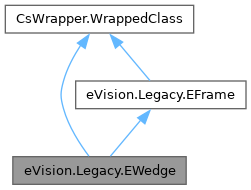
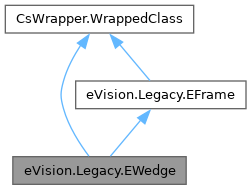
Represents a model of a wedge (disk, ring, sector or curvilinear quadrilateral). More...
Public Member Functions | |
| EWedge () | |
| Constructs a EWedge object. | |
| EWedge (eVision.EPoint center, float diameter, float breadth, float originAngle, bool direct) | |
| Constructs a EWedge object. | |
| EWedge (eVision.EPoint center, float diameter, float breadth, float originAngle) | |
| Constructs a EWedge object. | |
| EWedge (eVision.EPoint center, float diameter, float breadth) | |
| Constructs a EWedge object. | |
| EWedge (eVision.EPoint center, float diameter) | |
| Constructs a EWedge object. | |
| EWedge (eVision.EPoint center, eVision.EPoint origin, float breadth, bool direct) | |
| Constructs a EWedge object. | |
| EWedge (eVision.EPoint center, eVision.EPoint origin, float breadth) | |
| Constructs a EWedge object. | |
| EWedge (eVision.EPoint center, eVision.EPoint origin) | |
| Constructs a EWedge object. | |
| EWedge (eVision.EPoint center, float diameter, float breadth, float originAngle, float amplitude) | |
| Constructs a EWedge object. | |
| EWedge (eVision.EPoint origin, eVision.EPoint middle, eVision.EPoint end, float breadth, bool fullCircle) | |
| Constructs a EWedge object. | |
| EWedge (eVision.EPoint origin, eVision.EPoint middle, eVision.EPoint end, float breadth) | |
| Constructs a EWedge object. | |
| EWedge (eVision.EPoint origin, eVision.EPoint middle, eVision.EPoint end) | |
| Constructs a EWedge object. | |
| EWedge (eVision.Legacy.EWedge other) | |
| Constructs a EWedge object. | |
| void | CopyTo (eVision.Legacy.EWedge other) |
| Copies all the data of the current EWedge object into another EWedge object and returns it. | |
| void | SetFromCenterAndOrigin (eVision.EPoint center, eVision.EPoint origin, float breadth, bool direct) |
| Sets the geometric parameters (nominal position and diameter, breadth, angular position and amplitude) of an EWedge object. | |
| void | SetFromCenterAndOrigin (eVision.EPoint center, eVision.EPoint origin, float breadth) |
| Sets the geometric parameters (nominal position and diameter, breadth, angular position and amplitude) of an EWedge object. | |
| void | SetFromCenterAndOrigin (eVision.EPoint center, eVision.EPoint origin) |
| Sets the geometric parameters (nominal position and diameter, breadth, angular position and amplitude) of an EWedge object. | |
| void | SetFromOriginMiddleEnd (eVision.EPoint origin, eVision.EPoint middle, eVision.EPoint end, float breadth, bool fullCircle) |
| Sets the geometric parameters (nominal position and diameter, breadth, angular position and amplitude) of an EWedge object. | |
| void | SetFromOriginMiddleEnd (eVision.EPoint origin, eVision.EPoint middle, eVision.EPoint end, float breadth) |
| Sets the geometric parameters (nominal position and diameter, breadth, angular position and amplitude) of an EWedge object. | |
| void | SetFromOriginMiddleEnd (eVision.EPoint origin, eVision.EPoint middle, eVision.EPoint end) |
| Sets the geometric parameters (nominal position and diameter, breadth, angular position and amplitude) of an EWedge object. | |
| void | SetFromTwoPoints (eVision.EPoint center, eVision.EPoint origin, float breadth, bool direct) |
| Sets the geometric parameters (nominal position and diameter, breadth, angular position and amplitude) of an EWedge object. | |
| void | SetFromTwoPoints (eVision.EPoint center, eVision.EPoint origin, float breadth) |
| Sets the geometric parameters (nominal position and diameter, breadth, angular position and amplitude) of an EWedge object. | |
| void | SetFromTwoPoints (eVision.EPoint center, eVision.EPoint origin) |
| Sets the geometric parameters (nominal position and diameter, breadth, angular position and amplitude) of an EWedge object. | |
| void | SetRadii (float radius, float breadth) |
| Sets the nominal radius and breadth of the EWedge. | |
| void | SetRadii (float radius) |
| Sets the nominal radius and breadth of the EWedge. | |
| void | SetDiameters (float diameter, float breadth) |
| Sets the nominal inner/outer diameter and breadth of the EWedge. | |
| void | SetDiameters (float diameter) |
| Sets the nominal inner/outer diameter and breadth of the EWedge. | |
| eVision.EPoint | GetInnerPoint (float fraction) |
| Returns the coordinates of a particular point specified by its location along the inner circle arc. | |
| eVision.EPoint | GetOuterPoint (float fraction) |
| Returns the coordinates of a particular point specified by its location along the outter circle arc. | |
| eVision.EPoint | GetPoint (float breadthFraction, float angleFraction) |
| Returns the coordinates of a particular point specified by its location along the wedge perimeter. | |
| void | GetMidEdges (ref eVision.EPoint a, ref eVision.EPoint AA, ref eVision.EPoint r, ref eVision.EPoint RR) |
| Retrieves the center coordinates of each edge of the wedge fitting gauge. | |
| void | GetCorners (ref eVision.EPoint ar, ref eVision.EPoint AAr, ref eVision.EPoint aRR, ref eVision.EPoint AARR) |
| Retrieves the coordinates of each corner of the EWedge. | |
| void | GetEdges (eVision.Legacy.ELine a, eVision.Legacy.ELine AA, eVision.Legacy.ECircle r, eVision.Legacy.ECircle RR) |
| Retrieves each edge of the EWedge. | |
| Public Member Functions inherited from eVision.Legacy.EFrame | |
| EFrame () | |
| Constructs a EFrame object. | |
| EFrame (float centerX, float centerY, float angle, float scale) | |
| Constructs a EFrame object. | |
| EFrame (float centerX, float centerY, float angle) | |
| Constructs a EFrame object. | |
| EFrame (float centerX, float centerY) | |
| Constructs a EFrame object. | |
| EFrame (eVision.EPoint center, float angle, float scale) | |
| Constructs a EFrame object. | |
| EFrame (eVision.Legacy.EFrame frame) | |
| Constructs a EFrame object. | |
| void | CopyTo (eVision.Legacy.EFrame other) |
| Copies all the data from the current EFrame object into another EFrame object, and returns it. | |
| eVision.EPoint | LocalToGlobal (eVision.EPoint local) |
| Transforms a geometrical element from local to global coordinates (local to world). | |
| eVision.Legacy.EFrame | LocalToGlobal (eVision.Legacy.EFrame local) |
| Transforms a geometrical element from local to global coordinates (local to world). | |
| eVision.Legacy.ELine | LocalToGlobal (eVision.Legacy.ELine local) |
| Transforms a geometrical element from local to global coordinates (local to world). | |
| eVision.Legacy.ECircle | LocalToGlobal (eVision.Legacy.ECircle local) |
| Transforms a geometrical element from local to global coordinates (local to world). | |
| eVision.EPoint | GlobalToLocal (eVision.EPoint global) |
| Transforms a geometrical element from global to local coordinates (world to local). | |
| eVision.Legacy.EFrame | GlobalToLocal (eVision.Legacy.EFrame global) |
| Transforms a geometrical element from global to local coordinates (world to local). | |
| void | Load (string path) |
| Load the EFrame configuration. The given ESerializer must have been created for reading. | |
| void | Load (eVision.ESerializer serializer) |
| Load the EFrame configuration. The given ESerializer must have been created for reading. | |
| void | Save (string path) |
| Save the EFrame configuration. The given ESerializer must have been created for writing. | |
| void | Save (eVision.ESerializer serializer) |
| Save the EFrame configuration. The given ESerializer must have been created for writing. | |
| void | SetCenterXY (float centerX, float centerY) |
| Sets the center coordinates of a EFrame object. | |
| eVision.EPoint | MidPoint (eVision.EPoint Point) |
| Returns the middle coordinate between this EFrame object's center and another EFrame object's center. | |
| eVision.EPoint | Rotate (float angle) |
| Returns another EPoint object containing the coordinates of the rotated center point. | |
| float | Square () |
| Compute the sum of the squared coordinates of the center of a EFrame. | |
| float | Modulus () |
| Compute the euclidean modulus of the center of a EFrame. | |
| float | Argument () |
| Compute the polar argument of the center of EFrame object. | |
| float | Dot (eVision.EPoint Point) |
| Compute the dot product of the centers of two EFrame objects. | |
| float | Cross (eVision.EPoint Point) |
| Compute the cross product of the centers of two EFrame objects. | |
| float | Area (eVision.EPoint Point) |
| Compute the oriented area of the parallelogram built on the centers of two EFrame. | |
| eVision.EPoint | Project (eVision.Legacy.ELine shape) |
| Compute the orthogonal projection of the center of a EFrame on another shape. | |
| eVision.EPoint | Project (eVision.Legacy.ECircle shape) |
| Compute the orthogonal projection of the center of a EFrame on another shape. | |
| float | SquaredDistance (eVision.EPoint Point) |
| Compute the squared distance between the centers of two EFrame. | |
| eVision.EPoint | Move (float angle, float distance) |
| Return the position by moving the center along angle by distance. | |
| virtual float | Distance (eVision.EPoint point) |
| Returns the distance between the addressed point and the center of EFrame object. | |
| virtual float | Distance (eVision.Legacy.ELine line, bool segmentOnly) |
| Returns the distance between the addressed point and the center of EFrame object. | |
| virtual float | Distance (eVision.Legacy.ELine line) |
| Returns the distance between the addressed point and the center of EFrame object. | |
| virtual float | Distance (eVision.Legacy.ECircle circle, bool arcOnly) |
| Returns the distance between the addressed point and the center of EFrame object. | |
| virtual float | Distance (eVision.Legacy.ECircle circle) |
| Returns the distance between the addressed point and the center of EFrame object. | |
Properties | |
| float | Amplitude [get, set] |
| Angular amplitude of the EWedge. | |
| float | InnerDiameter [get] |
| Inner diameter of the EWedge. | |
| float | OuterDiameter [get] |
| Outer diameter of the EWedge. | |
| float | InnerRadius [get] |
| Inner radius of the EWedge. | |
| float | OuterRadius [get] |
| Outer radius of the EWedge. | |
| float | Breadth [get] |
| Breadth of the EWedge. | |
| float | InnerArcLength [get] |
| Inner circle arc length of the EWedge. | |
| float | OuterArcLength [get] |
| Outer circle arc length of the EWedge. | |
| float | OrgAngle [get] |
| Angular position from where the EWedge extents. | |
| float | ApexAngle [get] |
| Angular position at the apex of the EWedge. | |
| float | EndAngle [get] |
| Ending angular position of the EWedge. | |
| eVision.EPoint | InnerOrg [get] |
| Inner origin point coordinates of the EWedge. | |
| eVision.EPoint | InnerApex [get] |
| Inner apex point coordinates of the EWedge. | |
| eVision.EPoint | InnerEnd [get] |
| Inner end point coordinates of the EWedge. | |
| eVision.EPoint | OuterOrg [get] |
| Outer origin point coordinates of the EWedge. | |
| eVision.EPoint | OuterApex [get] |
| Outer apex point coordinates of the EWedge. | |
| eVision.EPoint | OuterEnd [get] |
| Outer end point coordinates of the EWedge. | |
| bool | FullBreadth [get] |
| Flag indicating if the EWedge has a full breadth (breadth = radius). | |
| bool | FullCircle [get] |
| Flag indicating if the EWedge is a full circle (amplitude = 2 PI). | |
| bool | Direct [get, set] |
| Flag indicating whether positive angles correspond to a clockwise or an anticlockwise rotation. | |
| Properties inherited from eVision.Legacy.EFrame | |
| float | Angle [get, set] |
| Orientation of the frame. | |
| float | Scale [get, set] |
| Horizontal sensor resolution, in pixels per unit. | |
| float | CenterX [get] |
| Abscissa of the origin point of the frame. | |
| float | CenterY [get] |
| Ordinate of the origin point of the frame. | |
| virtual eVision.EPoint | Center [get, set] |
| Center. | |
| float | X [get, set] |
| Abscissa (X coordinate) of the EFrame object. | |
| float | Y [get, set] |
| Ordinate (Y coordinate) of the EFrame object. | |
Additional Inherited Members | |
| Static Public Member Functions inherited from eVision.Legacy.EFrame | |
| static eVision.EPoint | operator+ (eVision.Legacy.EFrame extraArgument, eVision.EPoint point) |
| Returns the addition of the point to the center of the EFrame. | |
| static eVision.EPoint | operator- (eVision.Legacy.EFrame extraArgument, eVision.EPoint point) |
| Returns the substraction of the center of the EFrame with the given point. | |
| static eVision.EPoint | operator* (eVision.Legacy.EFrame extraArgument, float scalar) |
| Returns the multiplication of the center of the EFrame with the given multiplier. | |
| static eVision.EPoint | operator/ (eVision.Legacy.EFrame extraArgument, float scalar) |
| Returns the division of the center of the EFrame with the given divisor. | |
Represents a model of a wedge (disk, ring, sector or curvilinear quadrilateral).
License(s): BasicTypes
| eVision.Legacy.EWedge.EWedge | ( | ) |
Constructs a EWedge object.
| eVision.Legacy.EWedge.EWedge | ( | eVision.EPoint | center, |
| float | diameter, | ||
| float | breadth, | ||
| float | originAngle, | ||
| bool | direct ) |
Constructs a EWedge object.
| center | Center coordinates of the wedge at its nominal position. The default value is (0,0). |
| diameter | Nominal diameter of the wedge. The default value is 100. |
| breadth | Nominal breadth of the wedge. It must be negative or zero. The default value is -50. |
| originAngle | Origin point coordinates of the wedge. |
| direct | true (default) means that angles increase anticlockwise in a direct coordinate system and clockwise in an inverse coordinate system. |
| eVision.Legacy.EWedge.EWedge | ( | eVision.EPoint | center, |
| float | diameter, | ||
| float | breadth, | ||
| float | originAngle ) |
Constructs a EWedge object.
| center | Center coordinates of the wedge at its nominal position. The default value is (0,0). |
| diameter | Nominal diameter of the wedge. The default value is 100. |
| breadth | Nominal breadth of the wedge. It must be negative or zero. The default value is -50. |
| originAngle | Origin point coordinates of the wedge. |
| eVision.Legacy.EWedge.EWedge | ( | eVision.EPoint | center, |
| float | diameter, | ||
| float | breadth ) |
Constructs a EWedge object.
| center | Center coordinates of the wedge at its nominal position. The default value is (0,0). |
| diameter | Nominal diameter of the wedge. The default value is 100. |
| breadth | Nominal breadth of the wedge. It must be negative or zero. The default value is -50. |
| eVision.Legacy.EWedge.EWedge | ( | eVision.EPoint | center, |
| float | diameter ) |
Constructs a EWedge object.
| center | Center coordinates of the wedge at its nominal position. The default value is (0,0). |
| diameter | Nominal diameter of the wedge. The default value is 100. |
| eVision.Legacy.EWedge.EWedge | ( | eVision.EPoint | center, |
| eVision.EPoint | origin, | ||
| float | breadth, | ||
| bool | direct ) |
Constructs a EWedge object.
| center | Center coordinates of the wedge at its nominal position. The default value is (0,0). |
| origin | Origin point coordinates of the wedge. |
| breadth | Nominal breadth of the wedge. It must be negative or zero. The default value is -50. |
| direct | true (default) means that angles increase anticlockwise in a direct coordinate system and clockwise in an inverse coordinate system. |
| eVision.Legacy.EWedge.EWedge | ( | eVision.EPoint | center, |
| eVision.EPoint | origin, | ||
| float | breadth ) |
Constructs a EWedge object.
| center | Center coordinates of the wedge at its nominal position. The default value is (0,0). |
| origin | Origin point coordinates of the wedge. |
| breadth | Nominal breadth of the wedge. It must be negative or zero. The default value is -50. |
| eVision.Legacy.EWedge.EWedge | ( | eVision.EPoint | center, |
| eVision.EPoint | origin ) |
Constructs a EWedge object.
| center | Center coordinates of the wedge at its nominal position. The default value is (0,0). |
| origin | Origin point coordinates of the wedge. |
| eVision.Legacy.EWedge.EWedge | ( | eVision.EPoint | center, |
| float | diameter, | ||
| float | breadth, | ||
| float | originAngle, | ||
| float | amplitude ) |
Constructs a EWedge object.
| center | Center coordinates of the wedge at its nominal position. The default value is (0,0). |
| diameter | Nominal diameter of the wedge. The default value is 100. |
| breadth | Nominal breadth of the wedge. It must be negative or zero. The default value is -50. |
| originAngle | Origin point coordinates of the wedge. |
| amplitude | Nominal angular amplitude of the wedge. The default value is 360. |
| eVision.Legacy.EWedge.EWedge | ( | eVision.EPoint | origin, |
| eVision.EPoint | middle, | ||
| eVision.EPoint | end, | ||
| float | breadth, | ||
| bool | fullCircle ) |
Constructs a EWedge object.
| origin | Origin point coordinates of the wedge. |
| middle | Middle point coordinates of the wedge. |
| end | End point coordinates of the wedge. |
| breadth | Nominal breadth of the wedge. It must be negative or zero. The default value is -50. |
| fullCircle | true (default) in case of a full turn wedge. If fullCircle is false, origin and end give the wedge's amplitude. |
| eVision.Legacy.EWedge.EWedge | ( | eVision.EPoint | origin, |
| eVision.EPoint | middle, | ||
| eVision.EPoint | end, | ||
| float | breadth ) |
Constructs a EWedge object.
| origin | Origin point coordinates of the wedge. |
| middle | Middle point coordinates of the wedge. |
| end | End point coordinates of the wedge. |
| breadth | Nominal breadth of the wedge. It must be negative or zero. The default value is -50. |
| eVision.Legacy.EWedge.EWedge | ( | eVision.EPoint | origin, |
| eVision.EPoint | middle, | ||
| eVision.EPoint | end ) |
Constructs a EWedge object.
| origin | Origin point coordinates of the wedge. |
| middle | Middle point coordinates of the wedge. |
| end | End point coordinates of the wedge. |
| eVision.Legacy.EWedge.EWedge | ( | eVision.Legacy.EWedge | other | ) |
| void eVision.Legacy.EWedge.CopyTo | ( | eVision.Legacy.EWedge | other | ) |
| void eVision.Legacy.EWedge.GetCorners | ( | ref eVision.EPoint | ar, |
| ref eVision.EPoint | AAr, | ||
| ref eVision.EPoint | aRR, | ||
| ref eVision.EPoint | AARR ) |
| void eVision.Legacy.EWedge.GetEdges | ( | eVision.Legacy.ELine | a, |
| eVision.Legacy.ELine | AA, | ||
| eVision.Legacy.ECircle | r, | ||
| eVision.Legacy.ECircle | RR ) |
| eVision.EPoint eVision.Legacy.EWedge.GetInnerPoint | ( | float | fraction | ) |
Returns the coordinates of a particular point specified by its location along the inner circle arc.
| fraction | Point location expressed as a fraction of the circle arc (range [-1, +1]). |
| void eVision.Legacy.EWedge.GetMidEdges | ( | ref eVision.EPoint | a, |
| ref eVision.EPoint | AA, | ||
| ref eVision.EPoint | r, | ||
| ref eVision.EPoint | RR ) |
| eVision.EPoint eVision.Legacy.EWedge.GetOuterPoint | ( | float | fraction | ) |
Returns the coordinates of a particular point specified by its location along the outter circle arc.
| fraction | Point location expressed as a fraction of the circle arc (range [-1, +1]). |
| eVision.EPoint eVision.Legacy.EWedge.GetPoint | ( | float | breadthFraction, |
| float | angleFraction ) |
Returns the coordinates of a particular point specified by its location along the wedge perimeter.
| breadthFraction | Point location expressed as a fraction of the wedge breadth (range -1, +1). |
| angleFraction | Point location expressed as a fraction of the wedge amplitude (range -1, +1). |
| void eVision.Legacy.EWedge.SetDiameters | ( | float | diameter | ) |
Sets the nominal inner/outer diameter and breadth of the EWedge.
| diameter | Outer diameter of the EWedge. The default value is 100. |
A EWedge is fully defined knowing its nominal position (given by the coordinates of its center), its nominal outer radius (diameter), its breadth, the angular position from where it extents, its angular amplitude and its outline tolerance.
By default, the EWedge diameter value is 100, which means 100 pixels when the field of view is not calibrated and 100 "units" in case of a calibrated field of view.
| void eVision.Legacy.EWedge.SetDiameters | ( | float | diameter, |
| float | breadth ) |
Sets the nominal inner/outer diameter and breadth of the EWedge.
| diameter | Outer diameter of the EWedge. The default value is 100. |
| breadth | Breadth of the EWedge. It must be negative or zero. Its default value is -50. |
A EWedge is fully defined knowing its nominal position (given by the coordinates of its center), its nominal outer radius (diameter), its breadth, the angular position from where it extents, its angular amplitude and its outline tolerance.
By default, the EWedge diameter value is 100, which means 100 pixels when the field of view is not calibrated and 100 "units" in case of a calibrated field of view.
| void eVision.Legacy.EWedge.SetFromCenterAndOrigin | ( | eVision.EPoint | center, |
| eVision.EPoint | origin ) |
Sets the geometric parameters (nominal position and diameter, breadth, angular position and amplitude) of an EWedge object.
| center | Center coordinates of the wedge at its nominal position. The default value is (0,0). |
| origin | Origin point coordinates of the wedge. |
In a direct coordinate system, the abscissa extends rightwards and the ordinate extends upwards. The coordinate system is said to be inverse if the abscissa extends rightwards and the ordinate extends downwards.
| void eVision.Legacy.EWedge.SetFromCenterAndOrigin | ( | eVision.EPoint | center, |
| eVision.EPoint | origin, | ||
| float | breadth ) |
Sets the geometric parameters (nominal position and diameter, breadth, angular position and amplitude) of an EWedge object.
| center | Center coordinates of the wedge at its nominal position. The default value is (0,0). |
| origin | Origin point coordinates of the wedge. |
| breadth | Nominal breadth of the wedge. It must be negative or zero. The default value is -50. |
In a direct coordinate system, the abscissa extends rightwards and the ordinate extends upwards. The coordinate system is said to be inverse if the abscissa extends rightwards and the ordinate extends downwards.
| void eVision.Legacy.EWedge.SetFromCenterAndOrigin | ( | eVision.EPoint | center, |
| eVision.EPoint | origin, | ||
| float | breadth, | ||
| bool | direct ) |
Sets the geometric parameters (nominal position and diameter, breadth, angular position and amplitude) of an EWedge object.
| center | Center coordinates of the wedge at its nominal position. The default value is (0,0). |
| origin | Origin point coordinates of the wedge. |
| breadth | Nominal breadth of the wedge. It must be negative or zero. The default value is -50. |
| direct | true (default) means that angles increase anticlockwise in a direct coordinate system and clockwise in an inverse coordinate system. |
In a direct coordinate system, the abscissa extends rightwards and the ordinate extends upwards. The coordinate system is said to be inverse if the abscissa extends rightwards and the ordinate extends downwards.
| void eVision.Legacy.EWedge.SetFromOriginMiddleEnd | ( | eVision.EPoint | origin, |
| eVision.EPoint | middle, | ||
| eVision.EPoint | end ) |
Sets the geometric parameters (nominal position and diameter, breadth, angular position and amplitude) of an EWedge object.
| origin | Origin point coordinates of the wedge. |
| middle | Middle point coordinates of the wedge. |
| end | End point coordinates of the wedge. |
In a direct coordinate system, the abscissa extends rightwards and the ordinate extends upwards. The coordinate system is said to be inverse if the abscissa extends rightwards and the ordinate extends downwards.
| void eVision.Legacy.EWedge.SetFromOriginMiddleEnd | ( | eVision.EPoint | origin, |
| eVision.EPoint | middle, | ||
| eVision.EPoint | end, | ||
| float | breadth ) |
Sets the geometric parameters (nominal position and diameter, breadth, angular position and amplitude) of an EWedge object.
| origin | Origin point coordinates of the wedge. |
| middle | Middle point coordinates of the wedge. |
| end | End point coordinates of the wedge. |
| breadth | Nominal breadth of the wedge. It must be negative or zero. The default value is -50. |
In a direct coordinate system, the abscissa extends rightwards and the ordinate extends upwards. The coordinate system is said to be inverse if the abscissa extends rightwards and the ordinate extends downwards.
| void eVision.Legacy.EWedge.SetFromOriginMiddleEnd | ( | eVision.EPoint | origin, |
| eVision.EPoint | middle, | ||
| eVision.EPoint | end, | ||
| float | breadth, | ||
| bool | fullCircle ) |
Sets the geometric parameters (nominal position and diameter, breadth, angular position and amplitude) of an EWedge object.
| origin | Origin point coordinates of the wedge. |
| middle | Middle point coordinates of the wedge. |
| end | End point coordinates of the wedge. |
| breadth | Nominal breadth of the wedge. It must be negative or zero. The default value is -50. |
| fullCircle | true (default) in case of a full turn wedge. If fullCircle is false, origin and end give the wedge's amplitude. |
In a direct coordinate system, the abscissa extends rightwards and the ordinate extends upwards. The coordinate system is said to be inverse if the abscissa extends rightwards and the ordinate extends downwards.
| void eVision.Legacy.EWedge.SetFromTwoPoints | ( | eVision.EPoint | center, |
| eVision.EPoint | origin ) |
Sets the geometric parameters (nominal position and diameter, breadth, angular position and amplitude) of an EWedge object.
| center | Center coordinates of the wedge at its nominal position. The default value is (0,0). |
| origin | Origin point coordinates of the wedge. |
In a direct coordinate system, the abscissa extends rightwards and the ordinate extends upwards. The coordinate system is said to be inverse if the abscissa extends rightwards and the ordinate extends downwards.
Use EWedge.SetFromCenterAndOrigin instead.
Deprecated in version 25.10. Scheduled to be removed in version 27.6.
| void eVision.Legacy.EWedge.SetFromTwoPoints | ( | eVision.EPoint | center, |
| eVision.EPoint | origin, | ||
| float | breadth ) |
Sets the geometric parameters (nominal position and diameter, breadth, angular position and amplitude) of an EWedge object.
| center | Center coordinates of the wedge at its nominal position. The default value is (0,0). |
| origin | Origin point coordinates of the wedge. |
| breadth | Nominal breadth of the wedge. It must be negative or zero. The default value is -50. |
In a direct coordinate system, the abscissa extends rightwards and the ordinate extends upwards. The coordinate system is said to be inverse if the abscissa extends rightwards and the ordinate extends downwards.
Use EWedge.SetFromCenterAndOrigin instead.
Deprecated in version 25.10. Scheduled to be removed in version 27.6.
| void eVision.Legacy.EWedge.SetFromTwoPoints | ( | eVision.EPoint | center, |
| eVision.EPoint | origin, | ||
| float | breadth, | ||
| bool | direct ) |
Sets the geometric parameters (nominal position and diameter, breadth, angular position and amplitude) of an EWedge object.
| center | Center coordinates of the wedge at its nominal position. The default value is (0,0). |
| origin | Origin point coordinates of the wedge. |
| breadth | Nominal breadth of the wedge. It must be negative or zero. The default value is -50. |
| direct | true (default) means that angles increase anticlockwise in a direct coordinate system and clockwise in an inverse coordinate system. |
In a direct coordinate system, the abscissa extends rightwards and the ordinate extends upwards. The coordinate system is said to be inverse if the abscissa extends rightwards and the ordinate extends downwards.
Use EWedge.SetFromCenterAndOrigin instead.
Deprecated in version 25.10. Scheduled to be removed in version 27.6.
| void eVision.Legacy.EWedge.SetRadii | ( | float | radius | ) |
Sets the nominal radius and breadth of the EWedge.
| radius | Outer radius of the EWedge. The default value is 50. |
A EWedge is fully defined knowing its nominal position (given by the coordinates of its center), its nominal radius (diameter), its breadth, the angular position from where it extents, its angular amplitude and its outline tolerance.
By default, the EWedge radius value is 50, which means 50 pixels when the field of view is not calibrated and 50 "units" in case of a calibrated field of view.
| void eVision.Legacy.EWedge.SetRadii | ( | float | radius, |
| float | breadth ) |
Sets the nominal radius and breadth of the EWedge.
| radius | Outer radius of the EWedge. The default value is 50. |
| breadth | Breadth of the EWedge, which must be negative or zero. Its default value is -50. |
A EWedge is fully defined knowing its nominal position (given by the coordinates of its center), its nominal radius (diameter), its breadth, the angular position from where it extents, its angular amplitude and its outline tolerance.
By default, the EWedge radius value is 50, which means 50 pixels when the field of view is not calibrated and 50 "units" in case of a calibrated field of view.
|
getset |
Angular amplitude of the EWedge.
A EWedge is fully defined knowing its nominal position (its center coordinates), its nominal radius (diameter), its breadth, the angular position from where it extents, its angular amplitude, and its outline tolerance.
The sign of the rotation angle depends whether the field of view is calibrated or not.
|
get |
Angular position at the apex of the EWedge.
A EWedge is fully defined knowing its nominal position (its center coordinates), its nominal radius (diameter), its breadth, the angular position from where it extents, its angular amplitude, and its outline tolerance.
The sign of the rotation angle depends whether the field of view is calibrated or not.
|
get |
|
getset |
Flag indicating whether positive angles correspond to a clockwise or an anticlockwise rotation.
true (default) means that angles increase anticlockwisely in a direct coordinate system, and clockwisely in an inverse coordinate system.
|
get |
Ending angular position of the EWedge.
A EWedge is fully defined knowing its nominal position (its center coordinates), its nominal radius (diameter), its breadth, the angular position from where it extents, its angular amplitude, and its outline tolerance.
The sign of the rotation angle depends whether the field of view is calibrated or not.
|
get |
Flag indicating if the EWedge has a full breadth (breadth = radius).
|
get |
Flag indicating if the EWedge is a full circle (amplitude = 2 PI).
|
get |
Inner apex point coordinates of the EWedge.
|
get |
Inner circle arc length of the EWedge.
|
get |
Inner diameter of the EWedge.
|
get |
Inner end point coordinates of the EWedge.
|
get |
Inner origin point coordinates of the EWedge.
|
get |
Inner radius of the EWedge.
|
get |
Angular position from where the EWedge extents.
A EWedge is fully defined knowing its nominal position (its center coordinates), its nominal radius (diameter), its breadth, the angular position from where it extents, its angular amplitude, and its outline tolerance.
The sign of the rotation angle depends whether the field of view is calibrated or not.
|
get |
|
get |
|
get |
|
get |
|
get |
 1.17.0