 |
eVision Python API
|
|
eVision Python API
|
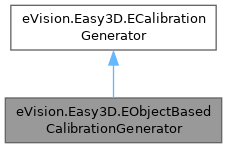
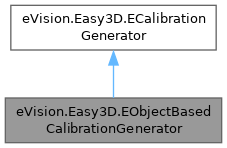
Represents an object-based 3D calibration generator. More...
Public Member Functions | |
| None | __init__ (self) |
| Creates a eVision.Easy3D.EObjectBasedCalibrationGenerator. | |
| None | __init__ (self, eVision.Easy3D.EObjectBasedCalibrationGenerator other) |
| Creates a eVision.Easy3D.EObjectBasedCalibrationGenerator. | |
| None | SetCalibrationObjectType (self, eVision.Easy3D.EObjectBasedCalibrationType type) |
| Sets the eVision.Easy3D.EObjectBasedCalibrationType used for the computation of the eVision.Easy3D.EObjectBasedCalibrationModel. | |
| None | SetCalibrationObjectType (self, eVision.Easy3D.EObjectBasedCalibrationType type, float sizeA, float sizeB, float sizeC) |
| Sets the eVision.Easy3D.EObjectBasedCalibrationType used for the computation of the eVision.Easy3D.EObjectBasedCalibrationModel. | |
| eVision.Easy3D.EObjectBasedCalibrationType | GetCalibrationObjectType (self) |
| Gets the eVision.Easy3D.EObjectBasedCalibrationType used for the computation of the eVision.Easy3D.EObjectBasedCalibrationModel. | |
| None | SetCalibrationObjectScale (self, float scale) |
| Sets the scale of your target calibration model compared to a reference model. | |
| None | SetCalibrationObjectScale (self, float scaleX, float scaleY, float scaleZ) |
| Sets the scale of your target calibration model compared to a reference model. | |
| eVision.Easy3D.EObjectBasedCalibrationModel | Compute (self, eVision.Easy3D.EDepthMap8 dm) |
| Computes an eVision.Easy3D.EObjectBasedCalibrationModel from the eVision.Easy3D.EDepthMap of the calibration object. | |
| eVision.Easy3D.EObjectBasedCalibrationModel | Compute (self, eVision.Easy3D.EDepthMap16 dm) |
| Computes an eVision.Easy3D.EObjectBasedCalibrationModel from the eVision.Easy3D.EDepthMap of the calibration object. | |
| eVision.Easy3D.EObjectBasedCalibrationModel | Compute (self, eVision.Easy3D.EDepthMap32f dm) |
| Computes an eVision.Easy3D.EObjectBasedCalibrationModel from the eVision.Easy3D.EDepthMap of the calibration object. | |
| None | Save (self, str path) |
| Saves the parameters used by the object based calibration generator. | |
| None | Save (self, eVision.ESerializer|None serializer) |
| Saves the parameters used by the object based calibration generator. | |
| None | Load (self, str path) |
| Loads the parameters used by the object based calibration generator. | |
| None | Load (self, eVision.ESerializer|None serializer) |
| Loads the parameters used by the object based calibration generator. | |
| float | CalibrationObjectScaleX (self) |
| Returns the X axis scale of the calibration object. | |
| float | CalibrationObjectSizeA (self) |
| Returns the 'A' size of the calibration object. | |
| float | CalibrationObjectScaleY (self) |
| Returns the Y axis scale of the calibration object. | |
| float | CalibrationObjectSizeB (self) |
| Returns the 'B' size of the calibration object. | |
| float | CalibrationObjectScaleZ (self) |
| Returns the Z axis scale of the calibration object. | |
| float | CalibrationObjectSizeC (self) |
| Returns the 'C' size of the calibration object. | |
| eVision.Easy3D.EObjectBasedCalibrationPrecisionVsSpeedTradeOff | PrecisionVsSpeedTradeOff (self) |
| Sets/Gets the trade-off between precision and speed for the calibration. | |
| PrecisionVsSpeedTradeOff (self, eVision.Easy3D.EObjectBasedCalibrationPrecisionVsSpeedTradeOff value) | |
| Sets/Gets the trade-off between precision and speed for the calibration. | |
| bool | AlongPositiveZAxis (self) |
| Sets/Gets whether the calibration object is along the positive z-axis. | |
| AlongPositiveZAxis (self, bool value) | |
| Sets/Gets whether the calibration object is along the positive z-axis. | |
| int | NumCalibrationPasses (self) |
| Sets/Gets the number of calibration passes. | |
| NumCalibrationPasses (self, int value) | |
| Sets/Gets the number of calibration passes. | |
| eVision.EIntegerRange | RangeX (self) |
| Sets/Gets the 'X' axis range for the calibration object detection in the eVision.Easy3D.EDepthMap. | |
| RangeX (self, eVision.EIntegerRange value) | |
| Sets/Gets the 'X' axis range for the calibration object detection in the eVision.Easy3D.EDepthMap. | |
| eVision.EIntegerRange | RangeY (self) |
| Sets/Gets the 'Y' axis range for the calibration object detection in the depth map. | |
| RangeY (self, eVision.EIntegerRange value) | |
| Sets/Gets the 'Y' axis range for the calibration object detection in the depth map. | |
| eVision.EFloatRange | RangeZ (self) |
| Sets/Gets the 'Z' axis range for the calibration object detection in the depth map. | |
| RangeZ (self, eVision.EFloatRange value) | |
| Sets/Gets the 'Z' axis range for the calibration object detection in the depth map. | |
Represents an object-based 3D calibration generator.
The class performs the computation of a calibration model based on the scan of the reference object.
Remarks:
License(s): Easy3DLaserLine
| None eVision.Easy3D.EObjectBasedCalibrationGenerator.__init__ | ( | self | ) |
| None eVision.Easy3D.EObjectBasedCalibrationGenerator.__init__ | ( | self, | |
| eVision.Easy3D.EObjectBasedCalibrationGenerator | other ) |
Creates a eVision.Easy3D.EObjectBasedCalibrationGenerator.
| other | The other eVision.Easy3D.EObjectBasedCalibrationGenerator. |
| bool eVision.Easy3D.EObjectBasedCalibrationGenerator.AlongPositiveZAxis | ( | self | ) |
Sets/Gets whether the calibration object is along the positive z-axis.
True by default.
| eVision.Easy3D.EObjectBasedCalibrationGenerator.AlongPositiveZAxis | ( | self, | |
| bool | value ) |
Sets/Gets whether the calibration object is along the positive z-axis.
True by default.
| float eVision.Easy3D.EObjectBasedCalibrationGenerator.CalibrationObjectScaleX | ( | self | ) |
Returns the X axis scale of the calibration object.
Use eVision.Easy3D.EObjectBasedCalibrationGenerator.CalibrationObjectSizeA instead. Note that scale and size aren't the same thing.
Deprecated in version 23.12. Scheduled to be removed in version 27.6.
| float eVision.Easy3D.EObjectBasedCalibrationGenerator.CalibrationObjectScaleY | ( | self | ) |
Returns the Y axis scale of the calibration object.
Use eVision.Easy3D.EObjectBasedCalibrationGenerator.CalibrationObjectSizeB instead. Note that scale and size aren't the same thing.
Deprecated in version 23.12. Scheduled to be removed in version 27.6.
| float eVision.Easy3D.EObjectBasedCalibrationGenerator.CalibrationObjectScaleZ | ( | self | ) |
Returns the Z axis scale of the calibration object.
Use eVision.Easy3D.EObjectBasedCalibrationGenerator.CalibrationObjectSizeC instead. Note that scale and size aren't the same thing.
Deprecated in version 23.12. Scheduled to be removed in version 27.6.
| float eVision.Easy3D.EObjectBasedCalibrationGenerator.CalibrationObjectSizeA | ( | self | ) |
Returns the 'A' size of the calibration object.
| float eVision.Easy3D.EObjectBasedCalibrationGenerator.CalibrationObjectSizeB | ( | self | ) |
Returns the 'B' size of the calibration object.
| float eVision.Easy3D.EObjectBasedCalibrationGenerator.CalibrationObjectSizeC | ( | self | ) |
Returns the 'C' size of the calibration object.
| eVision.Easy3D.EObjectBasedCalibrationModel eVision.Easy3D.EObjectBasedCalibrationGenerator.Compute | ( | self, | |
| eVision.Easy3D.EDepthMap16 | dm ) |
Computes an eVision.Easy3D.EObjectBasedCalibrationModel from the eVision.Easy3D.EDepthMap of the calibration object.
| dm | The input depth map of the calibration object. |
| eVision.Easy3D.EObjectBasedCalibrationModel eVision.Easy3D.EObjectBasedCalibrationGenerator.Compute | ( | self, | |
| eVision.Easy3D.EDepthMap32f | dm ) |
Computes an eVision.Easy3D.EObjectBasedCalibrationModel from the eVision.Easy3D.EDepthMap of the calibration object.
| dm | The input depth map of the calibration object. |
| eVision.Easy3D.EObjectBasedCalibrationModel eVision.Easy3D.EObjectBasedCalibrationGenerator.Compute | ( | self, | |
| eVision.Easy3D.EDepthMap8 | dm ) |
Computes an eVision.Easy3D.EObjectBasedCalibrationModel from the eVision.Easy3D.EDepthMap of the calibration object.
| dm | The input depth map of the calibration object. |
| eVision.Easy3D.EObjectBasedCalibrationType eVision.Easy3D.EObjectBasedCalibrationGenerator.GetCalibrationObjectType | ( | self | ) |
Gets the eVision.Easy3D.EObjectBasedCalibrationType used for the computation of the eVision.Easy3D.EObjectBasedCalibrationModel.
The type of the object used for the calibration is E3DObjectBasedCalibrationType_NotDefined by default.
| None eVision.Easy3D.EObjectBasedCalibrationGenerator.Load | ( | self, | |
| eVision.ESerializer | None | serializer ) |
Loads the parameters used by the object based calibration generator.
| serializer | The serializer. |
| None eVision.Easy3D.EObjectBasedCalibrationGenerator.Load | ( | self, | |
| str | path ) |
Loads the parameters used by the object based calibration generator.
| path | The file path. |
| int eVision.Easy3D.EObjectBasedCalibrationGenerator.NumCalibrationPasses | ( | self | ) |
Sets/Gets the number of calibration passes.
Each passes will refine the calibration model but the computation will be longer. The number of passes is 1 by default.
| eVision.Easy3D.EObjectBasedCalibrationGenerator.NumCalibrationPasses | ( | self, | |
| int | value ) |
Sets/Gets the number of calibration passes.
Each passes will refine the calibration model but the computation will be longer. The number of passes is 1 by default.
| eVision.Easy3D.EObjectBasedCalibrationPrecisionVsSpeedTradeOff eVision.Easy3D.EObjectBasedCalibrationGenerator.PrecisionVsSpeedTradeOff | ( | self | ) |
Sets/Gets the trade-off between precision and speed for the calibration.
The Precision vs speed trade-off mode from eVision.Easy3D.EObjectBasedCalibrationPrecisionVsSpeedTradeOff is EObjectBasedCalibrationPrecisionVsSpeedTradeOff_Balanced by default.
| eVision.Easy3D.EObjectBasedCalibrationGenerator.PrecisionVsSpeedTradeOff | ( | self, | |
| eVision.Easy3D.EObjectBasedCalibrationPrecisionVsSpeedTradeOff | value ) |
Sets/Gets the trade-off between precision and speed for the calibration.
The Precision vs speed trade-off mode from eVision.Easy3D.EObjectBasedCalibrationPrecisionVsSpeedTradeOff is EObjectBasedCalibrationPrecisionVsSpeedTradeOff_Balanced by default.
| eVision.EIntegerRange eVision.Easy3D.EObjectBasedCalibrationGenerator.RangeX | ( | self | ) |
Sets/Gets the 'X' axis range for the calibration object detection in the eVision.Easy3D.EDepthMap.
If max value is smaller than min value, then max will not be used, we use depth map width - 1 instead. If min value is smaller than 0, then min will not be used, we use 0 instead.
| eVision.Easy3D.EObjectBasedCalibrationGenerator.RangeX | ( | self, | |
| eVision.EIntegerRange | value ) |
Sets/Gets the 'X' axis range for the calibration object detection in the eVision.Easy3D.EDepthMap.
If max value is smaller than min value, then max will not be used, we use depth map width - 1 instead. If min value is smaller than 0, then min will not be used, we use 0 instead.
| eVision.EIntegerRange eVision.Easy3D.EObjectBasedCalibrationGenerator.RangeY | ( | self | ) |
Sets/Gets the 'Y' axis range for the calibration object detection in the depth map.
If max value is smaller than min value, then max will not be used, we use depth map height - 1 instead. If min value is smaller than 0, then min will not be used, we use 0 instead.
| eVision.Easy3D.EObjectBasedCalibrationGenerator.RangeY | ( | self, | |
| eVision.EIntegerRange | value ) |
Sets/Gets the 'Y' axis range for the calibration object detection in the depth map.
If max value is smaller than min value, then max will not be used, we use depth map height - 1 instead. If min value is smaller than 0, then min will not be used, we use 0 instead.
| eVision.EFloatRange eVision.Easy3D.EObjectBasedCalibrationGenerator.RangeZ | ( | self | ) |
Sets/Gets the 'Z' axis range for the calibration object detection in the depth map.
if max value is smaller than min value, then max will not be used, we use the maximum float value instead. if min value is smaller than 0, then min will not be used, we use 0 instead.
| eVision.Easy3D.EObjectBasedCalibrationGenerator.RangeZ | ( | self, | |
| eVision.EFloatRange | value ) |
Sets/Gets the 'Z' axis range for the calibration object detection in the depth map.
if max value is smaller than min value, then max will not be used, we use the maximum float value instead. if min value is smaller than 0, then min will not be used, we use 0 instead.
| None eVision.Easy3D.EObjectBasedCalibrationGenerator.Save | ( | self, | |
| eVision.ESerializer | None | serializer ) |
Saves the parameters used by the object based calibration generator.
| serializer | The eVision.ESerializer object that is written to. |
| None eVision.Easy3D.EObjectBasedCalibrationGenerator.Save | ( | self, | |
| str | path ) |
Saves the parameters used by the object based calibration generator.
| path | The file path. |
| None eVision.Easy3D.EObjectBasedCalibrationGenerator.SetCalibrationObjectScale | ( | self, | |
| float | scale ) |
Sets the scale of your target calibration model compared to a reference model.
Refer to the user guide for the eVision.Easy3D.EObjectBasedCalibrationModel reference design. Use that value to set the unit of the calibrated positions in the point cloud. The scale will affect the world coordinates after conversion of the eVision.Easy3D.EDepthMap to eVision.Easy3D.EPointCloud. For example, if "1 reference unit" is equal to "10 millimeters", set "10" as scale value. Then applying the calibration will produce results in millimeters. Changing these values affect the calibration object sizes defined by eVision.Easy3D.EObjectBasedCalibrationGenerator.SetCalibrationObjectType.
Use eVision.Easy3D.EObjectBasedCalibrationGenerator.SetCalibrationObjectType instead. Note that the scale and size arguments aren't the same thing.
Deprecated in version 23.12. Scheduled to be removed in version 27.6.
| scale | Sets the same scale on axis X, Y and Z relative to the calibration object reference size. |
| None eVision.Easy3D.EObjectBasedCalibrationGenerator.SetCalibrationObjectScale | ( | self, | |
| float | scaleX, | ||
| float | scaleY, | ||
| float | scaleZ ) |
Sets the scale of your target calibration model compared to a reference model.
Refer to the user guide for the eVision.Easy3D.EObjectBasedCalibrationModel reference design. Use that value to set the unit of the calibrated positions in the point cloud. The scale will affect the world coordinates after conversion of the eVision.Easy3D.EDepthMap to eVision.Easy3D.EPointCloud. For example, if "1 reference unit" is equal to "10 millimeters", set "10" as scale value. Then applying the calibration will produce results in millimeters. Changing these values affect the calibration object sizes defined by eVision.Easy3D.EObjectBasedCalibrationGenerator.SetCalibrationObjectType.
Use eVision.Easy3D.EObjectBasedCalibrationGenerator.SetCalibrationObjectType instead. Note that the scale and size arguments aren't the same thing.
Deprecated in version 23.12. Scheduled to be removed in version 27.6.
| scaleX | Sets the scale on X axis relative to the calibration object reference size. |
| scaleY | Sets the scale on Y axis relative to the calibration object reference size. |
| scaleZ | Sets the scale on Z axis relative to the calibration object reference size. |
| None eVision.Easy3D.EObjectBasedCalibrationGenerator.SetCalibrationObjectType | ( | self, | |
| eVision.Easy3D.EObjectBasedCalibrationType | type ) |
Sets the eVision.Easy3D.EObjectBasedCalibrationType used for the computation of the eVision.Easy3D.EObjectBasedCalibrationModel.
The type of the object used for the calibration is E3DObjectBasedCalibrationType_NotDefined by default.
Remarks:
'sizeA', 'sizeB', and 'sizeC' values are in metric unit. The resulting point cloud positions after applying the calibration will follow the same metric unit. Refer to the eVision user guide, Easy3D calibration section, for the definition of 'A', 'B' and 'C' dimensions.
| type | Sets the type of object calibration to detect in the eVision.Easy3D.EDepthMap. |
| None eVision.Easy3D.EObjectBasedCalibrationGenerator.SetCalibrationObjectType | ( | self, | |
| eVision.Easy3D.EObjectBasedCalibrationType | type, | ||
| float | sizeA, | ||
| float | sizeB, | ||
| float | sizeC ) |
Sets the eVision.Easy3D.EObjectBasedCalibrationType used for the computation of the eVision.Easy3D.EObjectBasedCalibrationModel.
The type of the object used for the calibration is E3DObjectBasedCalibrationType_NotDefined by default.
Remarks:
'sizeA', 'sizeB', and 'sizeC' values are in metric unit. The resulting point cloud positions after applying the calibration will follow the same metric unit. Refer to the eVision user guide, Easy3D calibration section, for the definition of 'A', 'B' and 'C' dimensions.
| type | Sets the type of object calibration to detect in the eVision.Easy3D.EDepthMap. |
| sizeA | Sets the size 'A' of object calibration (1 by default). |
| sizeB | Sets the size 'B' of object calibration (1 by default). |
| sizeC | Sets the size 'C' of object calibration (1 by default). |
 1.17.0