 |
eVision Python API
|
|
eVision Python API
|
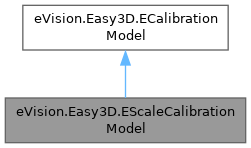
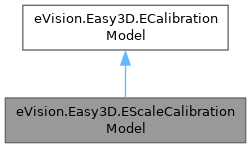
eVision.Easy3D.EScaleCalibrationModel is used to convert depth map 2.5D point to 3D world position, only by applying a scale factor. More...
Public Member Functions | |
| None | __init__ (self) |
| Constructs a eVision.Easy3D.EScaleCalibrationModel. | |
| None | __init__ (self, float factorX, float factorY, float factorZ) |
| Constructs a eVision.Easy3D.EScaleCalibrationModel. | |
| None | __init__ (self, eVision.Easy3D.EScaleCalibrationModel other) |
| Constructs a eVision.Easy3D.EScaleCalibrationModel. | |
| None | Load (self, str path) |
| Loads the eVision.Easy3D.EScaleCalibrationModel calibration model. | |
| None | Load (self, eVision.ESerializer|None serializer) |
| Loads the eVision.Easy3D.EScaleCalibrationModel calibration model. | |
| None | Save (self, str path) |
| Saves the eVision.Easy3D.EScaleCalibrationModel calibration model. | |
| None | Save (self, eVision.ESerializer|None serializer) |
| Saves the eVision.Easy3D.EScaleCalibrationModel calibration model. | |
| float | FactorX (self) |
| Returns the width of a pixel in metric unit. | |
| float | FactorY (self) |
| Returns the distance between 2 profiles (depth map lines) in metric unit. | |
| float | FactorZ (self) |
| Returns the scale of the pixel value in metric unit. | |
| eVision.Easy3D.ECalibrationType | Type (self) |
| Returns the type of calibration model, see eVision.Easy3D.ECalibrationType. | |
| Public Member Functions inherited from eVision.Easy3D.ECalibrationModel | |
| eVision.Easy3D.E3DPoint | Apply (self, eVision.Easy3D.E3DPoint uvwPoint) |
| Applies this model to convert an uncalibrated point to a world position. | |
Additional Inherited Members | |
| Static Public Member Functions inherited from eVision.Easy3D.ECalibrationModel | |
| eVision.Easy3D.ECalibrationModel|None | Create (str path) |
| Factory method from a serializer stream: allocates and reads the calibration model from the given serializer. | |
| eVision.Easy3D.ECalibrationModel|None | Create (eVision.ESerializer|None file) |
| Factory method from a serializer stream: allocates and reads the calibration model from the given serializer. | |
eVision.Easy3D.EScaleCalibrationModel is used to convert depth map 2.5D point to 3D world position, only by applying a scale factor.
That kind of "calibration" does not correct the perspective or distortion present in depth maps. It is a simple and fast way to get a 3D point cloud by applying a scale to each coordinate axis of the depth map pixels.
Remarks:
License(s): Easy3D
| None eVision.Easy3D.EScaleCalibrationModel.__init__ | ( | self | ) |
Constructs a eVision.Easy3D.EScaleCalibrationModel.
By default parameters are initialized to default unit values.
| None eVision.Easy3D.EScaleCalibrationModel.__init__ | ( | self, | |
| float | factorX, | ||
| float | factorY, | ||
| float | factorZ ) |
Constructs a eVision.Easy3D.EScaleCalibrationModel.
By default parameters are initialized to default unit values.
| factorX | Width of a pixel in metric unit (factor for X coordinate). |
| factorY | Distance between 2 profiles (depth map lines) in metric unit (factor for Y coordinate). |
| factorZ | Scale of the pixel value in metric unit (factor for Z coordinate). |
| None eVision.Easy3D.EScaleCalibrationModel.__init__ | ( | self, | |
| eVision.Easy3D.EScaleCalibrationModel | other ) |
Constructs a eVision.Easy3D.EScaleCalibrationModel.
By default parameters are initialized to default unit values.
| other | Another eVision.Easy3D.EScaleCalibrationModel used for the initialization. |
| float eVision.Easy3D.EScaleCalibrationModel.FactorX | ( | self | ) |
Returns the width of a pixel in metric unit.
| float eVision.Easy3D.EScaleCalibrationModel.FactorY | ( | self | ) |
Returns the distance between 2 profiles (depth map lines) in metric unit.
| float eVision.Easy3D.EScaleCalibrationModel.FactorZ | ( | self | ) |
Returns the scale of the pixel value in metric unit.
| None eVision.Easy3D.EScaleCalibrationModel.Load | ( | self, | |
| eVision.ESerializer | None | serializer ) |
Loads the eVision.Easy3D.EScaleCalibrationModel calibration model.
The given eVision.ESerializer must have been created for reading.
| serializer | The serializer. |
Reimplemented from eVision.Easy3D.ECalibrationModel.
| None eVision.Easy3D.EScaleCalibrationModel.Load | ( | self, | |
| str | path ) |
Loads the eVision.Easy3D.EScaleCalibrationModel calibration model.
The given eVision.ESerializer must have been created for reading.
| path | The file path. |
Reimplemented from eVision.Easy3D.ECalibrationModel.
| None eVision.Easy3D.EScaleCalibrationModel.Save | ( | self, | |
| eVision.ESerializer | None | serializer ) |
Saves the eVision.Easy3D.EScaleCalibrationModel calibration model.
The given eVision.ESerializer must have been created for writing.
| serializer | The eVision.ESerializer object that is written to. |
Reimplemented from eVision.Easy3D.ECalibrationModel.
| None eVision.Easy3D.EScaleCalibrationModel.Save | ( | self, | |
| str | path ) |
Saves the eVision.Easy3D.EScaleCalibrationModel calibration model.
The given eVision.ESerializer must have been created for writing.
| path | The file path. |
Reimplemented from eVision.Easy3D.ECalibrationModel.
| eVision.Easy3D.ECalibrationType eVision.Easy3D.EScaleCalibrationModel.Type | ( | self | ) |
Returns the type of calibration model, see eVision.Easy3D.ECalibrationType.
Reimplemented from eVision.Easy3D.ECalibrationModel.
 1.17.0