 |
eVision Python API
|
|
eVision Python API
|
Base class for EasyLocate tool. More...
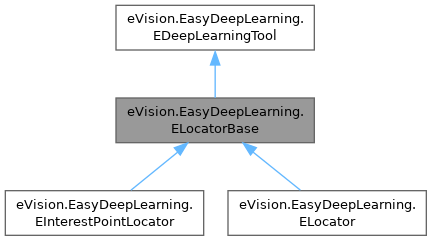
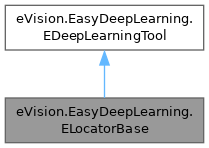
Public Member Functions | |
| None | SerializeSettings (self, eVision.ESerializer|None serializer) |
| Serializes the settings of the locator. | |
| eVision.EasyDeepLearning.ELocatorMetrics | GetTrainingMetrics (self, int iteration) |
| Training metrics at the given iteration. | |
| eVision.EasyDeepLearning.ELocatorMetrics | GetValidationMetrics (self, int iteration) |
| Validation metrics at the given iteration. | |
| None | Train (self, eVision.EasyDeepLearning.EDataset dataset) |
| Trains the eVision.EasyDeepLearning.ELocatorBase with the given dataset for the specified number of iterations. | |
| None | Train (self, eVision.EasyDeepLearning.EDataset dataset, eVision.EasyDeepLearning.EDataAugmentation dataAugmentation) |
| Trains the eVision.EasyDeepLearning.ELocatorBase with the given dataset for the specified number of iterations. | |
| None | Train (self, eVision.EasyDeepLearning.EDataset trainingDataset, eVision.EasyDeepLearning.EDataset validationDataset) |
| Trains the eVision.EasyDeepLearning.ELocatorBase with the given dataset for the specified number of iterations. | |
| None | Train (self, eVision.EasyDeepLearning.EDataset trainingDataset, eVision.EasyDeepLearning.EDataset validationDataset, eVision.EasyDeepLearning.EDataAugmentation dataAugmentation) |
| Trains the eVision.EasyDeepLearning.ELocatorBase with the given dataset for the specified number of iterations. | |
| None | Train (self, eVision.EasyDeepLearning.EDataset dataset, int iterations) |
| Trains the eVision.EasyDeepLearning.ELocatorBase with the given dataset for the specified number of iterations. | |
| None | Train (self, eVision.EasyDeepLearning.EDataset dataset, eVision.EasyDeepLearning.EDataAugmentation dataAugmentation, int iterations) |
| Trains the eVision.EasyDeepLearning.ELocatorBase with the given dataset for the specified number of iterations. | |
| None | Train (self, eVision.EasyDeepLearning.EDataset trainingDataset, eVision.EasyDeepLearning.EDataset validationDataset, int iterations) |
| Trains the eVision.EasyDeepLearning.ELocatorBase with the given dataset for the specified number of iterations. | |
| None | Train (self, eVision.EasyDeepLearning.EDataset trainingDataset, eVision.EasyDeepLearning.EDataset validationDataset, eVision.EasyDeepLearning.EDataAugmentation dataAugmentation, int iterations) |
| Trains the eVision.EasyDeepLearning.ELocatorBase with the given dataset for the specified number of iterations. | |
| eVision.EasyDeepLearning.ELocatorResult | Apply (self, eVision.EBaseROI img) |
| Applies the tool on the given image and its mask region. | |
| eVision.EasyDeepLearning.ELocatorResult | Apply (self, eVision.EBaseROI img, eVision.ERegion mask) |
| Applies the tool on the given image and its mask region. | |
| eVision.EasyDeepLearning.ELocatorResult | Apply (self, eVision.EBaseROI img, eVision.EFrame frame) |
| Applies the tool on the given image and its mask region. | |
| eVision.EasyDeepLearning.ELocatorResult | Apply (self, eVision.EBaseROI img, eVision.EFrame frame, eVision.ERegion mask) |
| Applies the tool on the given image and its mask region. | |
| list[eVision._eVision.EasyDeepLearning.ELocatorResult] | Apply (self, list[eVision._eVision.EBaseROI|None] imgs) |
| Applies the tool on the given image and its mask region. | |
| list[eVision._eVision.EasyDeepLearning.ELocatorResult] | Apply (self, list[eVision._eVision.EBaseROI|None] imgs, list[eVision._eVision.ERegion] masks) |
| Applies the tool on the given image and its mask region. | |
| eVision.EasyDeepLearning.ELocatorMetrics | Evaluate (self, eVision.EasyDeepLearning.EDataset dataset) |
| Evaluates the dataset. | |
| bool | HasFeature (self, eVision.EasyDeepLearning.ELocatorFeature feature) |
| Whether the given feature is enabled. | |
| eVision.EasyDeepLearning.ELocatorCapacity | Capacity (self) |
| Capacity of the eVision.EasyDeepLearning.ELocatorBase. | |
| Capacity (self, eVision.EasyDeepLearning.ELocatorCapacity value) | |
| Capacity of the eVision.EasyDeepLearning.ELocatorBase. | |
| int | Width (self) |
| Width of input images. | |
| Width (self, int value) | |
| Width of input images. | |
| int | Height (self) |
| Height of input images. | |
| Height (self, int value) | |
| Height of input images. | |
| int | Channels (self) |
| Number of channels of input images. | |
| Channels (self, int value) | |
| Number of channels of input images. | |
| list[eVision._eVision.ESize] | PredictionAnchors (self) |
| Prediction anchors. | |
| PredictionAnchors (self, list[eVision._eVision.ESize] value) | |
| Prediction anchors. | |
| float | DetectionThreshold (self) |
| Detection threshold. | |
| DetectionThreshold (self, float value) | |
| Detection threshold. | |
| int | MaxNumberOfObjects (self) |
| Maximum number of objects in an image (default value: 100). | |
| MaxNumberOfObjects (self, int value) | |
| Maximum number of objects in an image (default value: 100). | |
| float | SameLabelMaxObjectProximity (self) |
| Maximum proximity between two predicted objects with the same label. | |
| SameLabelMaxObjectProximity (self, float value) | |
| Maximum proximity between two predicted objects with the same label. | |
| float | AbsoluteMaxObjectProximity (self) |
| Maximum proximity between two predicted objects regardless of their label. | |
| AbsoluteMaxObjectProximity (self, float value) | |
| Maximum proximity between two predicted objects regardless of their label. | |
| int | LocatorFeatures (self) |
| The features supported by the locator. | |
| Public Member Functions inherited from eVision.EasyDeepLearning.EDeepLearningTool | |
| None | Load (self, str filePath) |
| Loads a deep learning tool. | |
| None | Load (self, eVision.ESerializer|None serializer) |
| Loads a deep learning tool. | |
| eVision.EasyDeepLearning.EDeepLearningTool|None | Clone (self) |
| Clones this tool. | |
| None | Save (self, str filePath, bool includeTrainingModel) |
| Saves the settings, inference and training model of the deep learning tool. | |
| None | Save (self, str filePath) |
| Saves the settings, inference and training model of the deep learning tool. | |
| None | Save (self, eVision.ESerializer|None serializer, bool includeTrainingModel) |
| Saves the settings, inference and training model of the deep learning tool. | |
| None | Save (self, eVision.ESerializer|None serializer) |
| Saves the settings, inference and training model of the deep learning tool. | |
| None | SerializeInferenceModel (self, eVision.ESerializer|None serializer) |
| Serializes the inference model of the tool. | |
| None | SerializeTrainingModel (self, eVision.ESerializer|None serializer) |
| Serializes the training model of the tool. | |
| None | SaveSettings (self, str filePath) |
| Saves the settings of the tool to a file. | |
| None | SaveInferenceModel (self, str filePath) |
| Saves the tool's inference model to a file. | |
| None | SaveTrainingModel (self, str filePath) |
| Saves the tool's training model to a file. | |
| None | LoadSettings (self, str filePath) |
| Loads the settings of a tool. | |
| None | LoadInferenceModel (self, str filePath) |
| Loads the tool's inference model. | |
| None | LoadTrainingModel (self, str filePath) |
| Loads the tool's training model. | |
| None | UnloadInferenceModel (self) |
| Unloads the inference model. | |
| None | UnloadTrainingModel (self) |
| Unloads the training model. | |
| None | UnloadModels (self) |
| Unloads the inference and training model. | |
| bool | HasInferenceModel (self) |
| Whether the inference model is loaded or created when the tool is not yet trained. | |
| bool | HasTrainingModel (self) |
| Whether the training model is loaded or created when the tool is not yet trained. | |
| bool | IsTrained (self) |
| Tells whether the deep learning tool has been trained. | |
| str | GetAvailableDeviceName (self, int i) |
| Name of the i-th device of the current engine. | |
| eVision.EasyDeepLearning.EDeepLearningDevice | GetAvailableDevice (self, int i) |
| i-th eVision.EasyDeepLearning.EDeepLearningDevice of the current engine. | |
| None | SetActiveDevice (self, eVision.EasyDeepLearning.EDeepLearningDevice device) |
| Sets the device with which to run or train the model. | |
| eVision.EasyDeepLearning.EDeepLearningDevice | GetActiveDevice (self, int i) |
| Gets the active device. | |
| eVision.EasyDeepLearning.EDeepLearningDevice | GetActiveDevice (self) |
| Gets the active device. | |
| bool | HasEngineSetupData (self) |
| Whether the inference model has engine setup data. | |
| None | ClearEngineSetupData (self) |
| Clears the engine data saved in the inference model. | |
| bool | IsTraining (self) |
| Indicates whether the object is currently training. | |
| int | WaitForTrainingCompletion (self, int timeout) |
| Waits until the training is complete or the timeout is expired. | |
| int | WaitForTrainingCompletion (self) |
| Waits until the training is complete or the timeout is expired. | |
| int | WaitForIterationCompletion (self) |
| Waits until an iteration is complete. | |
| int | StopTraining (self, bool wait) |
| Stops training and returns the last completed iteration. | |
| None | SetLearningRate (self, eVision.EasyDeepLearning.EDeepLearningLearningRateType type, list[float] parameters) |
| Specifies how the value of the learning rate and how it evolves during training. | |
| None | InitializeInference (self, int width, int height, eVision.EImageType imageType, int numImages) |
| Initializes the neural network for inference (i.e. | |
| None | InitializeInference (self, eVision.EBaseROI img) |
| Initializes the neural network for inference (i.e. | |
| None | InitializeInference (self, list[eVision._eVision.EBaseROI|None] imgList) |
| Initializes the neural network for inference (i.e. | |
| str | GetLabel (self, int index) |
| Gets the label from its index. | |
| None | SetLabel (self, int index, str label) |
| Changes a label predicted by the tool. | |
| None | SetLabelWeight (self, int index, float weight) |
| Sets the label weight. | |
| float | GetLabelWeight (self, int index) |
| Gets the label weight. | |
| None | SetLabelColor (self, int index, eVision.ERGBColor c) |
| Changes a label color. | |
| eVision.ERGBColor | GetLabelColor (self, int index) |
| Label color. | |
| None | SetLabelOpacity (self, int index, int opacity) |
| Changes a label opacity (between 0 for fully transparent and 255 for opaque color). | |
| int | GetLabelOpacity (self, int index) |
| Gets the label opacity (between 0 for fully transparent and 255 for opaque color). | |
| int | GetOptimalNumImagesForBatchSize (self, eVision.EBaseROI sampleImage) |
| Optimal number of images to process together for inference given the batch size and eVision.EasyDeepLearning.EDeepLearningTool.GetNumPatchesForImage. | |
| int | GetOptimalNumImagesForBatchSize (self, int imageWidth, int imageHeight) |
| Optimal number of images to process together for inference given the batch size and eVision.EasyDeepLearning.EDeepLearningTool.GetNumPatchesForImage. | |
| int | GetNumPatchesForImage (self, eVision.EBaseROI sampleImage) |
| Number of patches that will be extracted from an input image to perform inference. | |
| int | GetNumPatchesForImage (self, int imageWidth, int imageHeight) |
| Number of patches that will be extracted from an input image to perform inference. | |
| None | Clean (self) |
| Reset the engine and clean CPU and GPU memory allocated for running the model. | |
| eVision.EasyDeepLearning.EDeepLearningToolType | ToolType (self) |
| Type of the deep learning tool. | |
| bool | EnableGPU (self) |
| Enable the use of a GPU for training and inference of the deep learning tool. | |
| EnableGPU (self, bool value) | |
| Enable the use of a GPU for training and inference of the deep learning tool. | |
| list[int] | GPUIndexes (self) |
| Indexes of the GPUs to use for computations. | |
| GPUIndexes (self, list[int] value) | |
| Indexes of the GPUs to use for computations. | |
| int | NumGPUs (self) |
| Number of detected NVIDIA GPU. | |
| str | Engine (self) |
| Sets the engine with which to execute or train the neural network. | |
| Engine (self, str value) | |
| Sets the engine with which to execute or train the neural network. | |
| eVision.EasyDeepLearning.EDeepLearningInferencePrecision | InferencePrecision (self) |
| Inference precision. | |
| InferencePrecision (self, eVision.EasyDeepLearning.EDeepLearningInferencePrecision value) | |
| Inference precision. | |
| int | NumAvailableDevices (self) |
| Available devices for the current eVision.EasyDeepLearning.EDeepLearningTool.Engine. | |
| list[eVision._eVision.EasyDeepLearning.EDeepLearningDevice] | AvailableDevices (self) |
| Get all available device for the current engine. | |
| int | NumActiveDevices (self) |
| Gets the number of devices with which to run or train the model. | |
| list[eVision._eVision.EasyDeepLearning.EDeepLearningDevice] | ActiveDevices (self) |
| Devices with which to run or train the model. | |
| ActiveDevices (self, list[eVision._eVision.EasyDeepLearning.EDeepLearningDevice] value) | |
| Devices with which to run or train the model. | |
| eVision.EasyDeepLearning.EDeepLearningExecutionSettings | ExecutionSettings (self) |
| Execution settings of the tool (engine, device(s), inference precision, batch size settings). | |
| ExecutionSettings (self, eVision.EasyDeepLearning.EDeepLearningExecutionSettings value) | |
| Execution settings of the tool (engine, device(s), inference precision, batch size settings). | |
| eVision.EasyDeepLearning.EDeepLearningDevice | EngineSetupDataDevice (self) |
| Device corresponding to the engine data contained in the tool. | |
| eVision.EasyDeepLearning.EDeepLearningInferencePrecision | EngineSetupDataInferencePrecision (self) |
| Inference precision corresponding to the engine data contained in the tool. | |
| int | EngineSetupDataBatchSize (self) |
| Batch size corresponding to the engine data contained in the tool. | |
| bool | OptimizeBatchSize (self) |
| Indicates whether to optimize the batch size (see eVision.EasyDeepLearning.EDeepLearningTool.BatchSize) to maximize the training and inference speed according to the engine, the device and the available memory. | |
| OptimizeBatchSize (self, bool value) | |
| Indicates whether to optimize the batch size (see eVision.EasyDeepLearning.EDeepLearningTool.BatchSize) to maximize the training and inference speed according to the engine, the device and the available memory. | |
| int | BatchSizeForMaximumInferenceSpeed (self) |
| Computes the batch size that will maximize the inference speed on NVIDIA GPU. | |
| int | BatchSize (self) |
| Batch size. | |
| BatchSize (self, int value) | |
| Batch size. | |
| float | CurrentTrainingProgression (self) |
| Current training progression as a percentage (between 0 and 1). | |
| int | CurrentTrainingFinishedIterations (self) |
| Number of iterations that are already finished in the current training. | |
| int | CurrentTrainingNumIterations (self) |
| Total number of training iterations that will be performed during the current training of the deep learning tool. | |
| int | NumTrainedIterations (self) |
| Number of iterations that were performed to train this deep learning tool. | |
| int | BestIteration (self) |
| Iteration at which the minimum validation error was reached. | |
| int | ImageCacheSize (self) |
| Size in byte of the image cache. | |
| ImageCacheSize (self, int value) | |
| Size in byte of the image cache. | |
| str | Path (self) |
| Path of the tool when loaded or saved using eVision.EasyDeepLearning.EDeepLearningTool.Save or eVision.EasyDeepLearning.EDeepLearningTool.Load. | |
| str | InferenceModelPath (self) |
| Path of the inference model when loaded or saved using eVision.EasyDeepLearning.EDeepLearningTool.SaveInferenceModel, eVision.EasyDeepLearning.EDeepLearningTool.LoadInferenceModel or eVision.EasyDeepLearning.EDeepLearningTool.SerializeInferenceModel. | |
| str | TrainingModelPath (self) |
| Path of the training model when loaded or saved using eVision.EasyDeepLearning.EDeepLearningTool.SaveTrainingModel, eVision.EasyDeepLearning.EDeepLearningTool.LoadTrainingModel or eVision.EasyDeepLearning.EDeepLearningTool.SerializeTrainingModel. | |
| str | SettingsPath (self) |
| Path of the settings when loaded or saved using eVision.EasyDeepLearning.EDeepLearningTool.SaveSettings, eVision.EasyDeepLearning.EDeepLearningTool.LoadSettings or eVision.EasyDeepLearning.EDeepLearningTool.SerializeSettings. | |
| int | AutoSavePeriod (self) |
| Auto-save period. | |
| AutoSavePeriod (self, int value) | |
| Auto-save period. | |
| eVision.EasyDeepLearning.EDeepLearningLearningRateType | LearningRateType (self) |
| Learning rate type. | |
| list[float] | LearningRateParameters (self) |
| Parameters of the learning rate. | |
| bool | EnableDeterministicTraining (self) |
| Whether to use deterministic training algorithm that allows to repeatable training results. | |
| EnableDeterministicTraining (self, bool value) | |
| Whether to use deterministic training algorithm that allows to repeatable training results. | |
| int | DeterministicTrainingRandomSeed (self) |
| Random seed to use when eVision.EasyDeepLearning.EDeepLearningTool.EnableDeterministicTraining is set to true. | |
| DeterministicTrainingRandomSeed (self, int value) | |
| Random seed to use when eVision.EasyDeepLearning.EDeepLearningTool.EnableDeterministicTraining is set to true. | |
| int | NumLabels (self) |
| Number of labels of this tool. | |
Additional Inherited Members | |
| Static Public Member Functions inherited from eVision.EasyDeepLearning.EDeepLearningTool | |
| eVision.EasyDeepLearning.EDeepLearningTool|None | Create (str path) |
| Factory method to open a deep learning tool. | |
| eVision.EasyDeepLearning.EDeepLearningTool|None | Create (eVision.ESerializer|None serializer) |
| Factory method to open a deep learning tool. | |
| eVision.EasyDeepLearning.EDeepLearningTool|None | Create (eVision.EasyDeepLearning.EDeepLearningToolType type) |
| Factory method to open a deep learning tool. | |
| int | GetNumAvailableEngines () |
| Number of available engines. | |
| str | GetAvailableEngineName (int id) |
| Gets the name of the engine given its id. | |
| list[str] | GetAvailableEngines () |
| Available engines. | |
| list[eVision._eVision.EasyDeepLearning.EDeepLearningDevice] | GetAvailableDevicesForEngine (str engine) |
| Available devices for the specified engine. | |
| Protected Member Functions inherited from eVision.EasyDeepLearning.EDeepLearningTool | |
| _ActiveDeviceByName__setter (self, str value) | |
| Sets the device with which to run the model using its name. | |
| _ActiveDeviceById__setter (self, int value) | |
| Sets the device with which to run the model using its index in the list returned by eVision.EasyDeepLearning.EDeepLearningTool.AvailableDevices. | |
| _ActiveDevicesById__setter (self, list[int] value) | |
| Sets the devices with which to run the model using their index in the list returned by eVision.EasyDeepLearning.EDeepLearningTool.AvailableDevices. | |
| Properties inherited from eVision.EasyDeepLearning.EDeepLearningTool | |
| ActiveDeviceByName | |
| ActiveDeviceById | |
| ActiveDevicesById | |
Base class for EasyLocate tool.
The children classes of this class differs by their prediction features (eVision.EasyDeepLearning.ELocatorFeature). The ground truth objects used to train must have the same set of features as the prediction.
Remarks:
License(s): EasyLocate or EasyLocateInference
| float eVision.EasyDeepLearning.ELocatorBase.AbsoluteMaxObjectProximity | ( | self | ) |
Maximum proximity between two predicted objects regardless of their label.
The value of the parameter can be between
A low value will reduce the amount of falsely detected objects but may increase the number of missed objects. A high value will increase the number of falsely detected objects and reduce the number of missed objects.
See also eVision.EasyDeepLearning.ELocator.AbsoluteMaxOverlap and eVision.EasyDeepLearning.EInterestPointLocator.AbsoluteMinDistance. Default value: 1.
Remarks:
This parameter can be changed before and after training.
| eVision.EasyDeepLearning.ELocatorBase.AbsoluteMaxObjectProximity | ( | self, | |
| float | value ) |
Maximum proximity between two predicted objects regardless of their label.
The value of the parameter can be between
A low value will reduce the amount of falsely detected objects but may increase the number of missed objects. A high value will increase the number of falsely detected objects and reduce the number of missed objects.
See also eVision.EasyDeepLearning.ELocator.AbsoluteMaxOverlap and eVision.EasyDeepLearning.EInterestPointLocator.AbsoluteMinDistance. Default value: 1.
Remarks:
This parameter can be changed before and after training.
| eVision.EasyDeepLearning.ELocatorResult eVision.EasyDeepLearning.ELocatorBase.Apply | ( | self, | |
| eVision.EBaseROI | img ) |
Applies the tool on the given image and its mask region.
| img | Image. |
| eVision.EasyDeepLearning.ELocatorResult eVision.EasyDeepLearning.ELocatorBase.Apply | ( | self, | |
| eVision.EBaseROI | img, | ||
| eVision.EFrame | frame ) |
Applies the tool on the given image and its mask region.
| img | Image. |
| frame | Frame of reference in which the region was defined |
| eVision.EasyDeepLearning.ELocatorResult eVision.EasyDeepLearning.ELocatorBase.Apply | ( | self, | |
| eVision.EBaseROI | img, | ||
| eVision.EFrame | frame, | ||
| eVision.ERegion | mask ) |
Applies the tool on the given image and its mask region.
| img | Image. |
| frame | Frame of reference in which the region was defined |
| mask | Mask region of the image. |
| eVision.EasyDeepLearning.ELocatorResult eVision.EasyDeepLearning.ELocatorBase.Apply | ( | self, | |
| eVision.EBaseROI | img, | ||
| eVision.ERegion | mask ) |
Applies the tool on the given image and its mask region.
| img | Image. |
| mask | Mask region of the image. |
| list[eVision._eVision.EasyDeepLearning.ELocatorResult] eVision.EasyDeepLearning.ELocatorBase.Apply | ( | self, | |
| list[eVision._eVision.EBaseROI | None] | imgs ) |
Applies the tool on the given image and its mask region.
| imgs | Vector of images. |
| list[eVision._eVision.EasyDeepLearning.ELocatorResult] eVision.EasyDeepLearning.ELocatorBase.Apply | ( | self, | |
| list[eVision._eVision.EBaseROI | None] | imgs, | ||
| list[eVision._eVision.ERegion] | masks ) |
Applies the tool on the given image and its mask region.
| imgs | Vector of images. |
| masks | Vector of mask regions for the images. |
| eVision.EasyDeepLearning.ELocatorCapacity eVision.EasyDeepLearning.ELocatorBase.Capacity | ( | self | ) |
Capacity of the eVision.EasyDeepLearning.ELocatorBase.
A higher capacity makes the supervised segmenter capable of learning more information at the cost of a slower processing speed.
| eVision.EasyDeepLearning.ELocatorBase.Capacity | ( | self, | |
| eVision.EasyDeepLearning.ELocatorCapacity | value ) |
Capacity of the eVision.EasyDeepLearning.ELocatorBase.
A higher capacity makes the supervised segmenter capable of learning more information at the cost of a slower processing speed.
| int eVision.EasyDeepLearning.ELocatorBase.Channels | ( | self | ) |
Number of channels of input images.
It can either be 1 for grayscale images or 3 for color images.
Remarks:
If the locator tool is not trained or the value was not explicitly set, its value will be 0.
| eVision.EasyDeepLearning.ELocatorBase.Channels | ( | self, | |
| int | value ) |
Number of channels of input images.
It can either be 1 for grayscale images or 3 for color images.
Remarks:
If the locator tool is not trained or the value was not explicitly set, its value will be 0.
| float eVision.EasyDeepLearning.ELocatorBase.DetectionThreshold | ( | self | ) |
Detection threshold.
The detection threshold is set automatically during training to maximize accuracy. It can also be changed after training to obtain a different true positive/false positive tradeoff.
| eVision.EasyDeepLearning.ELocatorBase.DetectionThreshold | ( | self, | |
| float | value ) |
Detection threshold.
The detection threshold is set automatically during training to maximize accuracy. It can also be changed after training to obtain a different true positive/false positive tradeoff.
| eVision.EasyDeepLearning.ELocatorMetrics eVision.EasyDeepLearning.ELocatorBase.Evaluate | ( | self, | |
| eVision.EasyDeepLearning.EDataset | dataset ) |
Evaluates the dataset.
Remarks:
License(s): EasyLocate
| dataset | Dataset to evaluate |
| eVision.EasyDeepLearning.ELocatorMetrics eVision.EasyDeepLearning.ELocatorBase.GetTrainingMetrics | ( | self, | |
| int | iteration ) |
Training metrics at the given iteration.
| iteration | Iteration at which to get the metrics |
| eVision.EasyDeepLearning.ELocatorMetrics eVision.EasyDeepLearning.ELocatorBase.GetValidationMetrics | ( | self, | |
| int | iteration ) |
Validation metrics at the given iteration.
| iteration | Iteration at which to get the metrics |
| bool eVision.EasyDeepLearning.ELocatorBase.HasFeature | ( | self, | |
| eVision.EasyDeepLearning.ELocatorFeature | feature ) |
Whether the given feature is enabled.
| feature | The feature to check |
| int eVision.EasyDeepLearning.ELocatorBase.Height | ( | self | ) |
Height of input images.
Remarks:
If the locator tool is not trained or the value was not explicitly set, its value will be 0.
| eVision.EasyDeepLearning.ELocatorBase.Height | ( | self, | |
| int | value ) |
Height of input images.
Remarks:
If the locator tool is not trained or the value was not explicitly set, its value will be 0.
| int eVision.EasyDeepLearning.ELocatorBase.LocatorFeatures | ( | self | ) |
The features supported by the locator.
| int eVision.EasyDeepLearning.ELocatorBase.MaxNumberOfObjects | ( | self | ) |
Maximum number of objects in an image (default value: 100).
Remarks:
The value of this parameter will be automatically changed when training if it is lower than the maximum number of objects in an image from the training dataset.
This parameter can be changed before and after training.
| eVision.EasyDeepLearning.ELocatorBase.MaxNumberOfObjects | ( | self, | |
| int | value ) |
Maximum number of objects in an image (default value: 100).
Remarks:
The value of this parameter will be automatically changed when training if it is lower than the maximum number of objects in an image from the training dataset.
This parameter can be changed before and after training.
| list[eVision._eVision.ESize] eVision.EasyDeepLearning.ELocatorBase.PredictionAnchors | ( | self | ) |
Prediction anchors.
The prediction anchors are a set of object bounding box sizes. Each anchor is used to detect objects with a size similar to that anchor. As such, the prediction anchors must reflect the variety of sizes of objects that must be detected.
| eVision.EasyDeepLearning.ELocatorBase.PredictionAnchors | ( | self, | |
| list[eVision._eVision.ESize] | value ) |
Prediction anchors.
The prediction anchors are a set of object bounding box sizes. Each anchor is used to detect objects with a size similar to that anchor. As such, the prediction anchors must reflect the variety of sizes of objects that must be detected.
| float eVision.EasyDeepLearning.ELocatorBase.SameLabelMaxObjectProximity | ( | self | ) |
Maximum proximity between two predicted objects with the same label.
The value of the parameter can be between
A low value will reduce the amount of falsely detected objects but may increase the number of missed objects. A high value will increase the number of falsely detected objects and reduce the number of missed objects.
See also eVision.EasyDeepLearning.ELocator.SameLabelMaxOverlap and eVision.EasyDeepLearning.EInterestPointLocator.SameLabelMinDistance. Default value: 0.5
Remarks:
This parameter is also used to compute the matching between ground truth and predicted objects during evaluation.
This parameter can be changed before and after training.
| eVision.EasyDeepLearning.ELocatorBase.SameLabelMaxObjectProximity | ( | self, | |
| float | value ) |
Maximum proximity between two predicted objects with the same label.
The value of the parameter can be between
A low value will reduce the amount of falsely detected objects but may increase the number of missed objects. A high value will increase the number of falsely detected objects and reduce the number of missed objects.
See also eVision.EasyDeepLearning.ELocator.SameLabelMaxOverlap and eVision.EasyDeepLearning.EInterestPointLocator.SameLabelMinDistance. Default value: 0.5
Remarks:
This parameter is also used to compute the matching between ground truth and predicted objects during evaluation.
This parameter can be changed before and after training.
| None eVision.EasyDeepLearning.ELocatorBase.SerializeSettings | ( | self, | |
| eVision.ESerializer | None | serializer ) |
Serializes the settings of the locator.
| serializer | Pointer to eVision.ESerializer |
Reimplemented from eVision.EasyDeepLearning.EDeepLearningTool.
Reimplemented in eVision.EasyDeepLearning.EInterestPointLocator, and eVision.EasyDeepLearning.ELocator.
| None eVision.EasyDeepLearning.ELocatorBase.Train | ( | self, | |
| eVision.EasyDeepLearning.EDataset | dataset ) |
Trains the eVision.EasyDeepLearning.ELocatorBase with the given dataset for the specified number of iterations.
At the end of the training, the deep learning tool is in the state it was at the iteration that gave the minimum validation error. See eVision.EasyDeepLearning.EDeepLearningTool.BestIteration.
If no iterations is given, the training will stop automatically.
Remarks:
License(s): EasyLocate
| dataset | eVision.EasyDeepLearning.EDataset with which to train and validate the deep learning tool |
| None eVision.EasyDeepLearning.ELocatorBase.Train | ( | self, | |
| eVision.EasyDeepLearning.EDataset | dataset, | ||
| eVision.EasyDeepLearning.EDataAugmentation | dataAugmentation ) |
Trains the eVision.EasyDeepLearning.ELocatorBase with the given dataset for the specified number of iterations.
At the end of the training, the deep learning tool is in the state it was at the iteration that gave the minimum validation error. See eVision.EasyDeepLearning.EDeepLearningTool.BestIteration.
If no iterations is given, the training will stop automatically.
Remarks:
License(s): EasyLocate
| dataset | eVision.EasyDeepLearning.EDataset with which to train and validate the deep learning tool |
| dataAugmentation | Data augmentation to use during training |
| None eVision.EasyDeepLearning.ELocatorBase.Train | ( | self, | |
| eVision.EasyDeepLearning.EDataset | dataset, | ||
| eVision.EasyDeepLearning.EDataAugmentation | dataAugmentation, | ||
| int | iterations ) |
Trains the eVision.EasyDeepLearning.ELocatorBase with the given dataset for the specified number of iterations.
At the end of the training, the deep learning tool is in the state it was at the iteration that gave the minimum validation error. See eVision.EasyDeepLearning.EDeepLearningTool.BestIteration.
If no iterations is given, the training will stop automatically.
Remarks:
License(s): EasyLocate
| dataset | eVision.EasyDeepLearning.EDataset with which to train and validate the deep learning tool |
| dataAugmentation | Data augmentation to use during training |
| iterations | Number of iterations for training. |
| None eVision.EasyDeepLearning.ELocatorBase.Train | ( | self, | |
| eVision.EasyDeepLearning.EDataset | dataset, | ||
| int | iterations ) |
Trains the eVision.EasyDeepLearning.ELocatorBase with the given dataset for the specified number of iterations.
At the end of the training, the deep learning tool is in the state it was at the iteration that gave the minimum validation error. See eVision.EasyDeepLearning.EDeepLearningTool.BestIteration.
If no iterations is given, the training will stop automatically.
Remarks:
License(s): EasyLocate
| dataset | eVision.EasyDeepLearning.EDataset with which to train and validate the deep learning tool |
| iterations | Number of iterations for training. |
| None eVision.EasyDeepLearning.ELocatorBase.Train | ( | self, | |
| eVision.EasyDeepLearning.EDataset | trainingDataset, | ||
| eVision.EasyDeepLearning.EDataset | validationDataset ) |
Trains the eVision.EasyDeepLearning.ELocatorBase with the given dataset for the specified number of iterations.
At the end of the training, the deep learning tool is in the state it was at the iteration that gave the minimum validation error. See eVision.EasyDeepLearning.EDeepLearningTool.BestIteration.
If no iterations is given, the training will stop automatically.
Remarks:
License(s): EasyLocate
| trainingDataset | eVision.EasyDeepLearning.EDataset with which to train the deep learning tool |
| validationDataset | eVision.EasyDeepLearning.EDataset with which to validate the deep learning tool |
| None eVision.EasyDeepLearning.ELocatorBase.Train | ( | self, | |
| eVision.EasyDeepLearning.EDataset | trainingDataset, | ||
| eVision.EasyDeepLearning.EDataset | validationDataset, | ||
| eVision.EasyDeepLearning.EDataAugmentation | dataAugmentation ) |
Trains the eVision.EasyDeepLearning.ELocatorBase with the given dataset for the specified number of iterations.
At the end of the training, the deep learning tool is in the state it was at the iteration that gave the minimum validation error. See eVision.EasyDeepLearning.EDeepLearningTool.BestIteration.
If no iterations is given, the training will stop automatically.
Remarks:
License(s): EasyLocate
| trainingDataset | eVision.EasyDeepLearning.EDataset with which to train the deep learning tool |
| validationDataset | eVision.EasyDeepLearning.EDataset with which to validate the deep learning tool |
| dataAugmentation | Data augmentation to use during training |
| None eVision.EasyDeepLearning.ELocatorBase.Train | ( | self, | |
| eVision.EasyDeepLearning.EDataset | trainingDataset, | ||
| eVision.EasyDeepLearning.EDataset | validationDataset, | ||
| eVision.EasyDeepLearning.EDataAugmentation | dataAugmentation, | ||
| int | iterations ) |
Trains the eVision.EasyDeepLearning.ELocatorBase with the given dataset for the specified number of iterations.
At the end of the training, the deep learning tool is in the state it was at the iteration that gave the minimum validation error. See eVision.EasyDeepLearning.EDeepLearningTool.BestIteration.
If no iterations is given, the training will stop automatically.
Remarks:
License(s): EasyLocate
| trainingDataset | eVision.EasyDeepLearning.EDataset with which to train the deep learning tool |
| validationDataset | eVision.EasyDeepLearning.EDataset with which to validate the deep learning tool |
| dataAugmentation | Data augmentation to use during training |
| iterations | Number of iterations for training. |
| None eVision.EasyDeepLearning.ELocatorBase.Train | ( | self, | |
| eVision.EasyDeepLearning.EDataset | trainingDataset, | ||
| eVision.EasyDeepLearning.EDataset | validationDataset, | ||
| int | iterations ) |
Trains the eVision.EasyDeepLearning.ELocatorBase with the given dataset for the specified number of iterations.
At the end of the training, the deep learning tool is in the state it was at the iteration that gave the minimum validation error. See eVision.EasyDeepLearning.EDeepLearningTool.BestIteration.
If no iterations is given, the training will stop automatically.
Remarks:
License(s): EasyLocate
| trainingDataset | eVision.EasyDeepLearning.EDataset with which to train the deep learning tool |
| validationDataset | eVision.EasyDeepLearning.EDataset with which to validate the deep learning tool |
| iterations | Number of iterations for training. |
| int eVision.EasyDeepLearning.ELocatorBase.Width | ( | self | ) |
Width of input images.
Remarks:
If the locator tool is not trained or the value was not explicitly set, its value will be 0.
| eVision.EasyDeepLearning.ELocatorBase.Width | ( | self, | |
| int | value ) |
Width of input images.
Remarks:
If the locator tool is not trained or the value was not explicitly set, its value will be 0.
 1.17.0