 |
eVision .NET API
|
|
eVision .NET API
|
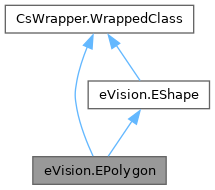
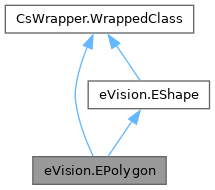
Represents a polygon. The number of vertices is arbitrary. A EPolygon could be closed (last and first point connected) or open (like a polyline shape). More...
Public Member Functions | |
| EPolygon () | |
| Constructs a EPolygon. | |
| EPolygon (eVision.EPolygon other) | |
| Constructs a EPolygon. | |
| EPolygon (eVision.EPoint[] vertices, bool closed) | |
| Constructs a EPolygon. | |
| EPolygon (eVision.EPoint[] vertices) | |
| Constructs a EPolygon. | |
| void | CopyTo (eVision.EPolygon other) |
| Copies the content of this object to the other one. | |
| void | AppendVertex (eVision.EPoint pt) |
| Appends a polygon vertex after the last. | |
| void | InsertVertex (int index, eVision.EPoint pt) |
| Inserts a vertex before the given index. | |
| void | RemoveVertex (int index) |
| Removes vertex at the given index. | |
| void | SetVertex (int index, eVision.EPoint pt) |
| Sets a polygon vertex. | |
| eVision.EPoint | GetVertex (int index) |
| Gets a polygon vertex. | |
| bool | IsValid () |
| Returns true if the polygon is valid. A valid polygon has at least 2 (when open) or 3 (when closed) distinct and valid vertices and no duplicate points. | |
| float | GetEdgeLength (int index) |
| Length of an edge. | |
| float | GetEdgeAngle (int index) |
| Angle of the edge with respect to the X-axis. | |
| eVision.ELine | GetEdge (int index) |
| Edge of the polygon as a ELine object. | |
| eVision.EEditionMode | AddVertexAtDisplayPosition (int x, int y, eVision.EFrame frame, float zoomX, float zoomY, float panX, float panY) |
| Adds a vertex at the given mouse position such that the new vertex splits the edge that it is the closest to. | |
| eVision.EEditionMode | AddVertexAtDisplayPosition (int x, int y, eVision.EFrame frame, float zoomX, float zoomY, float panX) |
| Adds a vertex at the given mouse position such that the new vertex splits the edge that it is the closest to. | |
| eVision.EEditionMode | AddVertexAtDisplayPosition (int x, int y, eVision.EFrame frame, float zoomX, float zoomY) |
| Adds a vertex at the given mouse position such that the new vertex splits the edge that it is the closest to. | |
| eVision.EEditionMode | AddVertexAtDisplayPosition (int x, int y, eVision.EFrame frame, float zoomX) |
| Adds a vertex at the given mouse position such that the new vertex splits the edge that it is the closest to. | |
| eVision.EEditionMode | AddVertexAtDisplayPosition (int x, int y, eVision.EFrame frame) |
| Adds a vertex at the given mouse position such that the new vertex splits the edge that it is the closest to. | |
| eVision.EEditionMode | AddVertexAtDisplayPosition (int x, int y, float zoomX, float zoomY, float panX, float panY) |
| Adds a vertex at the given mouse position such that the new vertex splits the edge that it is the closest to. | |
| eVision.EEditionMode | AddVertexAtDisplayPosition (int x, int y, float zoomX, float zoomY, float panX) |
| Adds a vertex at the given mouse position such that the new vertex splits the edge that it is the closest to. | |
| eVision.EEditionMode | AddVertexAtDisplayPosition (int x, int y, float zoomX, float zoomY) |
| Adds a vertex at the given mouse position such that the new vertex splits the edge that it is the closest to. | |
| eVision.EEditionMode | AddVertexAtDisplayPosition (int x, int y, float zoomX) |
| Adds a vertex at the given mouse position such that the new vertex splits the edge that it is the closest to. | |
| eVision.EEditionMode | AddVertexAtDisplayPosition (int x, int y) |
| Adds a vertex at the given mouse position such that the new vertex splits the edge that it is the closest to. | |
| void | RemoveVertexAtDisplayPosition (int x, int y, eVision.EFrame frame, float zoomX, float zoomY, float panX, float panY) |
| Removes the vertex at the given position or the vertex hit during the last call to EShape.HitTest. | |
| void | RemoveVertexAtDisplayPosition (int x, int y, eVision.EFrame frame, float zoomX, float zoomY, float panX) |
| Removes the vertex at the given position or the vertex hit during the last call to EShape.HitTest. | |
| void | RemoveVertexAtDisplayPosition (int x, int y, eVision.EFrame frame, float zoomX, float zoomY) |
| Removes the vertex at the given position or the vertex hit during the last call to EShape.HitTest. | |
| void | RemoveVertexAtDisplayPosition (int x, int y, eVision.EFrame frame, float zoomX) |
| Removes the vertex at the given position or the vertex hit during the last call to EShape.HitTest. | |
| void | RemoveVertexAtDisplayPosition (int x, int y, eVision.EFrame frame) |
| Removes the vertex at the given position or the vertex hit during the last call to EShape.HitTest. | |
| void | RemoveVertexAtDisplayPosition (int x, int y, float zoomX, float zoomY, float panX, float panY) |
| Removes the vertex at the given position or the vertex hit during the last call to EShape.HitTest. | |
| void | RemoveVertexAtDisplayPosition (int x, int y, float zoomX, float zoomY, float panX) |
| Removes the vertex at the given position or the vertex hit during the last call to EShape.HitTest. | |
| void | RemoveVertexAtDisplayPosition (int x, int y, float zoomX, float zoomY) |
| Removes the vertex at the given position or the vertex hit during the last call to EShape.HitTest. | |
| void | RemoveVertexAtDisplayPosition (int x, int y, float zoomX) |
| Removes the vertex at the given position or the vertex hit during the last call to EShape.HitTest. | |
| void | RemoveVertexAtDisplayPosition (int x, int y) |
| Removes the vertex at the given position or the vertex hit during the last call to EShape.HitTest. | |
| void | RemoveVertexAtDisplayPosition () |
| Removes the vertex at the given position or the vertex hit during the last call to EShape.HitTest. | |
| Public Member Functions inherited from eVision.EShape | |
| void | Load (string path) |
| Load the EShape configuration. The given ESerializer must have been created for reading. | |
| void | Load (eVision.ESerializer serializer) |
| Load the EShape configuration. The given ESerializer must have been created for reading. | |
| void | Save (string path) |
| Save the EShape configuration. The given ESerializer must have been created for writing. | |
| void | Save (eVision.ESerializer serializer) |
| Save the EShape configuration. The given ESerializer must have been created for writing. | |
| void | Draw (eVision.EDrawAdapter drawAdapter, float zoomX, float zoomY, float panX, float panY, bool drawDiagonals) |
| Draws the EShape shape. | |
| void | Draw (eVision.EDrawAdapter drawAdapter, float zoomX, float zoomY, float panX, float panY) |
| Draws the EShape shape. | |
| void | Draw (eVision.EDrawAdapter drawAdapter, float zoomX, float zoomY, float panX) |
| Draws the EShape shape. | |
| void | Draw (eVision.EDrawAdapter drawAdapter, float zoomX, float zoomY) |
| Draws the EShape shape. | |
| void | Draw (eVision.EDrawAdapter drawAdapter, float zoomX) |
| Draws the EShape shape. | |
| void | Draw (eVision.EDrawAdapter drawAdapter) |
| Draws the EShape shape. | |
| void | Draw (eVision.EDrawAdapter drawAdapter, eVision.EFrame frame, float zoomX, float zoomY, float panX, float panY, bool drawDiagonals) |
| Draws the EShape shape. | |
| void | Draw (eVision.EDrawAdapter drawAdapter, eVision.EFrame frame, float zoomX, float zoomY, float panX, float panY) |
| Draws the EShape shape. | |
| void | Draw (eVision.EDrawAdapter drawAdapter, eVision.EFrame frame, float zoomX, float zoomY, float panX) |
| Draws the EShape shape. | |
| void | Draw (eVision.EDrawAdapter drawAdapter, eVision.EFrame frame, float zoomX, float zoomY) |
| Draws the EShape shape. | |
| void | Draw (eVision.EDrawAdapter drawAdapter, eVision.EFrame frame, float zoomX) |
| Draws the EShape shape. | |
| void | Draw (eVision.EDrawAdapter drawAdapter, eVision.EFrame frame) |
| Draws the EShape shape. | |
| eVision.EEditionMode | HitTest (int x, int y, float zoomX, float zoomY, float panX, float panY) |
| Detects if the cursor is placed over one of the dragging handles. | |
| eVision.EEditionMode | HitTest (int x, int y, float zoomX, float zoomY, float panX) |
| Detects if the cursor is placed over one of the dragging handles. | |
| eVision.EEditionMode | HitTest (int x, int y, float zoomX, float zoomY) |
| Detects if the cursor is placed over one of the dragging handles. | |
| eVision.EEditionMode | HitTest (int x, int y, float zoomX) |
| Detects if the cursor is placed over one of the dragging handles. | |
| eVision.EEditionMode | HitTest (int x, int y, eVision.EFrame frame, float zoomX, float zoomY, float panX, float panY) |
| Detects if the cursor is placed over one of the dragging handles. | |
| eVision.EEditionMode | HitTest (int x, int y, eVision.EFrame frame, float zoomX, float zoomY, float panX) |
| Detects if the cursor is placed over one of the dragging handles. | |
| eVision.EEditionMode | HitTest (int x, int y, eVision.EFrame frame, float zoomX, float zoomY) |
| Detects if the cursor is placed over one of the dragging handles. | |
| eVision.EEditionMode | HitTest (int x, int y, eVision.EFrame frame, float zoomX) |
| Detects if the cursor is placed over one of the dragging handles. | |
| void | Drag (int x, int y, float zoomX, float zoomY, float panX, float panY) |
| Moves the specified handle to a new position and updates all placement parameters of the region. | |
| void | Drag (int x, int y, float zoomX, float zoomY, float panX) |
| Moves the specified handle to a new position and updates all placement parameters of the region. | |
| void | Drag (int x, int y, float zoomX, float zoomY) |
| Moves the specified handle to a new position and updates all placement parameters of the region. | |
| void | Drag (int x, int y, float zoomX) |
| Moves the specified handle to a new position and updates all placement parameters of the region. | |
| void | Drag (int x, int y) |
| Moves the specified handle to a new position and updates all placement parameters of the region. | |
| void | Drag (int x, int y, eVision.EFrame frame, float zoomX, float zoomY, float panX, float panY) |
| Moves the specified handle to a new position and updates all placement parameters of the region. | |
| void | Drag (int x, int y, eVision.EFrame frame, float zoomX, float zoomY, float panX) |
| Moves the specified handle to a new position and updates all placement parameters of the region. | |
| void | Drag (int x, int y, eVision.EFrame frame, float zoomX, float zoomY) |
| Moves the specified handle to a new position and updates all placement parameters of the region. | |
| void | Drag (int x, int y, eVision.EFrame frame, float zoomX) |
| Moves the specified handle to a new position and updates all placement parameters of the region. | |
| void | Drag (int x, int y, eVision.EFrame frame) |
| Moves the specified handle to a new position and updates all placement parameters of the region. | |
| eVision.EFrame | ToFrame (bool useAngle, eVision.EFrameScaling frameScaling) |
| Converts the shape to a frame. | |
| eVision.EFrame | ToFrame (bool useAngle, eVision.EFrameScaling frameScaling, eVision.EFrame shapeFrame) |
| Converts the shape to a frame. | |
Properties | |
| bool | IsClosed [get, set] |
| The polygon close attribute. | |
| int | NumVertices [get] |
| Returns the number of polygon's vertices. | |
| int | NumEdges [get] |
| Returns the number of polygon's edges (or sides). Depends on the EPolygon.IsClosed status. | |
| eVision.EPoint[] | Vertices [get] |
| Returns the list of polygon vertices. | |
| float | Length [get] |
| Returns the length (perimeter) of the polygon. | |
| float | Area [get] |
| Returns the area of the polygon. | |
| eVision.EPoint | Center [get] |
| The center of the polygon (average position of all the vertices). | |
| override eVision.EEditionMode | AvailableEditionModes [get] |
| Available edition modes for the shape. | |
| override string | Description [get] |
| Textual description of the shape and its parameters. | |
| Properties inherited from eVision.EShape | |
| eVision.EEditionMode | EditionMode [get, set] |
| Current edition mode for the shape. Default: EEditionMode_None. | |
| eVision.EEditionMode | AvailableEditionModes [get] |
| Available edition modes for the shape. | |
| string | Description [get] |
| Textual description of the shape and its parameters. | |
Represents a polygon. The number of vertices is arbitrary. A EPolygon could be closed (last and first point connected) or open (like a polyline shape).
License(s): BasicTypes
| eVision.EPolygon.EPolygon | ( | ) |
Constructs a EPolygon.
| eVision.EPolygon.EPolygon | ( | eVision.EPolygon | other | ) |
| eVision.EPolygon.EPolygon | ( | eVision.EPoint[] | vertices, |
| bool | closed ) |
Constructs a EPolygon.
| vertices | A vector of at least 3 points. |
| closed | An optional parameter to set the closed properties. When closed, an edge exists between the last and first points of the polygon. By default, created polygons are closed. |
| eVision.EPolygon.EPolygon | ( | eVision.EPoint[] | vertices | ) |
Constructs a EPolygon.
| vertices | A vector of at least 3 points. |
| eVision.EEditionMode eVision.EPolygon.AddVertexAtDisplayPosition | ( | int | x, |
| int | y ) |
Adds a vertex at the given mouse position such that the new vertex splits the edge that it is the closest to.
Returns EEditionMode.Stretch for the new vertex.
| x | x-coordinate of the mouse cursor. |
| y | y-coordinate of the mouse cursor. |
| eVision.EEditionMode eVision.EPolygon.AddVertexAtDisplayPosition | ( | int | x, |
| int | y, | ||
| eVision.EFrame | frame ) |
Adds a vertex at the given mouse position such that the new vertex splits the edge that it is the closest to.
Returns EEditionMode.Stretch for the new vertex.
| x | x-coordinate of the mouse cursor. |
| y | y-coordinate of the mouse cursor. |
| frame | Frame of reference in which the shape is defined. |
| eVision.EEditionMode eVision.EPolygon.AddVertexAtDisplayPosition | ( | int | x, |
| int | y, | ||
| eVision.EFrame | frame, | ||
| float | zoomX ) |
Adds a vertex at the given mouse position such that the new vertex splits the edge that it is the closest to.
Returns EEditionMode.Stretch for the new vertex.
| x | x-coordinate of the mouse cursor. |
| y | y-coordinate of the mouse cursor. |
| frame | Frame of reference in which the shape is defined. |
| zoomX | Horizontal zoom factor. By default, true scale is used. |
| eVision.EEditionMode eVision.EPolygon.AddVertexAtDisplayPosition | ( | int | x, |
| int | y, | ||
| eVision.EFrame | frame, | ||
| float | zoomX, | ||
| float | zoomY ) |
Adds a vertex at the given mouse position such that the new vertex splits the edge that it is the closest to.
Returns EEditionMode.Stretch for the new vertex.
| x | x-coordinate of the mouse cursor. |
| y | y-coordinate of the mouse cursor. |
| frame | Frame of reference in which the shape is defined. |
| zoomX | Horizontal zoom factor. By default, true scale is used. |
| zoomY | Vertical zoom factor. By default, true scale is used. |
| eVision.EEditionMode eVision.EPolygon.AddVertexAtDisplayPosition | ( | int | x, |
| int | y, | ||
| eVision.EFrame | frame, | ||
| float | zoomX, | ||
| float | zoomY, | ||
| float | panX ) |
Adds a vertex at the given mouse position such that the new vertex splits the edge that it is the closest to.
Returns EEditionMode.Stretch for the new vertex.
| x | x-coordinate of the mouse cursor. |
| y | y-coordinate of the mouse cursor. |
| frame | Frame of reference in which the shape is defined. |
| zoomX | Horizontal zoom factor. By default, true scale is used. |
| zoomY | Vertical zoom factor. By default, true scale is used. |
| panX | Horizontal pan offset. By default, no pan is added. |
| eVision.EEditionMode eVision.EPolygon.AddVertexAtDisplayPosition | ( | int | x, |
| int | y, | ||
| eVision.EFrame | frame, | ||
| float | zoomX, | ||
| float | zoomY, | ||
| float | panX, | ||
| float | panY ) |
Adds a vertex at the given mouse position such that the new vertex splits the edge that it is the closest to.
Returns EEditionMode.Stretch for the new vertex.
| x | x-coordinate of the mouse cursor. |
| y | y-coordinate of the mouse cursor. |
| frame | Frame of reference in which the shape is defined. |
| zoomX | Horizontal zoom factor. By default, true scale is used. |
| zoomY | Vertical zoom factor. By default, true scale is used. |
| panX | Horizontal pan offset. By default, no pan is added. |
| panY | Vertical pan offset. By default, no pan is added. |
| eVision.EEditionMode eVision.EPolygon.AddVertexAtDisplayPosition | ( | int | x, |
| int | y, | ||
| float | zoomX ) |
Adds a vertex at the given mouse position such that the new vertex splits the edge that it is the closest to.
Returns EEditionMode.Stretch for the new vertex.
| x | x-coordinate of the mouse cursor. |
| y | y-coordinate of the mouse cursor. |
| zoomX | Horizontal zoom factor. By default, true scale is used. |
| eVision.EEditionMode eVision.EPolygon.AddVertexAtDisplayPosition | ( | int | x, |
| int | y, | ||
| float | zoomX, | ||
| float | zoomY ) |
Adds a vertex at the given mouse position such that the new vertex splits the edge that it is the closest to.
Returns EEditionMode.Stretch for the new vertex.
| x | x-coordinate of the mouse cursor. |
| y | y-coordinate of the mouse cursor. |
| zoomX | Horizontal zoom factor. By default, true scale is used. |
| zoomY | Vertical zoom factor. By default, true scale is used. |
| eVision.EEditionMode eVision.EPolygon.AddVertexAtDisplayPosition | ( | int | x, |
| int | y, | ||
| float | zoomX, | ||
| float | zoomY, | ||
| float | panX ) |
Adds a vertex at the given mouse position such that the new vertex splits the edge that it is the closest to.
Returns EEditionMode.Stretch for the new vertex.
| x | x-coordinate of the mouse cursor. |
| y | y-coordinate of the mouse cursor. |
| zoomX | Horizontal zoom factor. By default, true scale is used. |
| zoomY | Vertical zoom factor. By default, true scale is used. |
| panX | Horizontal pan offset. By default, no pan is added. |
| eVision.EEditionMode eVision.EPolygon.AddVertexAtDisplayPosition | ( | int | x, |
| int | y, | ||
| float | zoomX, | ||
| float | zoomY, | ||
| float | panX, | ||
| float | panY ) |
Adds a vertex at the given mouse position such that the new vertex splits the edge that it is the closest to.
Returns EEditionMode.Stretch for the new vertex.
| x | x-coordinate of the mouse cursor. |
| y | y-coordinate of the mouse cursor. |
| zoomX | Horizontal zoom factor. By default, true scale is used. |
| zoomY | Vertical zoom factor. By default, true scale is used. |
| panX | Horizontal pan offset. By default, no pan is added. |
| panY | Vertical pan offset. By default, no pan is added. |
| void eVision.EPolygon.AppendVertex | ( | eVision.EPoint | pt | ) |
Appends a polygon vertex after the last.
| pt | The point to append. |
| void eVision.EPolygon.CopyTo | ( | eVision.EPolygon | other | ) |
Copies the content of this object to the other one.
| other | Other EPolygon object in which to copy the content of this object. |
| eVision.ELine eVision.EPolygon.GetEdge | ( | int | index | ) |
Edge of the polygon as a ELine object.
| index | Index of the edge between 0 and EPolygon.NumEdges - 1. |
| float eVision.EPolygon.GetEdgeAngle | ( | int | index | ) |
Angle of the edge with respect to the X-axis.
| index | Index of the edge between 0 and EPolygon.NumEdges - 1. |
| float eVision.EPolygon.GetEdgeLength | ( | int | index | ) |
Length of an edge.
| index | Index of the edge between 0 and EPolygon.NumEdges - 1. |
| eVision.EPoint eVision.EPolygon.GetVertex | ( | int | index | ) |
Gets a polygon vertex.
| index | The index of the vertex. |
| void eVision.EPolygon.InsertVertex | ( | int | index, |
| eVision.EPoint | pt ) |
Inserts a vertex before the given index.
| index | The index after which the vertex will be inserted. |
| pt | The point to insert. |
| bool eVision.EPolygon.IsValid | ( | ) |
Returns true if the polygon is valid. A valid polygon has at least 2 (when open) or 3 (when closed) distinct and valid vertices and no duplicate points.
| void eVision.EPolygon.RemoveVertex | ( | int | index | ) |
Removes vertex at the given index.
| index | The index of the vertex to remove. |
| void eVision.EPolygon.RemoveVertexAtDisplayPosition | ( | ) |
Removes the vertex at the given position or the vertex hit during the last call to EShape.HitTest.
| void eVision.EPolygon.RemoveVertexAtDisplayPosition | ( | int | x, |
| int | y ) |
Removes the vertex at the given position or the vertex hit during the last call to EShape.HitTest.
| x | x-coordinate of the mouse cursor. |
| y | y-coordinate of the mouse cursor. |
| void eVision.EPolygon.RemoveVertexAtDisplayPosition | ( | int | x, |
| int | y, | ||
| eVision.EFrame | frame ) |
Removes the vertex at the given position or the vertex hit during the last call to EShape.HitTest.
| x | x-coordinate of the mouse cursor. |
| y | y-coordinate of the mouse cursor. |
| frame | Frame of reference in which the shape is defined. |
| void eVision.EPolygon.RemoveVertexAtDisplayPosition | ( | int | x, |
| int | y, | ||
| eVision.EFrame | frame, | ||
| float | zoomX ) |
Removes the vertex at the given position or the vertex hit during the last call to EShape.HitTest.
| x | x-coordinate of the mouse cursor. |
| y | y-coordinate of the mouse cursor. |
| frame | Frame of reference in which the shape is defined. |
| zoomX | Horizontal zoom factor. By default, true scale is used. |
| void eVision.EPolygon.RemoveVertexAtDisplayPosition | ( | int | x, |
| int | y, | ||
| eVision.EFrame | frame, | ||
| float | zoomX, | ||
| float | zoomY ) |
Removes the vertex at the given position or the vertex hit during the last call to EShape.HitTest.
| x | x-coordinate of the mouse cursor. |
| y | y-coordinate of the mouse cursor. |
| frame | Frame of reference in which the shape is defined. |
| zoomX | Horizontal zoom factor. By default, true scale is used. |
| zoomY | Vertical zoom factor. By default, true scale is used. |
| void eVision.EPolygon.RemoveVertexAtDisplayPosition | ( | int | x, |
| int | y, | ||
| eVision.EFrame | frame, | ||
| float | zoomX, | ||
| float | zoomY, | ||
| float | panX ) |
Removes the vertex at the given position or the vertex hit during the last call to EShape.HitTest.
| x | x-coordinate of the mouse cursor. |
| y | y-coordinate of the mouse cursor. |
| frame | Frame of reference in which the shape is defined. |
| zoomX | Horizontal zoom factor. By default, true scale is used. |
| zoomY | Vertical zoom factor. By default, true scale is used. |
| panX | Horizontal pan offset. By default, no pan is added. |
| void eVision.EPolygon.RemoveVertexAtDisplayPosition | ( | int | x, |
| int | y, | ||
| eVision.EFrame | frame, | ||
| float | zoomX, | ||
| float | zoomY, | ||
| float | panX, | ||
| float | panY ) |
Removes the vertex at the given position or the vertex hit during the last call to EShape.HitTest.
| x | x-coordinate of the mouse cursor. |
| y | y-coordinate of the mouse cursor. |
| frame | Frame of reference in which the shape is defined. |
| zoomX | Horizontal zoom factor. By default, true scale is used. |
| zoomY | Vertical zoom factor. By default, true scale is used. |
| panX | Horizontal pan offset. By default, no pan is added. |
| panY | Vertical pan offset. By default, no pan is added. |
| void eVision.EPolygon.RemoveVertexAtDisplayPosition | ( | int | x, |
| int | y, | ||
| float | zoomX ) |
Removes the vertex at the given position or the vertex hit during the last call to EShape.HitTest.
| x | x-coordinate of the mouse cursor. |
| y | y-coordinate of the mouse cursor. |
| zoomX | Horizontal zoom factor. By default, true scale is used. |
| void eVision.EPolygon.RemoveVertexAtDisplayPosition | ( | int | x, |
| int | y, | ||
| float | zoomX, | ||
| float | zoomY ) |
Removes the vertex at the given position or the vertex hit during the last call to EShape.HitTest.
| x | x-coordinate of the mouse cursor. |
| y | y-coordinate of the mouse cursor. |
| zoomX | Horizontal zoom factor. By default, true scale is used. |
| zoomY | Vertical zoom factor. By default, true scale is used. |
| void eVision.EPolygon.RemoveVertexAtDisplayPosition | ( | int | x, |
| int | y, | ||
| float | zoomX, | ||
| float | zoomY, | ||
| float | panX ) |
Removes the vertex at the given position or the vertex hit during the last call to EShape.HitTest.
| x | x-coordinate of the mouse cursor. |
| y | y-coordinate of the mouse cursor. |
| zoomX | Horizontal zoom factor. By default, true scale is used. |
| zoomY | Vertical zoom factor. By default, true scale is used. |
| panX | Horizontal pan offset. By default, no pan is added. |
| void eVision.EPolygon.RemoveVertexAtDisplayPosition | ( | int | x, |
| int | y, | ||
| float | zoomX, | ||
| float | zoomY, | ||
| float | panX, | ||
| float | panY ) |
Removes the vertex at the given position or the vertex hit during the last call to EShape.HitTest.
| x | x-coordinate of the mouse cursor. |
| y | y-coordinate of the mouse cursor. |
| zoomX | Horizontal zoom factor. By default, true scale is used. |
| zoomY | Vertical zoom factor. By default, true scale is used. |
| panX | Horizontal pan offset. By default, no pan is added. |
| panY | Vertical pan offset. By default, no pan is added. |
| void eVision.EPolygon.SetVertex | ( | int | index, |
| eVision.EPoint | pt ) |
Sets a polygon vertex.
| index | The index of the vertex. |
| pt | The vertex position. |
|
get |
Returns the area of the polygon.
|
get |
Available edition modes for the shape.
|
get |
The center of the polygon (average position of all the vertices).
|
get |
Textual description of the shape and its parameters.
|
getset |
The polygon close attribute.
|
get |
Returns the length (perimeter) of the polygon.
|
get |
Returns the number of polygon's edges (or sides). Depends on the EPolygon.IsClosed status.
|
get |
Returns the number of polygon's vertices.
|
get |
Returns the list of polygon vertices.
 1.17.0