 |
eVision .NET API
|
|
eVision .NET API
|
Manages a complete context for calibrating a field of view. More...
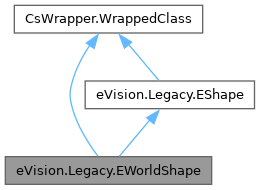
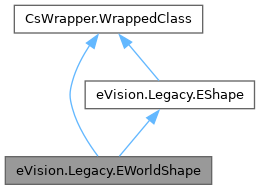
Public Member Functions | |
| EWorldShape (eVision.Legacy.EWorldShape other) | |
| Constructs a EWorldShape object. | |
| EWorldShape () | |
| Constructs a EWorldShape object. | |
| void | SetCenterXY (float centerX, float centerY) |
| Position of the origin point of the reference frame as projected onto the image, i.e. the Sensor position of the point at World coordinates (0,0). | |
| void | SetSensor (int sensorWidth, int sensorHeight, float fieldWidth, float fieldHeight, float centerX, float centerY, float angle, float tiltXAngle, float tiltYAngle, float perspectiveStrength, float distortionStrength, float opticalCenterX, float opticalCenterY, uint calibrationModes) |
| Initializes the calibration object using all given parameters. | |
| void | SetSensor (int sensorWidth, int sensorHeight, float fieldWidth, float fieldHeight, float centerX, float centerY, float angle, float tiltXAngle, float tiltYAngle, float perspectiveStrength, float distortionStrength, float opticalCenterX, float opticalCenterY) |
| Initializes the calibration object using all given parameters. | |
| void | SetSensor (int sensorWidth, int sensorHeight, float fieldWidth, float fieldHeight, float centerX, float centerY, float angle, float tiltXAngle, float tiltYAngle, float perspectiveStrength, float distortionStrength, float opticalCenterX) |
| Initializes the calibration object using all given parameters. | |
| void | SetSensor (int sensorWidth, int sensorHeight, float fieldWidth, float fieldHeight, float centerX, float centerY, float angle, float tiltXAngle, float tiltYAngle, float perspectiveStrength, float distortionStrength) |
| Initializes the calibration object using all given parameters. | |
| void | SetSensor (int sensorWidth, int sensorHeight, float fieldWidth, float fieldHeight, float centerX, float centerY, float angle, float tiltXAngle, float tiltYAngle, float perspectiveStrength) |
| Initializes the calibration object using all given parameters. | |
| void | SetSensor (int sensorWidth, int sensorHeight, float fieldWidth, float fieldHeight, float centerX, float centerY, float angle, float tiltXAngle, float tiltYAngle) |
| Initializes the calibration object using all given parameters. | |
| void | SetSensor (int sensorWidth, int sensorHeight, float fieldWidth, float fieldHeight, float centerX, float centerY, float angle, float tiltXAngle) |
| Initializes the calibration object using all given parameters. | |
| void | SetSensor (int sensorWidth, int sensorHeight, float fieldWidth, float fieldHeight, float centerX, float centerY, float angle) |
| Initializes the calibration object using all given parameters. | |
| void | SetSensor (int sensorWidth, int sensorHeight, float fieldWidth, float fieldHeight, float centerX, float centerY) |
| Initializes the calibration object using all given parameters. | |
| void | SetSensor (int sensorWidth, int sensorHeight, float fieldWidth, float fieldHeight, float centerX) |
| Initializes the calibration object using all given parameters. | |
| void | SetSensor (int sensorWidth, int sensorHeight, float fieldWidth, float fieldHeight) |
| Initializes the calibration object using all given parameters. | |
| void | SetSensor (int sensorWidth, int sensorHeight, float fieldWidth) |
| Initializes the calibration object using all given parameters. | |
| void | SetSensor (int sensorWidth, int sensorHeight) |
| Initializes the calibration object using all given parameters. | |
| void | SetSensorSize (int width, int height) |
| Sets the logical image size, i.e. the number of pixels horizontally and vertically. | |
| void | SetFieldSize (float width, float height) |
| Sets the field of view size in physical units. | |
| void | SetFieldSize (float width) |
| Sets the field of view size in physical units. | |
| void | SetResolution (float resolutionX, float resolutionY) |
| Sets the sensor resolution in pixels per unit in both directions. | |
| void | SetResolution (float resolutionX) |
| Sets the sensor resolution in pixels per unit in both directions. | |
| void | SetPerspective (float tiltXAngle, float tiltYAngle, float perspectiveStrength) |
| Sets the perspective effect coefficient, i.e. the inverse of the observation distance. | |
| void | EmptyLandmarks () |
| Resets the landmark specification sequence. | |
| void | AddPoint (eVision.EPoint sensorPoint) |
| Adds a new point coordinates (in Sensor space) to the set of grid points used for calibration. | |
| void | AddLandmark (eVision.EPoint sensorPoint, eVision.EPoint worldPoint) |
| Adds a new pair of points coordinates (in Sensor and World spaces) to the set of landmarks used for calibration. | |
| void | RemoveLandmark (uint index) |
| Removes a landmark. | |
| void | Calibrate (uint calibrationModes) |
| Performs a calibration according to the specified combination of calibration modes. | |
| void | Calibrate () |
| Performs a calibration according to the specified combination of calibration modes. | |
| uint | AutoCalibrate (bool testEmpiricalModes) |
| Returns the best calibration modes for the current calibration grid and calibrates the field of view accordingly. | |
| uint | AutoCalibrate () |
| Returns the best calibration modes for the current calibration grid and calibrates the field of view accordingly. | |
| uint | AutoCalibrate (uint calibrationModes) |
| Returns the best calibration modes for the current calibration grid and calibrates the field of view accordingly. | |
| uint | AutoCalibrateLandmarks (bool testEmpiricalModes) |
| Returns the best calibration modes for the current landmark set and calibrates the field of view accordingly. | |
| uint | AutoCalibrateLandmarks () |
| Returns the best calibration modes for the current landmark set and calibrates the field of view accordingly. | |
| uint | AutoCalibrateLandmarks (uint calibrationModes) |
| Returns the best calibration modes for the current landmark set and calibrates the field of view accordingly. | |
| uint | AutoCalibrateDotGrid (eVision.EROIBW8 sourceImage, float columnPitch, float rowPitch, bool testEmpiricalModes, bool testAdvancedMode) |
| Performs an automatic calibration based on a dot grid image. | |
| uint | AutoCalibrateDotGrid (eVision.EROIBW8 sourceImage, float columnPitch, float rowPitch, bool testEmpiricalModes) |
| Performs an automatic calibration based on a dot grid image. | |
| uint | AutoCalibrateDotGrid (eVision.EROIBW8 sourceImage, float columnPitch, float rowPitch) |
| Performs an automatic calibration based on a dot grid image. | |
| uint | AutoCalibrateDotGrid (eVision.EROIBW8 sourceImage, float columnPitch, float rowPitch, uint enabledCalibrationModes) |
| Performs an automatic calibration based on a dot grid image. | |
| bool | CalibrationSucceeded () |
| Getter method for the CalibrationSucceeded property. This property is the flag indicating if the calibration has succeeded (true), that is whether the mean variation of grid points (distance between computed grid points and ideal grid points in world space) and the maximum variation of grid points are between given tolerances. | |
| uint | RebuildGrid (float colPitch, float rowPitch, uint centerIndex, bool direct) |
| Reconstructs the grid of points from the given dot centers, to compute the World coordinates of the points. | |
| uint | RebuildGrid (float colPitch, float rowPitch, uint centerIndex) |
| Reconstructs the grid of points from the given dot centers, to compute the World coordinates of the points. | |
| uint | RebuildGrid (float colPitch, float rowPitch) |
| Reconstructs the grid of points from the given dot centers, to compute the World coordinates of the points. | |
| uint | RebuildGrid (float colPitch, float rowPitch, eVision.EPoint worldCenter, uint centerIndex, bool direct) |
| Reconstructs the grid of points from the given dot centers, to compute the World coordinates of the points. | |
| uint | RebuildGrid (float colPitch, float rowPitch, eVision.EPoint worldCenter, uint centerIndex) |
| Reconstructs the grid of points from the given dot centers, to compute the World coordinates of the points. | |
| uint | RebuildGrid (float colPitch, float rowPitch, eVision.EPoint worldCenter) |
| Reconstructs the grid of points from the given dot centers, to compute the World coordinates of the points. | |
| void | Unwarp (eVision.EROIBW8 sourceImage, eVision.EROIBW8 destinationImage, bool interpolate, bool resizeDestination) |
| Unwarps a distorted image using the current calibration model. | |
| void | Unwarp (eVision.EROIBW8 sourceImage, eVision.EROIBW8 destinationImage, bool interpolate) |
| Unwarps a distorted image using the current calibration model. | |
| void | Unwarp (eVision.EROIBW8 sourceImage, eVision.EROIBW8 destinationImage) |
| Unwarps a distorted image using the current calibration model. | |
| void | Unwarp (eVision.EROIC24 sourceImage, eVision.EROIC24 destinationImage, bool interpolate, bool resizeDestination) |
| Unwarps a distorted image using the current calibration model. | |
| void | Unwarp (eVision.EROIC24 sourceImage, eVision.EROIC24 destinationImage, bool interpolate) |
| Unwarps a distorted image using the current calibration model. | |
| void | Unwarp (eVision.EROIC24 sourceImage, eVision.EROIC24 destinationImage) |
| Unwarps a distorted image using the current calibration model. | |
| void | Unwarp (eVision.EROIBW8 sourceImage, eVision.EROIBW8 destinationImage, eVision.ERegion region, bool interpolate, bool resizeDestination) |
| Unwarps a distorted image using the current calibration model. | |
| void | Unwarp (eVision.EROIBW8 sourceImage, eVision.EROIBW8 destinationImage, eVision.ERegion region, bool interpolate) |
| Unwarps a distorted image using the current calibration model. | |
| void | Unwarp (eVision.EROIBW8 sourceImage, eVision.EROIBW8 destinationImage, eVision.ERegion region) |
| Unwarps a distorted image using the current calibration model. | |
| void | Unwarp (eVision.EROIC24 sourceImage, eVision.EROIC24 destinationImage, eVision.ERegion region, bool interpolate, bool resizeDestination) |
| Unwarps a distorted image using the current calibration model. | |
| void | Unwarp (eVision.EROIC24 sourceImage, eVision.EROIC24 destinationImage, eVision.ERegion region, bool interpolate) |
| Unwarps a distorted image using the current calibration model. | |
| void | Unwarp (eVision.EROIC24 sourceImage, eVision.EROIC24 destinationImage, eVision.ERegion region) |
| Unwarps a distorted image using the current calibration model. | |
| void | Unwarp (eVision.EUnwarpingLut lookupTable, eVision.EROIBW8 sourceImage, eVision.EROIBW8 destinationImage, bool interpolate) |
| Unwarps a distorted image using the current calibration model. | |
| void | Unwarp (eVision.EUnwarpingLut lookupTable, eVision.EROIBW8 sourceImage, eVision.EROIBW8 destinationImage) |
| Unwarps a distorted image using the current calibration model. | |
| void | Unwarp (eVision.EUnwarpingLut lookupTable, eVision.EROIC24 sourceImage, eVision.EROIC24 destinationImage, bool interpolate) |
| Unwarps a distorted image using the current calibration model. | |
| void | Unwarp (eVision.EUnwarpingLut lookupTable, eVision.EROIC24 sourceImage, eVision.EROIC24 destinationImage) |
| Unwarps a distorted image using the current calibration model. | |
| void | Unwarp (eVision.EUnwarpingLut lookupTable, eVision.EROIBW8 sourceImage, eVision.EROIBW8 destinationImage, eVision.ERegion region, bool interpolate) |
| Unwarps a distorted image using the current calibration model. | |
| void | Unwarp (eVision.EUnwarpingLut lookupTable, eVision.EROIBW8 sourceImage, eVision.EROIBW8 destinationImage, eVision.ERegion region) |
| Unwarps a distorted image using the current calibration model. | |
| void | Unwarp (eVision.EUnwarpingLut lookupTable, eVision.EROIC24 sourceImage, eVision.EROIC24 destinationImage, eVision.ERegion region, bool interpolate) |
| Unwarps a distorted image using the current calibration model. | |
| void | Unwarp (eVision.EUnwarpingLut lookupTable, eVision.EROIC24 sourceImage, eVision.EROIC24 destinationImage, eVision.ERegion region) |
| Unwarps a distorted image using the current calibration model. | |
| void | SetupUnwarp (eVision.EUnwarpingLut lookupTable, eVision.EROIBW8 sourceImage, bool interpolate, bool resizeDestination) |
| Prepares a lookup table for fast image unwarping. | |
| void | SetupUnwarp (eVision.EUnwarpingLut lookupTable, eVision.EROIBW8 sourceImage, bool interpolate) |
| Prepares a lookup table for fast image unwarping. | |
| void | SetupUnwarp (eVision.EUnwarpingLut lookupTable, eVision.EROIBW8 sourceImage) |
| Prepares a lookup table for fast image unwarping. | |
| void | SetupUnwarp (eVision.EUnwarpingLut lookupTable, eVision.EROIC24 sourceImage, bool interpolate, bool resizeDestination) |
| Prepares a lookup table for fast image unwarping. | |
| void | SetupUnwarp (eVision.EUnwarpingLut lookupTable, eVision.EROIC24 sourceImage, bool interpolate) |
| Prepares a lookup table for fast image unwarping. | |
| void | SetupUnwarp (eVision.EUnwarpingLut lookupTable, eVision.EROIC24 sourceImage) |
| Prepares a lookup table for fast image unwarping. | |
| eVision.Legacy.EWorldShape | GetUnwarpedWorldShape (eVision.EBaseROI sourceImage, bool resizeDestination) |
| Gets a EWorldShape instance representing the transformation of image to world coordinates for the result of EWorldShape.Unwarp. | |
| eVision.Legacy.EWorldShape | GetUnwarpedWorldShape (eVision.EBaseROI sourceImage) |
| Gets a EWorldShape instance representing the transformation of image to world coordinates for the result of EWorldShape.Unwarp. | |
| eVision.Legacy.EWorldShape | GetUnwarpedWorldShape (int sourceWidth, int sourceHeight, bool resizeDestination) |
| Gets a EWorldShape instance representing the transformation of image to world coordinates for the result of EWorldShape.Unwarp. | |
| eVision.Legacy.EWorldShape | GetUnwarpedWorldShape (int sourceWidth, int sourceHeight) |
| Gets a EWorldShape instance representing the transformation of image to world coordinates for the result of EWorldShape.Unwarp. | |
| void | Invalidate () |
| eVision.EPoint | SensorToWorld (eVision.EPoint sensorPoint) |
| Performs coordinate transform for arbitrary points from Sensor space to World space. | |
| eVision.EPoint | WorldToSensor (eVision.EPoint worldPoint) |
| Performs coordinate transform for arbitrary points from World space to Sensor space. | |
| eVision.ELandmark | GetLandmarkElement (uint i) |
| Returns the landmark element corresponding to the given index. | |
| void | SetOpticalCenter (float centerX, float centerY) |
| void | SetSize (float sizeX, float sizeY) |
| Sets the frame size. | |
| void | SetSize (float sizeX) |
| Sets the frame size. | |
| override void | Closest () |
| Find the daughter shape that is the closest to this shape. To retrieve the closest shape, use EShape.ClosestShape. | |
| override bool | HitTest (bool bDaughters) |
| Checks if there is a handle under the cursor. | |
| override bool | HitTest () |
| Checks if there is a handle under the cursor. | |
| override void | Drag (int n32CursorX, int n32CursorY) |
| Moves a handle to a new position and updates the position parameters of the shape. | |
| override void | Draw (eVision.EDrawAdapter graphicContext, eVision.EDrawingMode drawingModes, bool daughters) |
| Draws the world coordinate axis. | |
| override void | Draw (eVision.EDrawAdapter graphicContext, eVision.EDrawingMode drawingModes) |
| Draws the world coordinate axis. | |
| override void | Draw (eVision.EDrawAdapter graphicContext) |
| Draws the world coordinate axis. | |
| override void | Draw (IntPtr graphicContext, eVision.EDrawingMode drawingModes, bool daughters) |
| Draws the world coordinate axis. | |
| override void | Draw (IntPtr graphicContext, eVision.EDrawingMode drawingModes) |
| Draws the world coordinate axis. | |
| override void | Draw (IntPtr graphicContext) |
| Draws the world coordinate axis. | |
| override void | Draw (IntPtr graphicContext, eVision.ERGBColor color, eVision.EDrawingMode drawingModes, bool daughters) |
| Draws the world coordinate axis. | |
| override void | Draw (IntPtr graphicContext, eVision.ERGBColor color, eVision.EDrawingMode drawingModes) |
| Draws the world coordinate axis. | |
| override void | Draw (IntPtr graphicContext, eVision.ERGBColor color) |
| Draws the world coordinate axis. | |
| override void | DrawWithCurrentPen (IntPtr graphicContext, eVision.EDrawingMode drawingModes, bool daughters) |
| Draws the world coordinate axis. | |
| override void | DrawWithCurrentPen (IntPtr graphicContext, eVision.EDrawingMode drawingModes) |
| Draws the world coordinate axis. | |
| override void | DrawWithCurrentPen (IntPtr graphicContext) |
| Draws the world coordinate axis. | |
| void | DrawCrossGrid (eVision.EDrawAdapter graphicContext, float minimumX, float maximumX, float minimumY, float maximumY, uint numberOfIntervalsX, uint numberOfIntervalsY) |
| Draws a regular grid of crosses in world coordinates. | |
| void | DrawCrossGrid (eVision.EDrawAdapter graphicContext, float minimumX, float maximumX, float minimumY, float maximumY, uint numberOfIntervalsX) |
| Draws a regular grid of crosses in world coordinates. | |
| void | DrawCrossGrid (eVision.EDrawAdapter graphicContext, float minimumX, float maximumX, float minimumY, float maximumY) |
| Draws a regular grid of crosses in world coordinates. | |
| void | DrawCrossGrid (eVision.EDrawAdapter graphicContext, float minimumX, float maximumX, float minimumY) |
| Draws a regular grid of crosses in world coordinates. | |
| void | DrawCrossGrid (eVision.EDrawAdapter graphicContext, float minimumX, float maximumX) |
| Draws a regular grid of crosses in world coordinates. | |
| void | DrawCrossGrid (eVision.EDrawAdapter graphicContext, float minimumX) |
| Draws a regular grid of crosses in world coordinates. | |
| void | DrawCrossGrid (eVision.EDrawAdapter graphicContext) |
| Draws a regular grid of crosses in world coordinates. | |
| void | DrawCrossGrid (IntPtr graphicContext, float minimumX, float maximumX, float minimumY, float maximumY, uint numberOfIntervalsX, uint numberOfIntervalsY) |
| Draws a regular grid of crosses in world coordinates. | |
| void | DrawCrossGrid (IntPtr graphicContext, float minimumX, float maximumX, float minimumY, float maximumY, uint numberOfIntervalsX) |
| Draws a regular grid of crosses in world coordinates. | |
| void | DrawCrossGrid (IntPtr graphicContext, float minimumX, float maximumX, float minimumY, float maximumY) |
| Draws a regular grid of crosses in world coordinates. | |
| void | DrawCrossGrid (IntPtr graphicContext, float minimumX, float maximumX, float minimumY) |
| Draws a regular grid of crosses in world coordinates. | |
| void | DrawCrossGrid (IntPtr graphicContext, float minimumX, float maximumX) |
| Draws a regular grid of crosses in world coordinates. | |
| void | DrawCrossGrid (IntPtr graphicContext, float minimumX) |
| Draws a regular grid of crosses in world coordinates. | |
| void | DrawCrossGrid (IntPtr graphicContext) |
| Draws a regular grid of crosses in world coordinates. | |
| void | DrawCrossGrid (IntPtr graphicContext, eVision.ERGBColor color, float minimumX, float maximumX, float minimumY, float maximumY, uint numberOfIntervalsX, uint numberOfIntervalsY) |
| Draws a regular grid of crosses in world coordinates. | |
| void | DrawCrossGrid (IntPtr graphicContext, eVision.ERGBColor color, float minimumX, float maximumX, float minimumY, float maximumY, uint numberOfIntervalsX) |
| Draws a regular grid of crosses in world coordinates. | |
| void | DrawCrossGrid (IntPtr graphicContext, eVision.ERGBColor color, float minimumX, float maximumX, float minimumY, float maximumY) |
| Draws a regular grid of crosses in world coordinates. | |
| void | DrawCrossGrid (IntPtr graphicContext, eVision.ERGBColor color, float minimumX, float maximumX, float minimumY) |
| Draws a regular grid of crosses in world coordinates. | |
| void | DrawCrossGrid (IntPtr graphicContext, eVision.ERGBColor color, float minimumX, float maximumX) |
| Draws a regular grid of crosses in world coordinates. | |
| void | DrawCrossGrid (IntPtr graphicContext, eVision.ERGBColor color, float minimumX) |
| Draws a regular grid of crosses in world coordinates. | |
| void | DrawCrossGrid (IntPtr graphicContext, eVision.ERGBColor color) |
| Draws a regular grid of crosses in world coordinates. | |
| void | DrawCrossGridWithCurrentPen (IntPtr graphicContext, float minimumX, float maximumX, float minimumY, float maximumY, uint numberOfIntervalsX, uint numberOfIntervalsY) |
| Draws a regular grid of crosses in world coordinates. | |
| void | DrawCrossGridWithCurrentPen (IntPtr graphicContext, float minimumX, float maximumX, float minimumY, float maximumY, uint numberOfIntervalsX) |
| Draws a regular grid of crosses in world coordinates. | |
| void | DrawCrossGridWithCurrentPen (IntPtr graphicContext, float minimumX, float maximumX, float minimumY, float maximumY) |
| Draws a regular grid of crosses in world coordinates. | |
| void | DrawCrossGridWithCurrentPen (IntPtr graphicContext, float minimumX, float maximumX, float minimumY) |
| Draws a regular grid of crosses in world coordinates. | |
| void | DrawCrossGridWithCurrentPen (IntPtr graphicContext, float minimumX, float maximumX) |
| Draws a regular grid of crosses in world coordinates. | |
| void | DrawCrossGridWithCurrentPen (IntPtr graphicContext, float minimumX) |
| Draws a regular grid of crosses in world coordinates. | |
| void | DrawCrossGridWithCurrentPen (IntPtr graphicContext) |
| Draws a regular grid of crosses in world coordinates. | |
| override void | SetZoom (float zoomX, float zoomY) |
| Sets the horizontal and vertical zooming factors for drawing operations. | |
| override void | SetZoom (float zoomX) |
| Sets the horizontal and vertical zooming factors for drawing operations. | |
| override void | SetZoom () |
| Sets the horizontal and vertical zooming factors for drawing operations. | |
| override void | SetPan (float panX, float panY) |
| Sets the horizontal and vertical panning values for drawing operations, expressed in pixels. | |
| override void | SetPan (float panX) |
| Sets the horizontal and vertical panning values for drawing operations, expressed in pixels. | |
| override void | SetPan () |
| Sets the horizontal and vertical panning values for drawing operations, expressed in pixels. | |
| void | DrawGrid (eVision.EDrawAdapter graphicContext) |
| Draws the reconstructed grid to be used for grid calibration. | |
| void | DrawGrid (IntPtr graphicContext) |
| Draws the reconstructed grid to be used for grid calibration. | |
| void | DrawGrid (IntPtr graphicContext, eVision.ERGBColor color) |
| Draws the reconstructed grid to be used for grid calibration. | |
| void | DrawGridWithCurrentPen (IntPtr graphicContext) |
| Draws the reconstructed grid to be used for grid calibration. | |
| void | DrawLandmarks (eVision.EDrawAdapter graphicContext) |
| Draws the landmarks to be used for landmark calibration. | |
| void | DrawLandmarks (IntPtr graphicContext) |
| Draws the landmarks to be used for landmark calibration. | |
| void | HitLandmarks () |
| Checks if the cursor is placed over a landmark point. | |
| void | DragLandmark (int n32CursorX, int n32CursorY) |
| Moves the landmark to a new position. | |
| override void | EnableTypeFilter (uint un32Types) |
| Enables the filter of the specified shape type. | |
| override void | DisableTypeFilter () |
| Enables all shape types. | |
| override void | Draw (System.Drawing.Graphics graphicContext, eVision.EDrawingMode drawingModes, bool daughters) |
| Draws the world coordinate axis. | |
| override void | Draw (System.Drawing.Graphics graphicContext, eVision.EDrawingMode drawingModes) |
| Draws the world coordinate axis. | |
| override void | Draw (System.Drawing.Graphics graphicContext) |
| Draws the world coordinate axis. | |
| override void | Draw (System.Drawing.Graphics graphicContext, eVision.ERGBColor color, eVision.EDrawingMode drawingModes, bool daughters) |
| Draws the world coordinate axis. | |
| override void | Draw (System.Drawing.Graphics graphicContext, eVision.ERGBColor color, eVision.EDrawingMode drawingModes) |
| Draws the world coordinate axis. | |
| override void | Draw (System.Drawing.Graphics graphicContext, eVision.ERGBColor color) |
| Draws the world coordinate axis. | |
| void | DrawCrossGrid (System.Drawing.Graphics graphicContext, float minimumX, float maximumX, float minimumY, float maximumY, uint numberOfIntervalsX, uint numberOfIntervalsY) |
| Draws a regular grid of crosses in world coordinates. | |
| void | DrawCrossGrid (System.Drawing.Graphics graphicContext, float minimumX, float maximumX, float minimumY, float maximumY, uint numberOfIntervalsX) |
| Draws a regular grid of crosses in world coordinates. | |
| void | DrawCrossGrid (System.Drawing.Graphics graphicContext, float minimumX, float maximumX, float minimumY, float maximumY) |
| Draws a regular grid of crosses in world coordinates. | |
| void | DrawCrossGrid (System.Drawing.Graphics graphicContext, float minimumX, float maximumX, float minimumY) |
| Draws a regular grid of crosses in world coordinates. | |
| void | DrawCrossGrid (System.Drawing.Graphics graphicContext, float minimumX, float maximumX) |
| Draws a regular grid of crosses in world coordinates. | |
| void | DrawCrossGrid (System.Drawing.Graphics graphicContext, float minimumX) |
| Draws a regular grid of crosses in world coordinates. | |
| void | DrawCrossGrid (System.Drawing.Graphics graphicContext) |
| Draws a regular grid of crosses in world coordinates. | |
| void | DrawCrossGrid (System.Drawing.Graphics graphicContext, eVision.ERGBColor color, float minimumX, float maximumX, float minimumY, float maximumY, uint numberOfIntervalsX, uint numberOfIntervalsY) |
| Draws a regular grid of crosses in world coordinates. | |
| void | DrawCrossGrid (System.Drawing.Graphics graphicContext, eVision.ERGBColor color, float minimumX, float maximumX, float minimumY, float maximumY, uint numberOfIntervalsX) |
| Draws a regular grid of crosses in world coordinates. | |
| void | DrawCrossGrid (System.Drawing.Graphics graphicContext, eVision.ERGBColor color, float minimumX, float maximumX, float minimumY, float maximumY) |
| Draws a regular grid of crosses in world coordinates. | |
| void | DrawCrossGrid (System.Drawing.Graphics graphicContext, eVision.ERGBColor color, float minimumX, float maximumX, float minimumY) |
| Draws a regular grid of crosses in world coordinates. | |
| void | DrawCrossGrid (System.Drawing.Graphics graphicContext, eVision.ERGBColor color, float minimumX, float maximumX) |
| Draws a regular grid of crosses in world coordinates. | |
| void | DrawCrossGrid (System.Drawing.Graphics graphicContext, eVision.ERGBColor color, float minimumX) |
| Draws a regular grid of crosses in world coordinates. | |
| void | DrawCrossGrid (System.Drawing.Graphics graphicContext, eVision.ERGBColor color) |
| Draws a regular grid of crosses in world coordinates. | |
| void | DrawGrid (System.Drawing.Graphics graphicContext) |
| Draws the reconstructed grid to be used for grid calibration. | |
| void | DrawGrid (System.Drawing.Graphics graphicContext, eVision.ERGBColor color) |
| Draws the reconstructed grid to be used for grid calibration. | |
| void | DrawLandmarks (System.Drawing.Graphics graphicContext) |
| Draws the landmarks to be used for landmark calibration. | |
| Public Member Functions inherited from eVision.Legacy.EShape | |
| eVision.Legacy.EShape | GetShapeNamed (string name) |
| Returns a pointer to a daughter gauge or shape specified by its name. | |
| bool | GetFound () |
| Flag indicating whether a measured shape has been found. | |
| bool | GetAutoArrange () |
| void | SetAutoArrange (bool bAutoArrange, bool bDaughters) |
| void | SetAutoArrange (bool bAutoArrange) |
| virtual void | SetFound (bool bFound, bool bDaughters) |
| virtual void | SetFound (bool bFound) |
| bool | GetInspected () |
| void | SetInspected (bool bFound, bool bDaughters) |
| void | SetInspected (bool bFound) |
| bool | GetPassed () |
| void | SetPassed (bool bFound, bool bDaughters) |
| void | SetPassed (bool bFound) |
| bool | GetQuickDraw () |
| void | SetQuickDraw (bool bFound, bool bDaughters) |
| void | SetQuickDraw (bool bFound) |
| bool | GetOptionalDraw () |
| void | SetOptionalDraw (bool bFound, bool bDaughters) |
| void | SetOptionalDraw (bool bFound) |
| bool | GetUserFlag () |
| void | SetUserFlag (bool bUserFlag, bool bDaughters) |
| void | SetUserFlag (bool bUserFlag) |
| bool | GetAllocated () |
| Gets the allocated flag. | |
| void | EnableBehaviorFilter (eVision.EShapeBehavior behavior, bool value) |
| Modifies the so-called behavior filter that is a conjunction of conditions specifying when a shape or a gauge should be displayed or taken into consideration when monitoring the mouse interactions. | |
| void | EnableBehaviorFilter (eVision.EShapeBehavior behavior) |
| Modifies the so-called behavior filter that is a conjunction of conditions specifying when a shape or a gauge should be displayed or taken into consideration when monitoring the mouse interactions. | |
| void | DisableBehaviorFilter (eVision.EShapeBehavior behavior) |
| Disables (i.e. removes) a condition from the list of conditions in the behavior filter. | |
| void | Attach (eVision.Legacy.EShape mother) |
| Attaches the gauge to a mother gauge or shape. | |
| void | Detach () |
| Detaches the gauge from its mother gauge or shape. | |
| void | DetachDaughters () |
| Detaches the daughter gauges or shapes. | |
| virtual eVision.Legacy.EShape | GetDaughter (uint index) |
| Returns a pointer to the specified daughter gauge or shape. | |
| bool | IsWorld () |
| void | InvalidateWorld () |
| Invalidates the world shape for this shape and all its ancestors. | |
| eVision.EPoint | LocalToSensor (eVision.EPoint LPoint) |
| Transforms a point from local coordinates to sensor coordinates. | |
| eVision.EPoint | SensorToLocal (eVision.EPoint SPoint) |
| Transforms a point from sensor coordinates to local coordinates. | |
| void | Draw (eVision.EDrawAdapter graphicContext, eVision.EDrawingMode drawingMode, bool daughters) |
| Draws a graphical representation of a shape, as defined by EDrawingMode. | |
| void | Draw (eVision.EDrawAdapter graphicContext, eVision.EDrawingMode drawingMode) |
| Draws a graphical representation of a shape, as defined by EDrawingMode. | |
| void | Draw (eVision.EDrawAdapter graphicContext) |
| Draws a graphical representation of a shape, as defined by EDrawingMode. | |
| void | Draw (IntPtr graphicContext, eVision.EDrawingMode drawingMode, bool daughters) |
| Draws a graphical representation of a shape, as defined by EDrawingMode. | |
| void | Draw (IntPtr graphicContext, eVision.EDrawingMode drawingMode) |
| Draws a graphical representation of a shape, as defined by EDrawingMode. | |
| void | Draw (IntPtr graphicContext) |
| Draws a graphical representation of a shape, as defined by EDrawingMode. | |
| void | Draw (IntPtr graphicContext, eVision.ERGBColor color, eVision.EDrawingMode drawingMode, bool daughters) |
| Draws a graphical representation of a shape, as defined by EDrawingMode. | |
| void | Draw (IntPtr graphicContext, eVision.ERGBColor color, eVision.EDrawingMode drawingMode) |
| Draws a graphical representation of a shape, as defined by EDrawingMode. | |
| void | Draw (IntPtr graphicContext, eVision.ERGBColor color) |
| Draws a graphical representation of a shape, as defined by EDrawingMode. | |
| void | DrawWithCurrentPen (IntPtr graphicContext, eVision.EDrawingMode drawingMode, bool daughters) |
| Draws a graphical representation of a shape, as defined by EDrawingMode. | |
| void | DrawWithCurrentPen (IntPtr graphicContext, eVision.EDrawingMode drawingMode) |
| Draws a graphical representation of a shape, as defined by EDrawingMode. | |
| void | DrawWithCurrentPen (IntPtr graphicContext) |
| Draws a graphical representation of a shape, as defined by EDrawingMode. | |
| bool | HitTest (bool bDaughters) |
| Checks if there is a handle under the cursor. | |
| bool | HitTest () |
| Checks if there is a handle under the cursor. | |
| void | SetDraggingMode (eVision.EDraggingMode eDraggingMode, bool bDaughters) |
| Sets the dragging mode which defines how the shape could be dragged. | |
| void | SetDraggingMode (eVision.EDraggingMode eDraggingMode) |
| Sets the dragging mode which defines how the shape could be dragged. | |
| eVision.EDraggingMode | GetDraggingMode () |
| Gets the dragging mode which defines how the shape could be dragged. | |
| void | SetCursor (int x, int y) |
| Sets the cursor current coordinates. | |
| void | Drag (int n32CursorX, int n32CursorY) |
| Moves a handle to a new position and updates the position parameters of the shape. | |
| void | Closest () |
| Find the daughter shape that is the closest to this shape. To retrieve the closest shape, use EShape.ClosestShape. | |
| virtual void | Process (eVision.EROIBW8 pSrc, bool bDaughters) |
| virtual void | Process (eVision.EROIBW8 pSrc) |
| virtual void | Process (eVision.EROIBW8 pSrc, eVision.ERegion region, bool bDaughters) |
| virtual void | Process (eVision.EROIBW8 pSrc, eVision.ERegion region) |
| void | Save (string path, bool daughters) |
| Loads a Shape.The given ESerializer must have been created for writing. | |
| void | Save (string path) |
| Loads a Shape.The given ESerializer must have been created for writing. | |
| void | Save (eVision.ESerializer serializer, bool daughters) |
| Loads a Shape.The given ESerializer must have been created for writing. | |
| void | Save (eVision.ESerializer serializer) |
| Loads a Shape.The given ESerializer must have been created for writing. | |
| void | Load (string path, bool daughters) |
| Loads a Shape.The given ESerializer must have been created for reading. | |
| void | Load (string path) |
| Loads a Shape.The given ESerializer must have been created for reading. | |
| void | Load (eVision.ESerializer serializer, bool daughters) |
| Loads a Shape.The given ESerializer must have been created for reading. | |
| void | Load (eVision.ESerializer serializer) |
| Loads a Shape.The given ESerializer must have been created for reading. | |
| bool | HasProperty (string aProperty) |
| Returns whether a EShape has a property named aProperty. | |
| string | GetProperty (string aProperty) |
| Gets the value of property aProperty. Throws an exception if no such property exists. | |
| void | SetProperty (string aProperty, string aValue) |
| Sets the value of property aProperty to aValue for this EShape. | |
| void | SetPropertyRecursive (string aProperty, string aValue) |
| Sets the value of property aProperty to aValue for this EShape and all of its daughters. | |
| void | RemoveProperty (string aProperty) |
| Removes the property name aProperty from the EShape. | |
| bool | HasValidPolarityProperty () |
| Returns whether the EShape has a valid polarity property. | |
| void | Draw (System.Drawing.Graphics graphicContext, eVision.EDrawingMode drawingMode, bool daughters) |
| Draws a graphical representation of a shape, as defined by EDrawingMode. | |
| void | Draw (System.Drawing.Graphics graphicContext, eVision.EDrawingMode drawingMode) |
| Draws a graphical representation of a shape, as defined by EDrawingMode. | |
| void | Draw (System.Drawing.Graphics graphicContext) |
| Draws a graphical representation of a shape, as defined by EDrawingMode. | |
| void | Draw (System.Drawing.Graphics graphicContext, eVision.ERGBColor color, eVision.EDrawingMode drawingMode, bool daughters) |
| Draws a graphical representation of a shape, as defined by EDrawingMode. | |
| void | Draw (System.Drawing.Graphics graphicContext, eVision.ERGBColor color, eVision.EDrawingMode drawingMode) |
| Draws a graphical representation of a shape, as defined by EDrawingMode. | |
| void | Draw (System.Drawing.Graphics graphicContext, eVision.ERGBColor color) |
| Draws a graphical representation of a shape, as defined by EDrawingMode. | |
Properties | |
| eVision.EPoint | Center [get, set] |
| Position of the origin point of the reference frame as projected onto the image, i.e. the Sensor position of the point at World coordinates (0,0). | |
| float | CenterX [get] |
| Horizontal position of the origin point of the reference frame as projected onto the image, i.e. the Sensor abscissa of the point at World coordinates (0,0). | |
| float | CenterY [get] |
| Vertical position of the origin point of the reference frame as projected onto the image, i.e. the Sensor ordinate of the point at World coordinates (0,0). | |
| float | Angle [get, set] |
| Tilt X angle, that is the amplitude of the rotation applied around the X-axis of the sensor to bring the optical (Z) axis perpendicular to the field of view. | |
| float | Scale [get, set] |
| The scale of the reference frame. | |
| float | Ratio [get, set] |
| XResolution/YResolution ratio. | |
| int | SensorWidth [get] |
| Logical image width, that is the number of pixels horizontally. | |
| int | SensorHeight [get] |
| Logical image height, that is the number of pixels vertically. | |
| float | FieldWidth [get] |
| Field-of-view width, in physical units. | |
| float | FieldHeight [get] |
| Field-of-view height, in physical units. | |
| float | XResolution [get] |
| Horizontal sensor resolution, in pixels per unit. | |
| float | YResolution [get] |
| Vertical sensor resolution, in pixels per unit. | |
| float | TiltXAngle [get] |
| Tilt X angle, that is the amplitude of the rotation applied around the X-axis of the sensor to bring the optical (Z) axis perpendicular to the field of view. | |
| float | TiltYAngle [get] |
| Tilt Y angle, that is the amplitude of the rotation applied around the Y-axis of the sensor to bring the optical (Z) axis perpendicular to the field of view. | |
| float | PerspectiveStrength [get] |
| Perspective effect coefficient, that is the inverse of the observation distance. | |
| float | Distortion [set] |
| Sets the optical distortion parameters. | |
| float | DistortionStrength [get, set] |
| Optical distortion strength, i.e. the ratio of the image diagonal length with and without optical distortion introduced by the lens. | |
| uint | CalibrationModes [get, set] |
| Current calibration mode, made from a combination of values. | |
| float | GridPointsMeanVariation [get] |
| Mean variation of grid points (mean distance between computed grid points and ideal grid points in world space), normalized using the pitch values, after a call to EWorldShape.CalibrationSucceeded. | |
| float | GridPointsMaxVariation [get] |
| Maximum variation of grid points (maximum distance between computed grid points and ideal grid points in world space), normalized using the pitch values, after a call to EWorldShape.CalibrationSucceeded. | |
| float | GridPointsMeanVariationThreshold [get, set] |
| Grid points mean variation threshold, that is the value above which the mean variation of grid points (mean distance between computed grid points and ideal grid points in world space) is considered too high, and thus marks the calibration as a failure when using EWorldShape.CalibrationSucceeded. | |
| float | GridPointsMaxVariationThreshold [get, set] |
| Grid points maximum variation threshold, that is the value above which the maximum variation of grid points (maximum distance between computed grid points and ideal grid points in world space) is considered too high, and thus marks the calibration as a failure when using EWorldShape.CalibrationSucceeded. | |
| uint | NumLandmarkElements [get] |
| Returns the number of landmark elements. | |
| float | OpticalCenterX [get] |
| float | OpticalCenterY [get] |
| override eVision.EShapeType | Type [get] |
| Shape type. | |
| override float | ZoomX [get] |
| Current horizontal zooming factor for drawing operations. | |
| override float | ZoomY [get] |
| Current vertical zooming factor for drawing operations. | |
| override float | PanX [get] |
| Current horizontal panning value for drawing operations, expressed in pixels. By default, no panning occurs. | |
| override float | PanY [get] |
| Current vertical panning value for drawing operations, expressed in pixels. By default, no panning occurs. | |
| uint | HitLandmark [get] |
| Returns the landmark selected by EWorldShape.HitLandmarks or ~0 if no landmark is selected. | |
| Properties inherited from eVision.Legacy.EShape | |
| eVision.EShapeType | Type [get] |
| Shape type. | |
| string | Name [get, set] |
| Name of the EShape object. | |
| bool | Visible [get, set] |
| Flag indicating whether the shape is visible or not. | |
| bool | VisibleRecursive [set] |
| Sets the flag indicating whether the shape and its daughter shapes are visible or not. | |
| bool | Selected [get, set] |
| Flag indicating whether the shape is selected or not. | |
| bool | SelectedRecursive [set] |
| Sets the flag indicating whether the shape and all its daughters are selected or not. | |
| bool | Selectable [get, set] |
| Flag indicating whether the shape can be selected or not. | |
| bool | SelectableRecursive [set] |
| Sets the flag indicating whether the shape and all its daughters can be selected or not. | |
| bool | Dragable [get, set] |
| Flag indicating whether the shape can be dragged or not. | |
| bool | DragableRecursive [set] |
| Sets the flag indicating whether the shape and all its daughters can be dragged or not. | |
| bool | Resizable [get, set] |
| Flag indicating whether the shape can be resized or not. | |
| bool | ResizableRecursive [set] |
| Sets the flag indicating whether the shape and all its daughters can be resized or not. | |
| bool | Rotatable [get, set] |
| Flag indicating whether the shape can be rotated or not. | |
| bool | RotatableRecursive [set] |
| Sets the flag indicating whether the shape and all its daughters can be rotated or not. | |
| bool | Labeled [get, set] |
| Flag indicating whether the shape label should be displayed or not. | |
| bool | LabeledRecursive [set] |
| Sets the flag indicating whether the shape label should be displayed or not. The flag is set in this shape and all its daughters. | |
| virtual bool | Active [get, set] |
| Flag indicating whether the shape is active or not. | |
| virtual bool | ActiveRecursive [set] |
| Sets the flag indicating whether the shape and all its daughters are active or not. | |
| bool | ActualShape [get, set] |
| Flag indicating whether an inquiry returns a result pertaining to the nominal gauge (false, default) or the fitted model (true). | |
| bool | ActualShapeRecursive [set] |
| Sets the flag indicating whether an inquiry returns a result pertaining to the nominal gauge (false, default) or the fitted model (true). The flag is set in this shape and all its daughters. | |
| uint | NumDaughters [get] |
| Number of daughters attached to the shape. | |
| eVision.Legacy.EShape | Mother [get] |
| Pointer to the mother shape. | |
| eVision.Legacy.EWorldShape | WorldShape [get] |
| World ancestor. | |
| virtual float | ZoomX [get] |
| Current horizontal zooming factor for drawing operations. | |
| virtual float | ZoomY [get] |
| Current vertical zooming factor for drawing operations. | |
| virtual float | PanX [get] |
| Current horizontal panning value for drawing operations, expressed in pixels. By default, no panning occurs. | |
| virtual float | PanY [get] |
| Current vertical panning value for drawing operations, expressed in pixels. By default, no panning occurs. | |
| eVision.EDragHandle | HitHandle [get] |
| Handle currently under the cursor. | |
| eVision.Legacy.EShape | HitShape [get] |
| Pointer to the shape currently under the cursor. | |
| eVision.Legacy.EShape | ClosestShape [get] |
| Closest shape among the daughters. | |
Manages a complete context for calibrating a field of view.
License(s): BasicTypes
| eVision.Legacy.EWorldShape.EWorldShape | ( | eVision.Legacy.EWorldShape | other | ) |
Constructs a EWorldShape object.
| other | Another EWorldShape object to be copied in the new EWorldShape object. |
| eVision.Legacy.EWorldShape.EWorldShape | ( | ) |
Constructs a EWorldShape object.
| void eVision.Legacy.EWorldShape.AddLandmark | ( | eVision.EPoint | sensorPoint, |
| eVision.EPoint | worldPoint ) |
Adds a new pair of points coordinates (in Sensor and World spaces) to the set of landmarks used for calibration.
| sensorPoint | Sensor point coordinates. |
| worldPoint | Corresponding World point coordinates. |
Landmark calibration is the process of computing the calibration parameters by means of a set of known points for which the coordinates are available in both World and Sensor spaces. Usually, such points are chosen as salient features on the part or target in view. They must be such that appropriate image processing techniques allow measuring their positions from the image (directly or indirectly by geometric constructions), while at the same time their coordinates in a reference frame are known.
| void eVision.Legacy.EWorldShape.AddPoint | ( | eVision.EPoint | sensorPoint | ) |
Adds a new point coordinates (in Sensor space) to the set of grid points used for calibration.
| sensorPoint | Sensor point coordinates. |
Grid calibration is the process of computing the calibration parameters by means of a set of points known to lie on a rectangular grid. If the grid pitch is known and one of the points is chosen as the origin point, the points can be used as landmarks. By contrast with the landmark calibration functions, the World coordinates of the grid points need not be specified, nor do they have to be given in any specific order. The calibration algorithm is capable of sorting out the points to reconstruct the grid topology. Typically, this function is used in conjunction with blob analysis to extract the dot centers from a grid of dots. Anyway, any other scheme can be used. The grid of points need not be complete, i.e. some of the nodes may be missing, and the points need not completely fill a rectangular area. Landmark calibration is simply achieved by providing a series of point coordinates (in Sensor space only) and then calling the grid reconstruction function followed by the calibration function.
| uint eVision.Legacy.EWorldShape.AutoCalibrate | ( | ) |
Returns the best calibration modes for the current calibration grid and calibrates the field of view accordingly.
To ensure a successful calibration, the perspective angle of the view should not exceed 45 degrees.
By default, only combination of the calibration modes ECalibrationMode.ECalibrationMode_Scaled, ECalibrationMode.ECalibrationMode_Skewed, ECalibrationMode.ECalibrationMode_Radial, ECalibrationMode.ECalibrationMode_Tilted, and ECalibrationMode.ECalibrationMode_Anisotropic are considered. The ECalibrationMode.ECalibrationMode_Advanced calibration mode must be explicitely selected to be considered.
| uint eVision.Legacy.EWorldShape.AutoCalibrate | ( | bool | testEmpiricalModes | ) |
Returns the best calibration modes for the current calibration grid and calibrates the field of view accordingly.
| testEmpiricalModes | Boolean indicating whether empirical quadratic calibration mode (ECalibrationMode.ECalibrationMode_Quadratic) should be considered when determining the best calibration modes. |
To ensure a successful calibration, the perspective angle of the view should not exceed 45 degrees.
By default, only combination of the calibration modes ECalibrationMode.ECalibrationMode_Scaled, ECalibrationMode.ECalibrationMode_Skewed, ECalibrationMode.ECalibrationMode_Radial, ECalibrationMode.ECalibrationMode_Tilted, and ECalibrationMode.ECalibrationMode_Anisotropic are considered. The ECalibrationMode.ECalibrationMode_Advanced calibration mode must be explicitely selected to be considered.
| uint eVision.Legacy.EWorldShape.AutoCalibrate | ( | uint | calibrationModes | ) |
Returns the best calibration modes for the current calibration grid and calibrates the field of view accordingly.
| calibrationModes | Calibration modes that should be considered when determining the best calibration model |
To ensure a successful calibration, the perspective angle of the view should not exceed 45 degrees.
By default, only combination of the calibration modes ECalibrationMode.ECalibrationMode_Scaled, ECalibrationMode.ECalibrationMode_Skewed, ECalibrationMode.ECalibrationMode_Radial, ECalibrationMode.ECalibrationMode_Tilted, and ECalibrationMode.ECalibrationMode_Anisotropic are considered. The ECalibrationMode.ECalibrationMode_Advanced calibration mode must be explicitely selected to be considered.
| uint eVision.Legacy.EWorldShape.AutoCalibrateDotGrid | ( | eVision.EROIBW8 | sourceImage, |
| float | columnPitch, | ||
| float | rowPitch ) |
Performs an automatic calibration based on a dot grid image.
| sourceImage | Pointer to the source image/ROI. |
| columnPitch | Actual pitches of the grid, i.e. distances between vertical and horizontal rows of the grid. |
| rowPitch | Actual pitches of the grid, i.e. distances between vertical and horizontal rows of the grid. |
Returns the best calibration mode for the current dot grid. This method will first do an automatic blob analysis in order to extract all dots (all blobs whose area is smaller than 5 pixels or 1/50000th of the whole image area will be considered as noise and rejected). The dot gravity centers are used as the grid reference points. Then, this method will select and compute the best calibration mode by reducing the fitting error. To ensure a successful calibration, the perspective angle of the dot grid should not exceed 45 degrees.
By default, only combination of the calibration modes ECalibrationMode.ECalibrationMode_Scaled, ECalibrationMode.ECalibrationMode_Skewed, ECalibrationMode.ECalibrationMode_Radial, ECalibrationMode.ECalibrationMode_Tilted, and ECalibrationMode.ECalibrationMode_Anisotropic are considered. The ECalibrationMode.ECalibrationMode_Advanced calibration mode must be explicitly selected to be considered.
| uint eVision.Legacy.EWorldShape.AutoCalibrateDotGrid | ( | eVision.EROIBW8 | sourceImage, |
| float | columnPitch, | ||
| float | rowPitch, | ||
| bool | testEmpiricalModes ) |
Performs an automatic calibration based on a dot grid image.
| sourceImage | Pointer to the source image/ROI. |
| columnPitch | Actual pitches of the grid, i.e. distances between vertical and horizontal rows of the grid. |
| rowPitch | Actual pitches of the grid, i.e. distances between vertical and horizontal rows of the grid. |
| testEmpiricalModes | Boolean indicating whether the empirical quadratic calibration mode (ECalibrationMode.ECalibrationMode_Quadratic) should be considered when determining the best calibration modes. Default value is false. |
Returns the best calibration mode for the current dot grid. This method will first do an automatic blob analysis in order to extract all dots (all blobs whose area is smaller than 5 pixels or 1/50000th of the whole image area will be considered as noise and rejected). The dot gravity centers are used as the grid reference points. Then, this method will select and compute the best calibration mode by reducing the fitting error. To ensure a successful calibration, the perspective angle of the dot grid should not exceed 45 degrees.
By default, only combination of the calibration modes ECalibrationMode.ECalibrationMode_Scaled, ECalibrationMode.ECalibrationMode_Skewed, ECalibrationMode.ECalibrationMode_Radial, ECalibrationMode.ECalibrationMode_Tilted, and ECalibrationMode.ECalibrationMode_Anisotropic are considered. The ECalibrationMode.ECalibrationMode_Advanced calibration mode must be explicitly selected to be considered.
| uint eVision.Legacy.EWorldShape.AutoCalibrateDotGrid | ( | eVision.EROIBW8 | sourceImage, |
| float | columnPitch, | ||
| float | rowPitch, | ||
| bool | testEmpiricalModes, | ||
| bool | testAdvancedMode ) |
Performs an automatic calibration based on a dot grid image.
| sourceImage | Pointer to the source image/ROI. |
| columnPitch | Actual pitches of the grid, i.e. distances between vertical and horizontal rows of the grid. |
| rowPitch | Actual pitches of the grid, i.e. distances between vertical and horizontal rows of the grid. |
| testEmpiricalModes | Boolean indicating whether the empirical quadratic calibration mode (ECalibrationMode.ECalibrationMode_Quadratic) should be considered when determining the best calibration modes. Default value is false. |
| testAdvancedMode | Boolean indicating whether the advanced calibration mode (ECalibrationMode.ECalibrationMode_Advanced) should be considered when determining the best calibration modes. Default value is false. |
Returns the best calibration mode for the current dot grid. This method will first do an automatic blob analysis in order to extract all dots (all blobs whose area is smaller than 5 pixels or 1/50000th of the whole image area will be considered as noise and rejected). The dot gravity centers are used as the grid reference points. Then, this method will select and compute the best calibration mode by reducing the fitting error. To ensure a successful calibration, the perspective angle of the dot grid should not exceed 45 degrees.
By default, only combination of the calibration modes ECalibrationMode.ECalibrationMode_Scaled, ECalibrationMode.ECalibrationMode_Skewed, ECalibrationMode.ECalibrationMode_Radial, ECalibrationMode.ECalibrationMode_Tilted, and ECalibrationMode.ECalibrationMode_Anisotropic are considered. The ECalibrationMode.ECalibrationMode_Advanced calibration mode must be explicitly selected to be considered.
| uint eVision.Legacy.EWorldShape.AutoCalibrateDotGrid | ( | eVision.EROIBW8 | sourceImage, |
| float | columnPitch, | ||
| float | rowPitch, | ||
| uint | enabledCalibrationModes ) |
Performs an automatic calibration based on a dot grid image.
| sourceImage | Pointer to the source image/ROI. |
| columnPitch | Actual pitches of the grid, i.e. distances between vertical and horizontal rows of the grid. |
| rowPitch | Actual pitches of the grid, i.e. distances between vertical and horizontal rows of the grid. |
| enabledCalibrationModes | Calibration modes that should be considered when determining the best calibration model |
Returns the best calibration mode for the current dot grid. This method will first do an automatic blob analysis in order to extract all dots (all blobs whose area is smaller than 5 pixels or 1/50000th of the whole image area will be considered as noise and rejected). The dot gravity centers are used as the grid reference points. Then, this method will select and compute the best calibration mode by reducing the fitting error. To ensure a successful calibration, the perspective angle of the dot grid should not exceed 45 degrees.
By default, only combination of the calibration modes ECalibrationMode.ECalibrationMode_Scaled, ECalibrationMode.ECalibrationMode_Skewed, ECalibrationMode.ECalibrationMode_Radial, ECalibrationMode.ECalibrationMode_Tilted, and ECalibrationMode.ECalibrationMode_Anisotropic are considered. The ECalibrationMode.ECalibrationMode_Advanced calibration mode must be explicitly selected to be considered.
| uint eVision.Legacy.EWorldShape.AutoCalibrateLandmarks | ( | ) |
Returns the best calibration modes for the current landmark set and calibrates the field of view accordingly.
Landmark calibration is the process of computing the calibration parameters by means of a set of known points for which the coordinates are available in both World and Sensor spaces. Usually, such points are chosen as salient features on the part or target in view. They must be such that appropriate image processing techniques allow measuring their positions from the image (directly or indirectly by geometric constructions), while at the same time their coordinates in a reference frame are known. To ensure a successful calibration, the perspective angle of the view should not exceed 45 degrees. This method is meant to be used with landmark calibration only. To calibrate automatically your field of view using a dot grid, use the EWorldShape.AutoCalibrate method instead.
By default, only combination of the calibration modes ECalibrationMode.ECalibrationMode_Scaled, ECalibrationMode.ECalibrationMode_Skewed, ECalibrationMode.ECalibrationMode_Radial, ECalibrationMode.ECalibrationMode_Tilted, and ECalibrationMode.ECalibrationMode_Anisotropic are considered. The ECalibrationMode.ECalibrationMode_Advanced calibration mode must be explicitely selected to be considered.
| uint eVision.Legacy.EWorldShape.AutoCalibrateLandmarks | ( | bool | testEmpiricalModes | ) |
Returns the best calibration modes for the current landmark set and calibrates the field of view accordingly.
| testEmpiricalModes | Boolean indicating whether the empirical quadratic calibration mode (ECalibrationMode.ECalibrationMode_Quadratic) should be considered when determining the best calibration modes. Default value is false. |
Landmark calibration is the process of computing the calibration parameters by means of a set of known points for which the coordinates are available in both World and Sensor spaces. Usually, such points are chosen as salient features on the part or target in view. They must be such that appropriate image processing techniques allow measuring their positions from the image (directly or indirectly by geometric constructions), while at the same time their coordinates in a reference frame are known. To ensure a successful calibration, the perspective angle of the view should not exceed 45 degrees. This method is meant to be used with landmark calibration only. To calibrate automatically your field of view using a dot grid, use the EWorldShape.AutoCalibrate method instead.
By default, only combination of the calibration modes ECalibrationMode.ECalibrationMode_Scaled, ECalibrationMode.ECalibrationMode_Skewed, ECalibrationMode.ECalibrationMode_Radial, ECalibrationMode.ECalibrationMode_Tilted, and ECalibrationMode.ECalibrationMode_Anisotropic are considered. The ECalibrationMode.ECalibrationMode_Advanced calibration mode must be explicitely selected to be considered.
| uint eVision.Legacy.EWorldShape.AutoCalibrateLandmarks | ( | uint | calibrationModes | ) |
Returns the best calibration modes for the current landmark set and calibrates the field of view accordingly.
| calibrationModes | Calibration modes that should be considered when determining the best calibration model |
Landmark calibration is the process of computing the calibration parameters by means of a set of known points for which the coordinates are available in both World and Sensor spaces. Usually, such points are chosen as salient features on the part or target in view. They must be such that appropriate image processing techniques allow measuring their positions from the image (directly or indirectly by geometric constructions), while at the same time their coordinates in a reference frame are known. To ensure a successful calibration, the perspective angle of the view should not exceed 45 degrees. This method is meant to be used with landmark calibration only. To calibrate automatically your field of view using a dot grid, use the EWorldShape.AutoCalibrate method instead.
By default, only combination of the calibration modes ECalibrationMode.ECalibrationMode_Scaled, ECalibrationMode.ECalibrationMode_Skewed, ECalibrationMode.ECalibrationMode_Radial, ECalibrationMode.ECalibrationMode_Tilted, and ECalibrationMode.ECalibrationMode_Anisotropic are considered. The ECalibrationMode.ECalibrationMode_Advanced calibration mode must be explicitely selected to be considered.
| void eVision.Legacy.EWorldShape.Calibrate | ( | ) |
Performs a calibration according to the specified combination of calibration modes.
Landmark calibration is the process of computing the calibration parameters by means of a set of known points for which the coordinates are available in both World and Sensor spaces. Usually, such points are chosen as salient features on the part or target in view. They must be such that appropriate image processing techniques allow measuring their positions from the image (directly or indirectly by geometric constructions), while at the same time their coordinates in a reference frame are known. In some cases, not all requested calibration modes are honored. After calibration, EWorldShape.CalibrationModes returns the actual combination of modes in effect. To ensure a successful calibration, the perspective angle of the view should not exceed 45 degrees.
| void eVision.Legacy.EWorldShape.Calibrate | ( | uint | calibrationModes | ) |
Performs a calibration according to the specified combination of calibration modes.
| calibrationModes | Calibration modes, as defined by a combination of values from ECalibrationMode. |
Landmark calibration is the process of computing the calibration parameters by means of a set of known points for which the coordinates are available in both World and Sensor spaces. Usually, such points are chosen as salient features on the part or target in view. They must be such that appropriate image processing techniques allow measuring their positions from the image (directly or indirectly by geometric constructions), while at the same time their coordinates in a reference frame are known. In some cases, not all requested calibration modes are honored. After calibration, EWorldShape.CalibrationModes returns the actual combination of modes in effect. To ensure a successful calibration, the perspective angle of the view should not exceed 45 degrees.
| bool eVision.Legacy.EWorldShape.CalibrationSucceeded | ( | ) |
Getter method for the CalibrationSucceeded property. This property is the flag indicating if the calibration has succeeded (true), that is whether the mean variation of grid points (distance between computed grid points and ideal grid points in world space) and the maximum variation of grid points are between given tolerances.
The mean and maximum grid point variations are normalized using the pitch values. By default, tolerances are set to 0.05 (5 %) for the mean, and 0.1 (10 %) for the maximum grid point variation. You can get and set these tolerances using the EWorldShape.GridPointsMeanVariationThreshold and EWorldShape.GridPointsMaxVariationThreshold properties.
| override void eVision.Legacy.EWorldShape.Closest | ( | ) |
Find the daughter shape that is the closest to this shape. To retrieve the closest shape, use EShape.ClosestShape.
|
virtual |
Enables all shape types.
Reimplemented from eVision.Legacy.EShape.
| override void eVision.Legacy.EWorldShape.Drag | ( | int | n32CursorX, |
| int | n32CursorY ) |
Moves a handle to a new position and updates the position parameters of the shape.
| n32CursorX | Current cursor coordinates. |
| n32CursorY | Current cursor coordinates. |
| void eVision.Legacy.EWorldShape.DragLandmark | ( | int | n32CursorX, |
| int | n32CursorY ) |
Moves the landmark to a new position.
| n32CursorX | Current cursor coordinates. |
| n32CursorY | Current cursor coordinates. |
| override void eVision.Legacy.EWorldShape.Draw | ( | eVision.EDrawAdapter | graphicContext | ) |
Draws the world coordinate axis.
| graphicContext | Handle of the device context on which to draw. |
| override void eVision.Legacy.EWorldShape.Draw | ( | eVision.EDrawAdapter | graphicContext, |
| eVision.EDrawingMode | drawingModes ) |
Draws the world coordinate axis.
| graphicContext | Handle of the device context on which to draw. |
| drawingModes | Indicates how the world coordinate axis must be displayed, as defined by EDrawingMode. |
| override void eVision.Legacy.EWorldShape.Draw | ( | eVision.EDrawAdapter | graphicContext, |
| eVision.EDrawingMode | drawingModes, | ||
| bool | daughters ) |
Draws the world coordinate axis.
| graphicContext | Handle of the device context on which to draw. |
| drawingModes | Indicates how the world coordinate axis must be displayed, as defined by EDrawingMode. |
| daughters | Indicates whether the daughter shapes are to be displayed as well. |
| override void eVision.Legacy.EWorldShape.Draw | ( | IntPtr | graphicContext | ) |
Draws the world coordinate axis.
| graphicContext | Handle of the device context on which to draw. |
Use the overload taking an EDrawAdapter by using an instance of EWindowsDrawAdapter.
Deprecated in version 23.12. Scheduled to be removed in version 27.6.
| override void eVision.Legacy.EWorldShape.Draw | ( | IntPtr | graphicContext, |
| eVision.EDrawingMode | drawingModes ) |
Draws the world coordinate axis.
| graphicContext | Handle of the device context on which to draw. |
| drawingModes | Indicates how the world coordinate axis must be displayed, as defined by EDrawingMode. |
Use the overload taking an EDrawAdapter by using an instance of EWindowsDrawAdapter.
Deprecated in version 23.12. Scheduled to be removed in version 27.6.
| override void eVision.Legacy.EWorldShape.Draw | ( | IntPtr | graphicContext, |
| eVision.EDrawingMode | drawingModes, | ||
| bool | daughters ) |
Draws the world coordinate axis.
| graphicContext | Handle of the device context on which to draw. |
| drawingModes | Indicates how the world coordinate axis must be displayed, as defined by EDrawingMode. |
| daughters | Indicates whether the daughter shapes are to be displayed as well. |
Use the overload taking an EDrawAdapter by using an instance of EWindowsDrawAdapter.
Deprecated in version 23.12. Scheduled to be removed in version 27.6.
| override void eVision.Legacy.EWorldShape.Draw | ( | IntPtr | graphicContext, |
| eVision.ERGBColor | color ) |
Draws the world coordinate axis.
| graphicContext | Handle of the device context on which to draw. |
| color | The color in which to draw the overlay. |
Use the overload taking an EDrawAdapter by using an instance of EWindowsDrawAdapter.
Deprecated in version 23.12. Scheduled to be removed in version 27.6.
| override void eVision.Legacy.EWorldShape.Draw | ( | IntPtr | graphicContext, |
| eVision.ERGBColor | color, | ||
| eVision.EDrawingMode | drawingModes ) |
Draws the world coordinate axis.
| graphicContext | Handle of the device context on which to draw. |
| color | The color in which to draw the overlay. |
| drawingModes | Indicates how the world coordinate axis must be displayed, as defined by EDrawingMode. |
Use the overload taking an EDrawAdapter by using an instance of EWindowsDrawAdapter.
Deprecated in version 23.12. Scheduled to be removed in version 27.6.
| override void eVision.Legacy.EWorldShape.Draw | ( | IntPtr | graphicContext, |
| eVision.ERGBColor | color, | ||
| eVision.EDrawingMode | drawingModes, | ||
| bool | daughters ) |
Draws the world coordinate axis.
| graphicContext | Handle of the device context on which to draw. |
| color | The color in which to draw the overlay. |
| drawingModes | Indicates how the world coordinate axis must be displayed, as defined by EDrawingMode. |
| daughters | Indicates whether the daughter shapes are to be displayed as well. |
Use the overload taking an EDrawAdapter by using an instance of EWindowsDrawAdapter.
Deprecated in version 23.12. Scheduled to be removed in version 27.6.
| override void eVision.Legacy.EWorldShape.Draw | ( | System.Drawing.Graphics | graphicContext | ) |
Draws the world coordinate axis.
| graphicContext | Handle of the device context on which to draw. |
Use the overload taking an EDrawAdapter by using an instance of EWindowsDrawAdapter.
Deprecated in version 23.12. Scheduled to be removed in version 27.6.
| override void eVision.Legacy.EWorldShape.Draw | ( | System.Drawing.Graphics | graphicContext, |
| eVision.EDrawingMode | drawingModes ) |
Draws the world coordinate axis.
| graphicContext | Handle of the device context on which to draw. |
| drawingModes | Indicates how the world coordinate axis must be displayed, as defined by EDrawingMode. |
Use the overload taking an EDrawAdapter by using an instance of EWindowsDrawAdapter.
Deprecated in version 23.12. Scheduled to be removed in version 27.6.
| override void eVision.Legacy.EWorldShape.Draw | ( | System.Drawing.Graphics | graphicContext, |
| eVision.EDrawingMode | drawingModes, | ||
| bool | daughters ) |
Draws the world coordinate axis.
| graphicContext | Handle of the device context on which to draw. |
| drawingModes | Indicates how the world coordinate axis must be displayed, as defined by EDrawingMode. |
| daughters | Indicates whether the daughter shapes are to be displayed as well. |
Use the overload taking an EDrawAdapter by using an instance of EWindowsDrawAdapter.
Deprecated in version 23.12. Scheduled to be removed in version 27.6.
| override void eVision.Legacy.EWorldShape.Draw | ( | System.Drawing.Graphics | graphicContext, |
| eVision.ERGBColor | color ) |
Draws the world coordinate axis.
| graphicContext | Handle of the device context on which to draw. |
| color | The color in which to draw the overlay. |
Use the overload taking an EDrawAdapter by using an instance of EWindowsDrawAdapter.
Deprecated in version 23.12. Scheduled to be removed in version 27.6.
| override void eVision.Legacy.EWorldShape.Draw | ( | System.Drawing.Graphics | graphicContext, |
| eVision.ERGBColor | color, | ||
| eVision.EDrawingMode | drawingModes ) |
Draws the world coordinate axis.
| graphicContext | Handle of the device context on which to draw. |
| color | The color in which to draw the overlay. |
| drawingModes | Indicates how the world coordinate axis must be displayed, as defined by EDrawingMode. |
Use the overload taking an EDrawAdapter by using an instance of EWindowsDrawAdapter.
Deprecated in version 23.12. Scheduled to be removed in version 27.6.
| override void eVision.Legacy.EWorldShape.Draw | ( | System.Drawing.Graphics | graphicContext, |
| eVision.ERGBColor | color, | ||
| eVision.EDrawingMode | drawingModes, | ||
| bool | daughters ) |
Draws the world coordinate axis.
| graphicContext | Handle of the device context on which to draw. |
| color | The color in which to draw the overlay. |
| drawingModes | Indicates how the world coordinate axis must be displayed, as defined by EDrawingMode. |
| daughters | Indicates whether the daughter shapes are to be displayed as well. |
Use the overload taking an EDrawAdapter by using an instance of EWindowsDrawAdapter.
Deprecated in version 23.12. Scheduled to be removed in version 27.6.
| void eVision.Legacy.EWorldShape.DrawCrossGrid | ( | eVision.EDrawAdapter | graphicContext | ) |
Draws a regular grid of crosses in world coordinates.
| graphicContext | Handle of the device context on which to draw. |
| void eVision.Legacy.EWorldShape.DrawCrossGrid | ( | eVision.EDrawAdapter | graphicContext, |
| float | minimumX ) |
Draws a regular grid of crosses in world coordinates.
| graphicContext | Handle of the device context on which to draw. |
| minimumX | Abscissa of the leftmost crosses, in world coordinates. |
| void eVision.Legacy.EWorldShape.DrawCrossGrid | ( | eVision.EDrawAdapter | graphicContext, |
| float | minimumX, | ||
| float | maximumX ) |
Draws a regular grid of crosses in world coordinates.
| graphicContext | Handle of the device context on which to draw. |
| minimumX | Abscissa of the leftmost crosses, in world coordinates. |
| maximumX | Abscissa of the rightmost crosses, in world coordinates. |
| void eVision.Legacy.EWorldShape.DrawCrossGrid | ( | eVision.EDrawAdapter | graphicContext, |
| float | minimumX, | ||
| float | maximumX, | ||
| float | minimumY ) |
Draws a regular grid of crosses in world coordinates.
| graphicContext | Handle of the device context on which to draw. |
| minimumX | Abscissa of the leftmost crosses, in world coordinates. |
| maximumX | Abscissa of the rightmost crosses, in world coordinates. |
| minimumY | Ordinate of the leftmost crosses, in world coordinates. |
| void eVision.Legacy.EWorldShape.DrawCrossGrid | ( | eVision.EDrawAdapter | graphicContext, |
| float | minimumX, | ||
| float | maximumX, | ||
| float | minimumY, | ||
| float | maximumY ) |
Draws a regular grid of crosses in world coordinates.
| graphicContext | Handle of the device context on which to draw. |
| minimumX | Abscissa of the leftmost crosses, in world coordinates. |
| maximumX | Abscissa of the rightmost crosses, in world coordinates. |
| minimumY | Ordinate of the leftmost crosses, in world coordinates. |
| maximumY | Ordinate of the rightmost crosses, in world coordinates. |
| void eVision.Legacy.EWorldShape.DrawCrossGrid | ( | eVision.EDrawAdapter | graphicContext, |
| float | minimumX, | ||
| float | maximumX, | ||
| float | minimumY, | ||
| float | maximumY, | ||
| uint | numberOfIntervalsX ) |
Draws a regular grid of crosses in world coordinates.
| graphicContext | Handle of the device context on which to draw. |
| minimumX | Abscissa of the leftmost crosses, in world coordinates. |
| maximumX | Abscissa of the rightmost crosses, in world coordinates. |
| minimumY | Ordinate of the leftmost crosses, in world coordinates. |
| maximumY | Ordinate of the rightmost crosses, in world coordinates. |
| numberOfIntervalsX | Number of intervals between crosses along the horizontal direction. |
| void eVision.Legacy.EWorldShape.DrawCrossGrid | ( | eVision.EDrawAdapter | graphicContext, |
| float | minimumX, | ||
| float | maximumX, | ||
| float | minimumY, | ||
| float | maximumY, | ||
| uint | numberOfIntervalsX, | ||
| uint | numberOfIntervalsY ) |
Draws a regular grid of crosses in world coordinates.
| graphicContext | Handle of the device context on which to draw. |
| minimumX | Abscissa of the leftmost crosses, in world coordinates. |
| maximumX | Abscissa of the rightmost crosses, in world coordinates. |
| minimumY | Ordinate of the leftmost crosses, in world coordinates. |
| maximumY | Ordinate of the rightmost crosses, in world coordinates. |
| numberOfIntervalsX | Number of intervals between crosses along the horizontal direction. |
| numberOfIntervalsY | Number of intervals between crosses along the vertical direction. |
| void eVision.Legacy.EWorldShape.DrawCrossGrid | ( | IntPtr | graphicContext | ) |
Draws a regular grid of crosses in world coordinates.
| graphicContext | Handle of the device context on which to draw. |
Use the overload taking an EDrawAdapter by using an instance of EWindowsDrawAdapter.
Deprecated in version 23.12. Scheduled to be removed in version 27.6.
| void eVision.Legacy.EWorldShape.DrawCrossGrid | ( | IntPtr | graphicContext, |
| eVision.ERGBColor | color ) |
Draws a regular grid of crosses in world coordinates.
| graphicContext | Handle of the device context on which to draw. |
| color | The color in which to draw the overlay. |
Use the overload taking an EDrawAdapter by using an instance of EWindowsDrawAdapter.
Deprecated in version 23.12. Scheduled to be removed in version 27.6.
| void eVision.Legacy.EWorldShape.DrawCrossGrid | ( | IntPtr | graphicContext, |
| eVision.ERGBColor | color, | ||
| float | minimumX ) |
Draws a regular grid of crosses in world coordinates.
| graphicContext | Handle of the device context on which to draw. |
| color | The color in which to draw the overlay. |
| minimumX | Abscissa of the leftmost crosses, in world coordinates. |
Use the overload taking an EDrawAdapter by using an instance of EWindowsDrawAdapter.
Deprecated in version 23.12. Scheduled to be removed in version 27.6.
| void eVision.Legacy.EWorldShape.DrawCrossGrid | ( | IntPtr | graphicContext, |
| eVision.ERGBColor | color, | ||
| float | minimumX, | ||
| float | maximumX ) |
Draws a regular grid of crosses in world coordinates.
| graphicContext | Handle of the device context on which to draw. |
| color | The color in which to draw the overlay. |
| minimumX | Abscissa of the leftmost crosses, in world coordinates. |
| maximumX | Abscissa of the rightmost crosses, in world coordinates. |
Use the overload taking an EDrawAdapter by using an instance of EWindowsDrawAdapter.
Deprecated in version 23.12. Scheduled to be removed in version 27.6.
| void eVision.Legacy.EWorldShape.DrawCrossGrid | ( | IntPtr | graphicContext, |
| eVision.ERGBColor | color, | ||
| float | minimumX, | ||
| float | maximumX, | ||
| float | minimumY ) |
Draws a regular grid of crosses in world coordinates.
| graphicContext | Handle of the device context on which to draw. |
| color | The color in which to draw the overlay. |
| minimumX | Abscissa of the leftmost crosses, in world coordinates. |
| maximumX | Abscissa of the rightmost crosses, in world coordinates. |
| minimumY | Ordinate of the leftmost crosses, in world coordinates. |
Use the overload taking an EDrawAdapter by using an instance of EWindowsDrawAdapter.
Deprecated in version 23.12. Scheduled to be removed in version 27.6.
| void eVision.Legacy.EWorldShape.DrawCrossGrid | ( | IntPtr | graphicContext, |
| eVision.ERGBColor | color, | ||
| float | minimumX, | ||
| float | maximumX, | ||
| float | minimumY, | ||
| float | maximumY ) |
Draws a regular grid of crosses in world coordinates.
| graphicContext | Handle of the device context on which to draw. |
| color | The color in which to draw the overlay. |
| minimumX | Abscissa of the leftmost crosses, in world coordinates. |
| maximumX | Abscissa of the rightmost crosses, in world coordinates. |
| minimumY | Ordinate of the leftmost crosses, in world coordinates. |
| maximumY | Ordinate of the rightmost crosses, in world coordinates. |
Use the overload taking an EDrawAdapter by using an instance of EWindowsDrawAdapter.
Deprecated in version 23.12. Scheduled to be removed in version 27.6.
| void eVision.Legacy.EWorldShape.DrawCrossGrid | ( | IntPtr | graphicContext, |
| eVision.ERGBColor | color, | ||
| float | minimumX, | ||
| float | maximumX, | ||
| float | minimumY, | ||
| float | maximumY, | ||
| uint | numberOfIntervalsX ) |
Draws a regular grid of crosses in world coordinates.
| graphicContext | Handle of the device context on which to draw. |
| color | The color in which to draw the overlay. |
| minimumX | Abscissa of the leftmost crosses, in world coordinates. |
| maximumX | Abscissa of the rightmost crosses, in world coordinates. |
| minimumY | Ordinate of the leftmost crosses, in world coordinates. |
| maximumY | Ordinate of the rightmost crosses, in world coordinates. |
| numberOfIntervalsX | Number of intervals between crosses along the horizontal direction. |
Use the overload taking an EDrawAdapter by using an instance of EWindowsDrawAdapter.
Deprecated in version 23.12. Scheduled to be removed in version 27.6.
| void eVision.Legacy.EWorldShape.DrawCrossGrid | ( | IntPtr | graphicContext, |
| eVision.ERGBColor | color, | ||
| float | minimumX, | ||
| float | maximumX, | ||
| float | minimumY, | ||
| float | maximumY, | ||
| uint | numberOfIntervalsX, | ||
| uint | numberOfIntervalsY ) |
Draws a regular grid of crosses in world coordinates.
| graphicContext | Handle of the device context on which to draw. |
| color | The color in which to draw the overlay. |
| minimumX | Abscissa of the leftmost crosses, in world coordinates. |
| maximumX | Abscissa of the rightmost crosses, in world coordinates. |
| minimumY | Ordinate of the leftmost crosses, in world coordinates. |
| maximumY | Ordinate of the rightmost crosses, in world coordinates. |
| numberOfIntervalsX | Number of intervals between crosses along the horizontal direction. |
| numberOfIntervalsY | Number of intervals between crosses along the vertical direction. |
Use the overload taking an EDrawAdapter by using an instance of EWindowsDrawAdapter.
Deprecated in version 23.12. Scheduled to be removed in version 27.6.
| void eVision.Legacy.EWorldShape.DrawCrossGrid | ( | IntPtr | graphicContext, |
| float | minimumX ) |
Draws a regular grid of crosses in world coordinates.
| graphicContext | Handle of the device context on which to draw. |
| minimumX | Abscissa of the leftmost crosses, in world coordinates. |
Use the overload taking an EDrawAdapter by using an instance of EWindowsDrawAdapter.
Deprecated in version 23.12. Scheduled to be removed in version 27.6.
| void eVision.Legacy.EWorldShape.DrawCrossGrid | ( | IntPtr | graphicContext, |
| float | minimumX, | ||
| float | maximumX ) |
Draws a regular grid of crosses in world coordinates.
| graphicContext | Handle of the device context on which to draw. |
| minimumX | Abscissa of the leftmost crosses, in world coordinates. |
| maximumX | Abscissa of the rightmost crosses, in world coordinates. |
Use the overload taking an EDrawAdapter by using an instance of EWindowsDrawAdapter.
Deprecated in version 23.12. Scheduled to be removed in version 27.6.
| void eVision.Legacy.EWorldShape.DrawCrossGrid | ( | IntPtr | graphicContext, |
| float | minimumX, | ||
| float | maximumX, | ||
| float | minimumY ) |
Draws a regular grid of crosses in world coordinates.
| graphicContext | Handle of the device context on which to draw. |
| minimumX | Abscissa of the leftmost crosses, in world coordinates. |
| maximumX | Abscissa of the rightmost crosses, in world coordinates. |
| minimumY | Ordinate of the leftmost crosses, in world coordinates. |
Use the overload taking an EDrawAdapter by using an instance of EWindowsDrawAdapter.
Deprecated in version 23.12. Scheduled to be removed in version 27.6.
| void eVision.Legacy.EWorldShape.DrawCrossGrid | ( | IntPtr | graphicContext, |
| float | minimumX, | ||
| float | maximumX, | ||
| float | minimumY, | ||
| float | maximumY ) |
Draws a regular grid of crosses in world coordinates.
| graphicContext | Handle of the device context on which to draw. |
| minimumX | Abscissa of the leftmost crosses, in world coordinates. |
| maximumX | Abscissa of the rightmost crosses, in world coordinates. |
| minimumY | Ordinate of the leftmost crosses, in world coordinates. |
| maximumY | Ordinate of the rightmost crosses, in world coordinates. |
Use the overload taking an EDrawAdapter by using an instance of EWindowsDrawAdapter.
Deprecated in version 23.12. Scheduled to be removed in version 27.6.
| void eVision.Legacy.EWorldShape.DrawCrossGrid | ( | IntPtr | graphicContext, |
| float | minimumX, | ||
| float | maximumX, | ||
| float | minimumY, | ||
| float | maximumY, | ||
| uint | numberOfIntervalsX ) |
Draws a regular grid of crosses in world coordinates.
| graphicContext | Handle of the device context on which to draw. |
| minimumX | Abscissa of the leftmost crosses, in world coordinates. |
| maximumX | Abscissa of the rightmost crosses, in world coordinates. |
| minimumY | Ordinate of the leftmost crosses, in world coordinates. |
| maximumY | Ordinate of the rightmost crosses, in world coordinates. |
| numberOfIntervalsX | Number of intervals between crosses along the horizontal direction. |
Use the overload taking an EDrawAdapter by using an instance of EWindowsDrawAdapter.
Deprecated in version 23.12. Scheduled to be removed in version 27.6.
| void eVision.Legacy.EWorldShape.DrawCrossGrid | ( | IntPtr | graphicContext, |
| float | minimumX, | ||
| float | maximumX, | ||
| float | minimumY, | ||
| float | maximumY, | ||
| uint | numberOfIntervalsX, | ||
| uint | numberOfIntervalsY ) |
Draws a regular grid of crosses in world coordinates.
| graphicContext | Handle of the device context on which to draw. |
| minimumX | Abscissa of the leftmost crosses, in world coordinates. |
| maximumX | Abscissa of the rightmost crosses, in world coordinates. |
| minimumY | Ordinate of the leftmost crosses, in world coordinates. |
| maximumY | Ordinate of the rightmost crosses, in world coordinates. |
| numberOfIntervalsX | Number of intervals between crosses along the horizontal direction. |
| numberOfIntervalsY | Number of intervals between crosses along the vertical direction. |
Use the overload taking an EDrawAdapter by using an instance of EWindowsDrawAdapter.
Deprecated in version 23.12. Scheduled to be removed in version 27.6.
| void eVision.Legacy.EWorldShape.DrawCrossGrid | ( | System.Drawing.Graphics | graphicContext | ) |
Draws a regular grid of crosses in world coordinates.
| graphicContext | Handle of the device context on which to draw. |
Use the overload taking an EDrawAdapter by using an instance of EWindowsDrawAdapter.
Deprecated in version 23.12. Scheduled to be removed in version 27.6.
| void eVision.Legacy.EWorldShape.DrawCrossGrid | ( | System.Drawing.Graphics | graphicContext, |
| eVision.ERGBColor | color ) |
Draws a regular grid of crosses in world coordinates.
| graphicContext | Handle of the device context on which to draw. |
| color | The color in which to draw the overlay. |
Use the overload taking an EDrawAdapter by using an instance of EWindowsDrawAdapter.
Deprecated in version 23.12. Scheduled to be removed in version 27.6.
| void eVision.Legacy.EWorldShape.DrawCrossGrid | ( | System.Drawing.Graphics | graphicContext, |
| eVision.ERGBColor | color, | ||
| float | minimumX ) |
Draws a regular grid of crosses in world coordinates.
| graphicContext | Handle of the device context on which to draw. |
| color | The color in which to draw the overlay. |
| minimumX | Abscissa of the leftmost crosses, in world coordinates. |
Use the overload taking an EDrawAdapter by using an instance of EWindowsDrawAdapter.
Deprecated in version 23.12. Scheduled to be removed in version 27.6.
| void eVision.Legacy.EWorldShape.DrawCrossGrid | ( | System.Drawing.Graphics | graphicContext, |
| eVision.ERGBColor | color, | ||
| float | minimumX, | ||
| float | maximumX ) |
Draws a regular grid of crosses in world coordinates.
| graphicContext | Handle of the device context on which to draw. |
| color | The color in which to draw the overlay. |
| minimumX | Abscissa of the leftmost crosses, in world coordinates. |
| maximumX | Abscissa of the rightmost crosses, in world coordinates. |
Use the overload taking an EDrawAdapter by using an instance of EWindowsDrawAdapter.
Deprecated in version 23.12. Scheduled to be removed in version 27.6.
| void eVision.Legacy.EWorldShape.DrawCrossGrid | ( | System.Drawing.Graphics | graphicContext, |
| eVision.ERGBColor | color, | ||
| float | minimumX, | ||
| float | maximumX, | ||
| float | minimumY ) |
Draws a regular grid of crosses in world coordinates.
| graphicContext | Handle of the device context on which to draw. |
| color | The color in which to draw the overlay. |
| minimumX | Abscissa of the leftmost crosses, in world coordinates. |
| maximumX | Abscissa of the rightmost crosses, in world coordinates. |
| minimumY | Ordinate of the leftmost crosses, in world coordinates. |
Use the overload taking an EDrawAdapter by using an instance of EWindowsDrawAdapter.
Deprecated in version 23.12. Scheduled to be removed in version 27.6.
| void eVision.Legacy.EWorldShape.DrawCrossGrid | ( | System.Drawing.Graphics | graphicContext, |
| eVision.ERGBColor | color, | ||
| float | minimumX, | ||
| float | maximumX, | ||
| float | minimumY, | ||
| float | maximumY ) |
Draws a regular grid of crosses in world coordinates.
| graphicContext | Handle of the device context on which to draw. |
| color | The color in which to draw the overlay. |
| minimumX | Abscissa of the leftmost crosses, in world coordinates. |
| maximumX | Abscissa of the rightmost crosses, in world coordinates. |
| minimumY | Ordinate of the leftmost crosses, in world coordinates. |
| maximumY | Ordinate of the rightmost crosses, in world coordinates. |
Use the overload taking an EDrawAdapter by using an instance of EWindowsDrawAdapter.
Deprecated in version 23.12. Scheduled to be removed in version 27.6.
| void eVision.Legacy.EWorldShape.DrawCrossGrid | ( | System.Drawing.Graphics | graphicContext, |
| eVision.ERGBColor | color, | ||
| float | minimumX, | ||
| float | maximumX, | ||
| float | minimumY, | ||
| float | maximumY, | ||
| uint | numberOfIntervalsX ) |
Draws a regular grid of crosses in world coordinates.
| graphicContext | Handle of the device context on which to draw. |
| color | The color in which to draw the overlay. |
| minimumX | Abscissa of the leftmost crosses, in world coordinates. |
| maximumX | Abscissa of the rightmost crosses, in world coordinates. |
| minimumY | Ordinate of the leftmost crosses, in world coordinates. |
| maximumY | Ordinate of the rightmost crosses, in world coordinates. |
| numberOfIntervalsX | Number of intervals between crosses along the horizontal direction. |
Use the overload taking an EDrawAdapter by using an instance of EWindowsDrawAdapter.
Deprecated in version 23.12. Scheduled to be removed in version 27.6.
| void eVision.Legacy.EWorldShape.DrawCrossGrid | ( | System.Drawing.Graphics | graphicContext, |
| eVision.ERGBColor | color, | ||
| float | minimumX, | ||
| float | maximumX, | ||
| float | minimumY, | ||
| float | maximumY, | ||
| uint | numberOfIntervalsX, | ||
| uint | numberOfIntervalsY ) |
Draws a regular grid of crosses in world coordinates.
| graphicContext | Handle of the device context on which to draw. |
| color | The color in which to draw the overlay. |
| minimumX | Abscissa of the leftmost crosses, in world coordinates. |
| maximumX | Abscissa of the rightmost crosses, in world coordinates. |
| minimumY | Ordinate of the leftmost crosses, in world coordinates. |
| maximumY | Ordinate of the rightmost crosses, in world coordinates. |
| numberOfIntervalsX | Number of intervals between crosses along the horizontal direction. |
| numberOfIntervalsY | Number of intervals between crosses along the vertical direction. |
Use the overload taking an EDrawAdapter by using an instance of EWindowsDrawAdapter.
Deprecated in version 23.12. Scheduled to be removed in version 27.6.
| void eVision.Legacy.EWorldShape.DrawCrossGrid | ( | System.Drawing.Graphics | graphicContext, |
| float | minimumX ) |
Draws a regular grid of crosses in world coordinates.
| graphicContext | Handle of the device context on which to draw. |
| minimumX | Abscissa of the leftmost crosses, in world coordinates. |
Use the overload taking an EDrawAdapter by using an instance of EWindowsDrawAdapter.
Deprecated in version 23.12. Scheduled to be removed in version 27.6.
| void eVision.Legacy.EWorldShape.DrawCrossGrid | ( | System.Drawing.Graphics | graphicContext, |
| float | minimumX, | ||
| float | maximumX ) |
Draws a regular grid of crosses in world coordinates.
| graphicContext | Handle of the device context on which to draw. |
| minimumX | Abscissa of the leftmost crosses, in world coordinates. |
| maximumX | Abscissa of the rightmost crosses, in world coordinates. |
Use the overload taking an EDrawAdapter by using an instance of EWindowsDrawAdapter.
Deprecated in version 23.12. Scheduled to be removed in version 27.6.
| void eVision.Legacy.EWorldShape.DrawCrossGrid | ( | System.Drawing.Graphics | graphicContext, |
| float | minimumX, | ||
| float | maximumX, | ||
| float | minimumY ) |
Draws a regular grid of crosses in world coordinates.
| graphicContext | Handle of the device context on which to draw. |
| minimumX | Abscissa of the leftmost crosses, in world coordinates. |
| maximumX | Abscissa of the rightmost crosses, in world coordinates. |
| minimumY | Ordinate of the leftmost crosses, in world coordinates. |
Use the overload taking an EDrawAdapter by using an instance of EWindowsDrawAdapter.
Deprecated in version 23.12. Scheduled to be removed in version 27.6.
| void eVision.Legacy.EWorldShape.DrawCrossGrid | ( | System.Drawing.Graphics | graphicContext, |
| float | minimumX, | ||
| float | maximumX, | ||
| float | minimumY, | ||
| float | maximumY ) |
Draws a regular grid of crosses in world coordinates.
| graphicContext | Handle of the device context on which to draw. |
| minimumX | Abscissa of the leftmost crosses, in world coordinates. |
| maximumX | Abscissa of the rightmost crosses, in world coordinates. |
| minimumY | Ordinate of the leftmost crosses, in world coordinates. |
| maximumY | Ordinate of the rightmost crosses, in world coordinates. |
Use the overload taking an EDrawAdapter by using an instance of EWindowsDrawAdapter.
Deprecated in version 23.12. Scheduled to be removed in version 27.6.
| void eVision.Legacy.EWorldShape.DrawCrossGrid | ( | System.Drawing.Graphics | graphicContext, |
| float | minimumX, | ||
| float | maximumX, | ||
| float | minimumY, | ||
| float | maximumY, | ||
| uint | numberOfIntervalsX ) |
Draws a regular grid of crosses in world coordinates.
| graphicContext | Handle of the device context on which to draw. |
| minimumX | Abscissa of the leftmost crosses, in world coordinates. |
| maximumX | Abscissa of the rightmost crosses, in world coordinates. |
| minimumY | Ordinate of the leftmost crosses, in world coordinates. |
| maximumY | Ordinate of the rightmost crosses, in world coordinates. |
| numberOfIntervalsX | Number of intervals between crosses along the horizontal direction. |
Use the overload taking an EDrawAdapter by using an instance of EWindowsDrawAdapter.
Deprecated in version 23.12. Scheduled to be removed in version 27.6.
| void eVision.Legacy.EWorldShape.DrawCrossGrid | ( | System.Drawing.Graphics | graphicContext, |
| float | minimumX, | ||
| float | maximumX, | ||
| float | minimumY, | ||
| float | maximumY, | ||
| uint | numberOfIntervalsX, | ||
| uint | numberOfIntervalsY ) |
Draws a regular grid of crosses in world coordinates.
| graphicContext | Handle of the device context on which to draw. |
| minimumX | Abscissa of the leftmost crosses, in world coordinates. |
| maximumX | Abscissa of the rightmost crosses, in world coordinates. |
| minimumY | Ordinate of the leftmost crosses, in world coordinates. |
| maximumY | Ordinate of the rightmost crosses, in world coordinates. |
| numberOfIntervalsX | Number of intervals between crosses along the horizontal direction. |
| numberOfIntervalsY | Number of intervals between crosses along the vertical direction. |
Use the overload taking an EDrawAdapter by using an instance of EWindowsDrawAdapter.
Deprecated in version 23.12. Scheduled to be removed in version 27.6.
| void eVision.Legacy.EWorldShape.DrawCrossGridWithCurrentPen | ( | IntPtr | graphicContext | ) |
Draws a regular grid of crosses in world coordinates.
| graphicContext | Handle of the device context on which to draw. |
Use the overload of EWorldShape.DrawCrossGrid taking an EDrawAdapter by using an instance of EWindowsDrawAdapter.
Deprecated in version 23.12. Scheduled to be removed in version 27.6.
| void eVision.Legacy.EWorldShape.DrawCrossGridWithCurrentPen | ( | IntPtr | graphicContext, |
| float | minimumX ) |
Draws a regular grid of crosses in world coordinates.
| graphicContext | Handle of the device context on which to draw. |
| minimumX | Abscissa of the leftmost crosses, in world coordinates. |
Use the overload of EWorldShape.DrawCrossGrid taking an EDrawAdapter by using an instance of EWindowsDrawAdapter.
Deprecated in version 23.12. Scheduled to be removed in version 27.6.
| void eVision.Legacy.EWorldShape.DrawCrossGridWithCurrentPen | ( | IntPtr | graphicContext, |
| float | minimumX, | ||
| float | maximumX ) |
Draws a regular grid of crosses in world coordinates.
| graphicContext | Handle of the device context on which to draw. |
| minimumX | Abscissa of the leftmost crosses, in world coordinates. |
| maximumX | Abscissa of the rightmost crosses, in world coordinates. |
Use the overload of EWorldShape.DrawCrossGrid taking an EDrawAdapter by using an instance of EWindowsDrawAdapter.
Deprecated in version 23.12. Scheduled to be removed in version 27.6.
| void eVision.Legacy.EWorldShape.DrawCrossGridWithCurrentPen | ( | IntPtr | graphicContext, |
| float | minimumX, | ||
| float | maximumX, | ||
| float | minimumY ) |
Draws a regular grid of crosses in world coordinates.
| graphicContext | Handle of the device context on which to draw. |
| minimumX | Abscissa of the leftmost crosses, in world coordinates. |
| maximumX | Abscissa of the rightmost crosses, in world coordinates. |
| minimumY | Ordinate of the leftmost crosses, in world coordinates. |
Use the overload of EWorldShape.DrawCrossGrid taking an EDrawAdapter by using an instance of EWindowsDrawAdapter.
Deprecated in version 23.12. Scheduled to be removed in version 27.6.
| void eVision.Legacy.EWorldShape.DrawCrossGridWithCurrentPen | ( | IntPtr | graphicContext, |
| float | minimumX, | ||
| float | maximumX, | ||
| float | minimumY, | ||
| float | maximumY ) |
Draws a regular grid of crosses in world coordinates.
| graphicContext | Handle of the device context on which to draw. |
| minimumX | Abscissa of the leftmost crosses, in world coordinates. |
| maximumX | Abscissa of the rightmost crosses, in world coordinates. |
| minimumY | Ordinate of the leftmost crosses, in world coordinates. |
| maximumY | Ordinate of the rightmost crosses, in world coordinates. |
Use the overload of EWorldShape.DrawCrossGrid taking an EDrawAdapter by using an instance of EWindowsDrawAdapter.
Deprecated in version 23.12. Scheduled to be removed in version 27.6.
| void eVision.Legacy.EWorldShape.DrawCrossGridWithCurrentPen | ( | IntPtr | graphicContext, |
| float | minimumX, | ||
| float | maximumX, | ||
| float | minimumY, | ||
| float | maximumY, | ||
| uint | numberOfIntervalsX ) |
Draws a regular grid of crosses in world coordinates.
| graphicContext | Handle of the device context on which to draw. |
| minimumX | Abscissa of the leftmost crosses, in world coordinates. |
| maximumX | Abscissa of the rightmost crosses, in world coordinates. |
| minimumY | Ordinate of the leftmost crosses, in world coordinates. |
| maximumY | Ordinate of the rightmost crosses, in world coordinates. |
| numberOfIntervalsX | Number of intervals between crosses along the horizontal direction. |
Use the overload of EWorldShape.DrawCrossGrid taking an EDrawAdapter by using an instance of EWindowsDrawAdapter.
Deprecated in version 23.12. Scheduled to be removed in version 27.6.
| void eVision.Legacy.EWorldShape.DrawCrossGridWithCurrentPen | ( | IntPtr | graphicContext, |
| float | minimumX, | ||
| float | maximumX, | ||
| float | minimumY, | ||
| float | maximumY, | ||
| uint | numberOfIntervalsX, | ||
| uint | numberOfIntervalsY ) |
Draws a regular grid of crosses in world coordinates.
| graphicContext | Handle of the device context on which to draw. |
| minimumX | Abscissa of the leftmost crosses, in world coordinates. |
| maximumX | Abscissa of the rightmost crosses, in world coordinates. |
| minimumY | Ordinate of the leftmost crosses, in world coordinates. |
| maximumY | Ordinate of the rightmost crosses, in world coordinates. |
| numberOfIntervalsX | Number of intervals between crosses along the horizontal direction. |
| numberOfIntervalsY | Number of intervals between crosses along the vertical direction. |
Use the overload of EWorldShape.DrawCrossGrid taking an EDrawAdapter by using an instance of EWindowsDrawAdapter.
Deprecated in version 23.12. Scheduled to be removed in version 27.6.
| void eVision.Legacy.EWorldShape.DrawGrid | ( | eVision.EDrawAdapter | graphicContext | ) |
Draws the reconstructed grid to be used for grid calibration.
| graphicContext | Handle of the device context on which to draw. |
| void eVision.Legacy.EWorldShape.DrawGrid | ( | IntPtr | graphicContext | ) |
Draws the reconstructed grid to be used for grid calibration.
| graphicContext | Handle of the device context on which to draw. |
Use the overload taking an EDrawAdapter by using an instance of EWindowsDrawAdapter.
Deprecated in version 23.12. Scheduled to be removed in version 27.6.
| void eVision.Legacy.EWorldShape.DrawGrid | ( | IntPtr | graphicContext, |
| eVision.ERGBColor | color ) |
Draws the reconstructed grid to be used for grid calibration.
| graphicContext | Handle of the device context on which to draw. |
| color | The color in which to draw the overlay. |
Use the overload taking an EDrawAdapter by using an instance of EWindowsDrawAdapter.
Deprecated in version 23.12. Scheduled to be removed in version 27.6.
| void eVision.Legacy.EWorldShape.DrawGrid | ( | System.Drawing.Graphics | graphicContext | ) |
Draws the reconstructed grid to be used for grid calibration.
| graphicContext | Handle of the device context on which to draw. |
Use the overload taking an EDrawAdapter by using an instance of EWindowsDrawAdapter.
Deprecated in version 23.12. Scheduled to be removed in version 27.6.
| void eVision.Legacy.EWorldShape.DrawGrid | ( | System.Drawing.Graphics | graphicContext, |
| eVision.ERGBColor | color ) |
Draws the reconstructed grid to be used for grid calibration.
| graphicContext | Handle of the device context on which to draw. |
| color | The color in which to draw the overlay. |
Use the overload taking an EDrawAdapter by using an instance of EWindowsDrawAdapter.
Deprecated in version 23.12. Scheduled to be removed in version 27.6.
| void eVision.Legacy.EWorldShape.DrawGridWithCurrentPen | ( | IntPtr | graphicContext | ) |
Draws the reconstructed grid to be used for grid calibration.
| graphicContext | Handle of the device context on which to draw. |
Use the overload of EWorldShape.DrawGrid taking an EDrawAdapter by using an instance of EWindowsDrawAdapter.
Deprecated in version 23.12. Scheduled to be removed in version 27.6.
| void eVision.Legacy.EWorldShape.DrawLandmarks | ( | eVision.EDrawAdapter | graphicContext | ) |
Draws the landmarks to be used for landmark calibration.
| graphicContext | Handle of the device context on which to draw. |
| void eVision.Legacy.EWorldShape.DrawLandmarks | ( | IntPtr | graphicContext | ) |
Draws the landmarks to be used for landmark calibration.
| graphicContext | Handle of the device context on which to draw. |
Use the overload taking an EDrawAdapter by using an instance of EWindowsDrawAdapter.
Deprecated in version 23.12. Scheduled to be removed in version 27.6.
| void eVision.Legacy.EWorldShape.DrawLandmarks | ( | System.Drawing.Graphics | graphicContext | ) |
Draws the landmarks to be used for landmark calibration.
| graphicContext | Handle of the device context on which to draw. |
Use the overload taking an EDrawAdapter by using an instance of EWindowsDrawAdapter.
Deprecated in version 23.12. Scheduled to be removed in version 27.6.
| override void eVision.Legacy.EWorldShape.DrawWithCurrentPen | ( | IntPtr | graphicContext | ) |
Draws the world coordinate axis.
| graphicContext | Handle of the device context on which to draw. |
Use the overload of EWorldShape.Draw taking an EDrawAdapter by using an instance of EWindowsDrawAdapter.
Deprecated in version 23.12. Scheduled to be removed in version 27.6.
| override void eVision.Legacy.EWorldShape.DrawWithCurrentPen | ( | IntPtr | graphicContext, |
| eVision.EDrawingMode | drawingModes ) |
Draws the world coordinate axis.
| graphicContext | Handle of the device context on which to draw. |
| drawingModes | Indicates how the world coordinate axis must be displayed, as defined by EDrawingMode. |
Use the overload of EWorldShape.Draw taking an EDrawAdapter by using an instance of EWindowsDrawAdapter.
Deprecated in version 23.12. Scheduled to be removed in version 27.6.
| override void eVision.Legacy.EWorldShape.DrawWithCurrentPen | ( | IntPtr | graphicContext, |
| eVision.EDrawingMode | drawingModes, | ||
| bool | daughters ) |
Draws the world coordinate axis.
| graphicContext | Handle of the device context on which to draw. |
| drawingModes | Indicates how the world coordinate axis must be displayed, as defined by EDrawingMode. |
| daughters | Indicates whether the daughter shapes are to be displayed as well. |
Use the overload of EWorldShape.Draw taking an EDrawAdapter by using an instance of EWindowsDrawAdapter.
Deprecated in version 23.12. Scheduled to be removed in version 27.6.
| void eVision.Legacy.EWorldShape.EmptyLandmarks | ( | ) |
Resets the landmark specification sequence.
Landmark calibration is the process of computing the calibration parameters by means of a set of known points for which the coordinates are available in both World and Sensor spaces. Usually, such points are chosen as salient features on the part or target in view. They must be such that appropriate image processing techniques allow measuring their positions from the image (directly or indirectly by geometric constructions), while at the same time their coordinates in a reference frame are known.
|
virtual |
Enables the filter of the specified shape type.
| un32Types | The type of the shape to filter from EShapeType. |
Reimplemented from eVision.Legacy.EShape.
| eVision.ELandmark eVision.Legacy.EWorldShape.GetLandmarkElement | ( | uint | i | ) |
Returns the landmark element corresponding to the given index.
| i | Landmark index. |
| eVision.Legacy.EWorldShape eVision.Legacy.EWorldShape.GetUnwarpedWorldShape | ( | eVision.EBaseROI | sourceImage | ) |
Gets a EWorldShape instance representing the transformation of image to world coordinates for the result of EWorldShape.Unwarp.
| sourceImage | Image to unwarp. |
| eVision.Legacy.EWorldShape eVision.Legacy.EWorldShape.GetUnwarpedWorldShape | ( | eVision.EBaseROI | sourceImage, |
| bool | resizeDestination ) |
Gets a EWorldShape instance representing the transformation of image to world coordinates for the result of EWorldShape.Unwarp.
| sourceImage | Image to unwarp. |
| resizeDestination | Resize the destination image to match the unwarped image size. Default value is false. |
| eVision.Legacy.EWorldShape eVision.Legacy.EWorldShape.GetUnwarpedWorldShape | ( | int | sourceWidth, |
| int | sourceHeight ) |
Gets a EWorldShape instance representing the transformation of image to world coordinates for the result of EWorldShape.Unwarp.
| sourceWidth | Width of the image to unwarp. |
| sourceHeight | Height of the image to unwarp. |
| eVision.Legacy.EWorldShape eVision.Legacy.EWorldShape.GetUnwarpedWorldShape | ( | int | sourceWidth, |
| int | sourceHeight, | ||
| bool | resizeDestination ) |
Gets a EWorldShape instance representing the transformation of image to world coordinates for the result of EWorldShape.Unwarp.
| sourceWidth | Width of the image to unwarp. |
| sourceHeight | Height of the image to unwarp. |
| resizeDestination | Resize the destination image to match the unwarped image size. Default value is false. |
| void eVision.Legacy.EWorldShape.HitLandmarks | ( | ) |
Checks if the cursor is placed over a landmark point.
Landmark calibration is the process of computing the calibration parameters by means of a set of known points for which the coordinates are available in both World and Sensor spaces. Usually, such points are chosen as salient features on the part or target in view. They must be such that appropriate image processing techniques allow measuring their positions from the image (directly or indirectly by geometric constructions), while at the same time their coordinates in a reference frame are known.
| override bool eVision.Legacy.EWorldShape.HitTest | ( | ) |
Checks if there is a handle under the cursor.
| override bool eVision.Legacy.EWorldShape.HitTest | ( | bool | bDaughters | ) |
Checks if there is a handle under the cursor.
| bDaughters | Indicates if the check must be done in the whole hierarchy or just this object. |
| void eVision.Legacy.EWorldShape.Invalidate | ( | ) |
| uint eVision.Legacy.EWorldShape.RebuildGrid | ( | float | colPitch, |
| float | rowPitch ) |
Reconstructs the grid of points from the given dot centers, to compute the World coordinates of the points.
| colPitch | Actual pitches of the grid, that are distances between vertical and horizontal rows of the grid. |
| rowPitch | Actual pitches of the grid, that are distances between vertical and horizontal rows of the grid. |
This member function also returns the number of grid points that were connected. This prepares the calibration using landmarks (for use by member EWorldShape.Calibrate). Landmark calibration is the process of computing the calibration parameters by means of a set of known points for which the coordinates are available in both World and Sensor spaces. Usually, such points are chosen as salient features on the part or target in view. They must be such that appropriate image processing techniques allow measuring their positions from the image (directly or indirectly by geometric constructions), while at the same time their coordinates in a reference frame are known. See also Dot-Grid-Based Calibration for the grid construction algorithm.
| uint eVision.Legacy.EWorldShape.RebuildGrid | ( | float | colPitch, |
| float | rowPitch, | ||
| eVision.EPoint | worldCenter ) |
Reconstructs the grid of points from the given dot centers, to compute the World coordinates of the points.
| colPitch | Actual pitches of the grid, that are distances between vertical and horizontal rows of the grid. |
| rowPitch | Actual pitches of the grid, that are distances between vertical and horizontal rows of the grid. |
| worldCenter | World coordinates of the starting grid point. |
This member function also returns the number of grid points that were connected. This prepares the calibration using landmarks (for use by member EWorldShape.Calibrate). Landmark calibration is the process of computing the calibration parameters by means of a set of known points for which the coordinates are available in both World and Sensor spaces. Usually, such points are chosen as salient features on the part or target in view. They must be such that appropriate image processing techniques allow measuring their positions from the image (directly or indirectly by geometric constructions), while at the same time their coordinates in a reference frame are known. See also Dot-Grid-Based Calibration for the grid construction algorithm.
| uint eVision.Legacy.EWorldShape.RebuildGrid | ( | float | colPitch, |
| float | rowPitch, | ||
| eVision.EPoint | worldCenter, | ||
| uint | centerIndex ) |
Reconstructs the grid of points from the given dot centers, to compute the World coordinates of the points.
| colPitch | Actual pitches of the grid, that are distances between vertical and horizontal rows of the grid. |
| rowPitch | Actual pitches of the grid, that are distances between vertical and horizontal rows of the grid. |
| worldCenter | World coordinates of the starting grid point. |
| centerIndex | Index of the grid point chosen as coordinate origin point. By default, the most central grid point. |
This member function also returns the number of grid points that were connected. This prepares the calibration using landmarks (for use by member EWorldShape.Calibrate). Landmark calibration is the process of computing the calibration parameters by means of a set of known points for which the coordinates are available in both World and Sensor spaces. Usually, such points are chosen as salient features on the part or target in view. They must be such that appropriate image processing techniques allow measuring their positions from the image (directly or indirectly by geometric constructions), while at the same time their coordinates in a reference frame are known. See also Dot-Grid-Based Calibration for the grid construction algorithm.
| uint eVision.Legacy.EWorldShape.RebuildGrid | ( | float | colPitch, |
| float | rowPitch, | ||
| eVision.EPoint | worldCenter, | ||
| uint | centerIndex, | ||
| bool | direct ) |
Reconstructs the grid of points from the given dot centers, to compute the World coordinates of the points.
| colPitch | Actual pitches of the grid, that are distances between vertical and horizontal rows of the grid. |
| rowPitch | Actual pitches of the grid, that are distances between vertical and horizontal rows of the grid. |
| worldCenter | World coordinates of the starting grid point. |
| centerIndex | Index of the grid point chosen as coordinate origin point. By default, the most central grid point. |
| direct | true if the world reference frame points upwards. |
This member function also returns the number of grid points that were connected. This prepares the calibration using landmarks (for use by member EWorldShape.Calibrate). Landmark calibration is the process of computing the calibration parameters by means of a set of known points for which the coordinates are available in both World and Sensor spaces. Usually, such points are chosen as salient features on the part or target in view. They must be such that appropriate image processing techniques allow measuring their positions from the image (directly or indirectly by geometric constructions), while at the same time their coordinates in a reference frame are known. See also Dot-Grid-Based Calibration for the grid construction algorithm.
| uint eVision.Legacy.EWorldShape.RebuildGrid | ( | float | colPitch, |
| float | rowPitch, | ||
| uint | centerIndex ) |
Reconstructs the grid of points from the given dot centers, to compute the World coordinates of the points.
| colPitch | Actual pitches of the grid, that are distances between vertical and horizontal rows of the grid. |
| rowPitch | Actual pitches of the grid, that are distances between vertical and horizontal rows of the grid. |
| centerIndex | Index of the grid point chosen as coordinate origin point. By default, the most central grid point. |
This member function also returns the number of grid points that were connected. This prepares the calibration using landmarks (for use by member EWorldShape.Calibrate). Landmark calibration is the process of computing the calibration parameters by means of a set of known points for which the coordinates are available in both World and Sensor spaces. Usually, such points are chosen as salient features on the part or target in view. They must be such that appropriate image processing techniques allow measuring their positions from the image (directly or indirectly by geometric constructions), while at the same time their coordinates in a reference frame are known. See also Dot-Grid-Based Calibration for the grid construction algorithm.
| uint eVision.Legacy.EWorldShape.RebuildGrid | ( | float | colPitch, |
| float | rowPitch, | ||
| uint | centerIndex, | ||
| bool | direct ) |
Reconstructs the grid of points from the given dot centers, to compute the World coordinates of the points.
| colPitch | Actual pitches of the grid, that are distances between vertical and horizontal rows of the grid. |
| rowPitch | Actual pitches of the grid, that are distances between vertical and horizontal rows of the grid. |
| centerIndex | Index of the grid point chosen as coordinate origin point. By default, the most central grid point. |
| direct | true if the world reference frame points upwards. |
This member function also returns the number of grid points that were connected. This prepares the calibration using landmarks (for use by member EWorldShape.Calibrate). Landmark calibration is the process of computing the calibration parameters by means of a set of known points for which the coordinates are available in both World and Sensor spaces. Usually, such points are chosen as salient features on the part or target in view. They must be such that appropriate image processing techniques allow measuring their positions from the image (directly or indirectly by geometric constructions), while at the same time their coordinates in a reference frame are known. See also Dot-Grid-Based Calibration for the grid construction algorithm.
| void eVision.Legacy.EWorldShape.RemoveLandmark | ( | uint | index | ) |
Removes a landmark.
| index | Index of the landmark to be removed. |
| eVision.EPoint eVision.Legacy.EWorldShape.SensorToWorld | ( | eVision.EPoint | sensorPoint | ) |
Performs coordinate transform for arbitrary points from Sensor space to World space.
| sensorPoint | Sensor point. |
For cameras with large distortions, reverting the distortion model for eccentric pixels (i.e. pixels near the border of the image) may not converge properly and may yield inaccurate results.
| void eVision.Legacy.EWorldShape.SetCenterXY | ( | float | centerX, |
| float | centerY ) |
Position of the origin point of the reference frame as projected onto the image, i.e. the Sensor position of the point at World coordinates (0,0).
| centerX | Horizontal position (abscissa) |
| centerY | Vertical position (ordinate) |
| void eVision.Legacy.EWorldShape.SetFieldSize | ( | float | width | ) |
Sets the field of view size in physical units.
| width | Full image physical width, in length units. |
Field size not matching the sensor size results in non-square pixels. By default, the pixels are square.

Pixels having non-square aspect ratio. Beware there is a restriction pertaining to the allowed image anisotropy. The resulting pixels aspect ratio (XResolution/YResolution) should be in the range [-4/3, -3/4] (or [3/4, 4/3]), otherwise the calibration process could fail.
| void eVision.Legacy.EWorldShape.SetFieldSize | ( | float | width, |
| float | height ) |
Sets the field of view size in physical units.
| width | Full image physical width, in length units. |
| height | Full image physical height, in length units. If not specified, same as physical width. |
Field size not matching the sensor size results in non-square pixels. By default, the pixels are square.
Pixels having non-square aspect ratio. Beware there is a restriction pertaining to the allowed image anisotropy. The resulting pixels aspect ratio (XResolution/YResolution) should be in the range [-4/3, -3/4] (or [3/4, 4/3]), otherwise the calibration process could fail.
| void eVision.Legacy.EWorldShape.SetOpticalCenter | ( | float | centerX, |
| float | centerY ) |
|
virtual |
Sets the horizontal and vertical panning values for drawing operations, expressed in pixels.
All objects attached to an EWorldShape.EWorldShape object inherit of the same panning factor.
Reimplemented from eVision.Legacy.EShape.
|
virtual |
Sets the horizontal and vertical panning values for drawing operations, expressed in pixels.
| panX | Horizontal panning value expressed in pixels. By default, no panning occurs. |
All objects attached to an EWorldShape.EWorldShape object inherit of the same panning factor.
Reimplemented from eVision.Legacy.EShape.
|
virtual |
Sets the horizontal and vertical panning values for drawing operations, expressed in pixels.
| panX | Horizontal panning value expressed in pixels. By default, no panning occurs. |
| panY | Vertical panning value expressed in pixels. By default, no panning occurs. |
All objects attached to an EWorldShape.EWorldShape object inherit of the same panning factor.
Reimplemented from eVision.Legacy.EShape.
| void eVision.Legacy.EWorldShape.SetPerspective | ( | float | tiltXAngle, |
| float | tiltYAngle, | ||
| float | perspectiveStrength ) |
Sets the perspective effect coefficient, i.e. the inverse of the observation distance.
| tiltXAngle | Tilt angles, i.e. the amplitudes of the rotations applied around the X and Y axis of the sensor to bring the optical (Z) axis perpendicular to the field of view. |
| tiltYAngle | Tilt angles, i.e. the amplitudes of the rotations applied around the X and Y axis of the sensor to bring the optical (Z) axis perpendicular to the field of view. |
| perspectiveStrength | Perspective effect coefficient. |
The larger this parameter, the more perceivable the perspective distortion will be. A NULL value corresponds to a telecentric lens.


Weak Perspective and Strong Perspective
| void eVision.Legacy.EWorldShape.SetResolution | ( | float | resolutionX | ) |
Sets the sensor resolution in pixels per unit in both directions.
| resolutionX | Horizontal resolution in pixels per units |
By default, the pixels are square.
| void eVision.Legacy.EWorldShape.SetResolution | ( | float | resolutionX, |
| float | resolutionY ) |
Sets the sensor resolution in pixels per unit in both directions.
| resolutionX | Horizontal resolution in pixels per units |
| resolutionY | Vertical resolution in pixels per units. If not specified, same as horizontal resolution. |
By default, the pixels are square.
| void eVision.Legacy.EWorldShape.SetSensor | ( | int | sensorWidth, |
| int | sensorHeight ) |
Initializes the calibration object using all given parameters.
| sensorWidth | Logical size of the field of view, i.e. image size, in pixels. |
| sensorHeight | Logical size of the field of view, i.e. image size, in pixels. |
The function automatically selects the appropriate calibration model by checking the parameters. The use of a more complex calibration mode can be enforced by means of parameter EWorldShape.CalibrationModes, not a simpler one.
| void eVision.Legacy.EWorldShape.SetSensor | ( | int | sensorWidth, |
| int | sensorHeight, | ||
| float | fieldWidth ) |
Initializes the calibration object using all given parameters.
| sensorWidth | Logical size of the field of view, i.e. image size, in pixels. |
| sensorHeight | Logical size of the field of view, i.e. image size, in pixels. |
| fieldWidth | Physical size of the field of view. By default (argument omitted), the pixels are square. |
The function automatically selects the appropriate calibration model by checking the parameters. The use of a more complex calibration mode can be enforced by means of parameter EWorldShape.CalibrationModes, not a simpler one.
| void eVision.Legacy.EWorldShape.SetSensor | ( | int | sensorWidth, |
| int | sensorHeight, | ||
| float | fieldWidth, | ||
| float | fieldHeight ) |
Initializes the calibration object using all given parameters.
| sensorWidth | Logical size of the field of view, i.e. image size, in pixels. |
| sensorHeight | Logical size of the field of view, i.e. image size, in pixels. |
| fieldWidth | Physical size of the field of view. By default (argument omitted), the pixels are square. |
| fieldHeight | Physical size of the field of view. By default (argument omitted), the pixels are square. |
The function automatically selects the appropriate calibration model by checking the parameters. The use of a more complex calibration mode can be enforced by means of parameter EWorldShape.CalibrationModes, not a simpler one.
| void eVision.Legacy.EWorldShape.SetSensor | ( | int | sensorWidth, |
| int | sensorHeight, | ||
| float | fieldWidth, | ||
| float | fieldHeight, | ||
| float | centerX ) |
Initializes the calibration object using all given parameters.
| sensorWidth | Logical size of the field of view, i.e. image size, in pixels. |
| sensorHeight | Logical size of the field of view, i.e. image size, in pixels. |
| fieldWidth | Physical size of the field of view. By default (argument omitted), the pixels are square. |
| fieldHeight | Physical size of the field of view. By default (argument omitted), the pixels are square. |
| centerX | Position of the "intersection" between the optical axis and the field of view in the image. By default, if the calibration modes contain ECalibrationMode.ECalibrationMode_Raw, it is set to 0. Otherwise, it is set to the image center. |
The function automatically selects the appropriate calibration model by checking the parameters. The use of a more complex calibration mode can be enforced by means of parameter EWorldShape.CalibrationModes, not a simpler one.
| void eVision.Legacy.EWorldShape.SetSensor | ( | int | sensorWidth, |
| int | sensorHeight, | ||
| float | fieldWidth, | ||
| float | fieldHeight, | ||
| float | centerX, | ||
| float | centerY ) |
Initializes the calibration object using all given parameters.
| sensorWidth | Logical size of the field of view, i.e. image size, in pixels. |
| sensorHeight | Logical size of the field of view, i.e. image size, in pixels. |
| fieldWidth | Physical size of the field of view. By default (argument omitted), the pixels are square. |
| fieldHeight | Physical size of the field of view. By default (argument omitted), the pixels are square. |
| centerX | Position of the "intersection" between the optical axis and the field of view in the image. By default, if the calibration modes contain ECalibrationMode.ECalibrationMode_Raw, it is set to 0. Otherwise, it is set to the image center. |
| centerY | Position of the "intersection" between the optical axis and the field of view in the image. By default, if the calibration modes contain ECalibrationMode.ECalibrationMode_Raw, it is set to 0 (or to the bottommost pixel index if the calibration modes also contain ECalibrationMode.ECalibrationMode_Inverse). Otherwise, it is set to the image center. |
The function automatically selects the appropriate calibration model by checking the parameters. The use of a more complex calibration mode can be enforced by means of parameter EWorldShape.CalibrationModes, not a simpler one.
| void eVision.Legacy.EWorldShape.SetSensor | ( | int | sensorWidth, |
| int | sensorHeight, | ||
| float | fieldWidth, | ||
| float | fieldHeight, | ||
| float | centerX, | ||
| float | centerY, | ||
| float | angle ) |
Initializes the calibration object using all given parameters.
| sensorWidth | Logical size of the field of view, i.e. image size, in pixels. |
| sensorHeight | Logical size of the field of view, i.e. image size, in pixels. |
| fieldWidth | Physical size of the field of view. By default (argument omitted), the pixels are square. |
| fieldHeight | Physical size of the field of view. By default (argument omitted), the pixels are square. |
| centerX | Position of the "intersection" between the optical axis and the field of view in the image. By default, if the calibration modes contain ECalibrationMode.ECalibrationMode_Raw, it is set to 0. Otherwise, it is set to the image center. |
| centerY | Position of the "intersection" between the optical axis and the field of view in the image. By default, if the calibration modes contain ECalibrationMode.ECalibrationMode_Raw, it is set to 0 (or to the bottommost pixel index if the calibration modes also contain ECalibrationMode.ECalibrationMode_Inverse). Otherwise, it is set to the image center. |
| angle | Skew angle, i.e. angle formed by the axis of reference and the image edges. By default (argument omitted), no skewing effect is assumed. |
The function automatically selects the appropriate calibration model by checking the parameters. The use of a more complex calibration mode can be enforced by means of parameter EWorldShape.CalibrationModes, not a simpler one.
| void eVision.Legacy.EWorldShape.SetSensor | ( | int | sensorWidth, |
| int | sensorHeight, | ||
| float | fieldWidth, | ||
| float | fieldHeight, | ||
| float | centerX, | ||
| float | centerY, | ||
| float | angle, | ||
| float | tiltXAngle ) |
Initializes the calibration object using all given parameters.
| sensorWidth | Logical size of the field of view, i.e. image size, in pixels. |
| sensorHeight | Logical size of the field of view, i.e. image size, in pixels. |
| fieldWidth | Physical size of the field of view. By default (argument omitted), the pixels are square. |
| fieldHeight | Physical size of the field of view. By default (argument omitted), the pixels are square. |
| centerX | Position of the "intersection" between the optical axis and the field of view in the image. By default, if the calibration modes contain ECalibrationMode.ECalibrationMode_Raw, it is set to 0. Otherwise, it is set to the image center. |
| centerY | Position of the "intersection" between the optical axis and the field of view in the image. By default, if the calibration modes contain ECalibrationMode.ECalibrationMode_Raw, it is set to 0 (or to the bottommost pixel index if the calibration modes also contain ECalibrationMode.ECalibrationMode_Inverse). Otherwise, it is set to the image center. |
| angle | Skew angle, i.e. angle formed by the axis of reference and the image edges. By default (argument omitted), no skewing effect is assumed. |
| tiltXAngle | Rotation angles on the X axis to bring the optical axis perpendicular to the image plane. By default (argument omitted), no perspective effect is assumed. |
The function automatically selects the appropriate calibration model by checking the parameters. The use of a more complex calibration mode can be enforced by means of parameter EWorldShape.CalibrationModes, not a simpler one.
| void eVision.Legacy.EWorldShape.SetSensor | ( | int | sensorWidth, |
| int | sensorHeight, | ||
| float | fieldWidth, | ||
| float | fieldHeight, | ||
| float | centerX, | ||
| float | centerY, | ||
| float | angle, | ||
| float | tiltXAngle, | ||
| float | tiltYAngle ) |
Initializes the calibration object using all given parameters.
| sensorWidth | Logical size of the field of view, i.e. image size, in pixels. |
| sensorHeight | Logical size of the field of view, i.e. image size, in pixels. |
| fieldWidth | Physical size of the field of view. By default (argument omitted), the pixels are square. |
| fieldHeight | Physical size of the field of view. By default (argument omitted), the pixels are square. |
| centerX | Position of the "intersection" between the optical axis and the field of view in the image. By default, if the calibration modes contain ECalibrationMode.ECalibrationMode_Raw, it is set to 0. Otherwise, it is set to the image center. |
| centerY | Position of the "intersection" between the optical axis and the field of view in the image. By default, if the calibration modes contain ECalibrationMode.ECalibrationMode_Raw, it is set to 0 (or to the bottommost pixel index if the calibration modes also contain ECalibrationMode.ECalibrationMode_Inverse). Otherwise, it is set to the image center. |
| angle | Skew angle, i.e. angle formed by the axis of reference and the image edges. By default (argument omitted), no skewing effect is assumed. |
| tiltXAngle | Rotation angles on the X axis to bring the optical axis perpendicular to the image plane. By default (argument omitted), no perspective effect is assumed. |
| tiltYAngle | Rotation angles on the Y axis to bring the optical axis perpendicular to the image plane. By default (argument omitted), no perspective effect is assumed. |
The function automatically selects the appropriate calibration model by checking the parameters. The use of a more complex calibration mode can be enforced by means of parameter EWorldShape.CalibrationModes, not a simpler one.
| void eVision.Legacy.EWorldShape.SetSensor | ( | int | sensorWidth, |
| int | sensorHeight, | ||
| float | fieldWidth, | ||
| float | fieldHeight, | ||
| float | centerX, | ||
| float | centerY, | ||
| float | angle, | ||
| float | tiltXAngle, | ||
| float | tiltYAngle, | ||
| float | perspectiveStrength ) |
Initializes the calibration object using all given parameters.
| sensorWidth | Logical size of the field of view, i.e. image size, in pixels. |
| sensorHeight | Logical size of the field of view, i.e. image size, in pixels. |
| fieldWidth | Physical size of the field of view. By default (argument omitted), the pixels are square. |
| fieldHeight | Physical size of the field of view. By default (argument omitted), the pixels are square. |
| centerX | Position of the "intersection" between the optical axis and the field of view in the image. By default, if the calibration modes contain ECalibrationMode.ECalibrationMode_Raw, it is set to 0. Otherwise, it is set to the image center. |
| centerY | Position of the "intersection" between the optical axis and the field of view in the image. By default, if the calibration modes contain ECalibrationMode.ECalibrationMode_Raw, it is set to 0 (or to the bottommost pixel index if the calibration modes also contain ECalibrationMode.ECalibrationMode_Inverse). Otherwise, it is set to the image center. |
| angle | Skew angle, i.e. angle formed by the axis of reference and the image edges. By default (argument omitted), no skewing effect is assumed. |
| tiltXAngle | Rotation angles on the X axis to bring the optical axis perpendicular to the image plane. By default (argument omitted), no perspective effect is assumed. |
| tiltYAngle | Rotation angles on the Y axis to bring the optical axis perpendicular to the image plane. By default (argument omitted), no perspective effect is assumed. |
| perspectiveStrength | Relative importance of the perspective effect. By default, no perspective effect is assumed, as if the lens was telecentric. |
The function automatically selects the appropriate calibration model by checking the parameters. The use of a more complex calibration mode can be enforced by means of parameter EWorldShape.CalibrationModes, not a simpler one.
| void eVision.Legacy.EWorldShape.SetSensor | ( | int | sensorWidth, |
| int | sensorHeight, | ||
| float | fieldWidth, | ||
| float | fieldHeight, | ||
| float | centerX, | ||
| float | centerY, | ||
| float | angle, | ||
| float | tiltXAngle, | ||
| float | tiltYAngle, | ||
| float | perspectiveStrength, | ||
| float | distortionStrength ) |
Initializes the calibration object using all given parameters.
| sensorWidth | Logical size of the field of view, i.e. image size, in pixels. |
| sensorHeight | Logical size of the field of view, i.e. image size, in pixels. |
| fieldWidth | Physical size of the field of view. By default (argument omitted), the pixels are square. |
| fieldHeight | Physical size of the field of view. By default (argument omitted), the pixels are square. |
| centerX | Position of the "intersection" between the optical axis and the field of view in the image. By default, if the calibration modes contain ECalibrationMode.ECalibrationMode_Raw, it is set to 0. Otherwise, it is set to the image center. |
| centerY | Position of the "intersection" between the optical axis and the field of view in the image. By default, if the calibration modes contain ECalibrationMode.ECalibrationMode_Raw, it is set to 0 (or to the bottommost pixel index if the calibration modes also contain ECalibrationMode.ECalibrationMode_Inverse). Otherwise, it is set to the image center. |
| angle | Skew angle, i.e. angle formed by the axis of reference and the image edges. By default (argument omitted), no skewing effect is assumed. |
| tiltXAngle | Rotation angles on the X axis to bring the optical axis perpendicular to the image plane. By default (argument omitted), no perspective effect is assumed. |
| tiltYAngle | Rotation angles on the Y axis to bring the optical axis perpendicular to the image plane. By default (argument omitted), no perspective effect is assumed. |
| perspectiveStrength | Relative importance of the perspective effect. By default, no perspective effect is assumed, as if the lens was telecentric. |
| distortionStrength | Relative importance of the lens radial distortion. Positive for barrel, negative for cushion. By default (argument omitted), no optical distortion is assumed. |
The function automatically selects the appropriate calibration model by checking the parameters. The use of a more complex calibration mode can be enforced by means of parameter EWorldShape.CalibrationModes, not a simpler one.
| void eVision.Legacy.EWorldShape.SetSensor | ( | int | sensorWidth, |
| int | sensorHeight, | ||
| float | fieldWidth, | ||
| float | fieldHeight, | ||
| float | centerX, | ||
| float | centerY, | ||
| float | angle, | ||
| float | tiltXAngle, | ||
| float | tiltYAngle, | ||
| float | perspectiveStrength, | ||
| float | distortionStrength, | ||
| float | opticalCenterX ) |
Initializes the calibration object using all given parameters.
| sensorWidth | Logical size of the field of view, i.e. image size, in pixels. |
| sensorHeight | Logical size of the field of view, i.e. image size, in pixels. |
| fieldWidth | Physical size of the field of view. By default (argument omitted), the pixels are square. |
| fieldHeight | Physical size of the field of view. By default (argument omitted), the pixels are square. |
| centerX | Position of the "intersection" between the optical axis and the field of view in the image. By default, if the calibration modes contain ECalibrationMode.ECalibrationMode_Raw, it is set to 0. Otherwise, it is set to the image center. |
| centerY | Position of the "intersection" between the optical axis and the field of view in the image. By default, if the calibration modes contain ECalibrationMode.ECalibrationMode_Raw, it is set to 0 (or to the bottommost pixel index if the calibration modes also contain ECalibrationMode.ECalibrationMode_Inverse). Otherwise, it is set to the image center. |
| angle | Skew angle, i.e. angle formed by the axis of reference and the image edges. By default (argument omitted), no skewing effect is assumed. |
| tiltXAngle | Rotation angles on the X axis to bring the optical axis perpendicular to the image plane. By default (argument omitted), no perspective effect is assumed. |
| tiltYAngle | Rotation angles on the Y axis to bring the optical axis perpendicular to the image plane. By default (argument omitted), no perspective effect is assumed. |
| perspectiveStrength | Relative importance of the perspective effect. By default, no perspective effect is assumed, as if the lens was telecentric. |
| distortionStrength | Relative importance of the lens radial distortion. Positive for barrel, negative for cushion. By default (argument omitted), no optical distortion is assumed. |
| opticalCenterX | X Position of the "intersection" between the optical axis and the field of view in the image. By default (argument omitted) the image center. |
The function automatically selects the appropriate calibration model by checking the parameters. The use of a more complex calibration mode can be enforced by means of parameter EWorldShape.CalibrationModes, not a simpler one.
| void eVision.Legacy.EWorldShape.SetSensor | ( | int | sensorWidth, |
| int | sensorHeight, | ||
| float | fieldWidth, | ||
| float | fieldHeight, | ||
| float | centerX, | ||
| float | centerY, | ||
| float | angle, | ||
| float | tiltXAngle, | ||
| float | tiltYAngle, | ||
| float | perspectiveStrength, | ||
| float | distortionStrength, | ||
| float | opticalCenterX, | ||
| float | opticalCenterY ) |
Initializes the calibration object using all given parameters.
| sensorWidth | Logical size of the field of view, i.e. image size, in pixels. |
| sensorHeight | Logical size of the field of view, i.e. image size, in pixels. |
| fieldWidth | Physical size of the field of view. By default (argument omitted), the pixels are square. |
| fieldHeight | Physical size of the field of view. By default (argument omitted), the pixels are square. |
| centerX | Position of the "intersection" between the optical axis and the field of view in the image. By default, if the calibration modes contain ECalibrationMode.ECalibrationMode_Raw, it is set to 0. Otherwise, it is set to the image center. |
| centerY | Position of the "intersection" between the optical axis and the field of view in the image. By default, if the calibration modes contain ECalibrationMode.ECalibrationMode_Raw, it is set to 0 (or to the bottommost pixel index if the calibration modes also contain ECalibrationMode.ECalibrationMode_Inverse). Otherwise, it is set to the image center. |
| angle | Skew angle, i.e. angle formed by the axis of reference and the image edges. By default (argument omitted), no skewing effect is assumed. |
| tiltXAngle | Rotation angles on the X axis to bring the optical axis perpendicular to the image plane. By default (argument omitted), no perspective effect is assumed. |
| tiltYAngle | Rotation angles on the Y axis to bring the optical axis perpendicular to the image plane. By default (argument omitted), no perspective effect is assumed. |
| perspectiveStrength | Relative importance of the perspective effect. By default, no perspective effect is assumed, as if the lens was telecentric. |
| distortionStrength | Relative importance of the lens radial distortion. Positive for barrel, negative for cushion. By default (argument omitted), no optical distortion is assumed. |
| opticalCenterX | X Position of the "intersection" between the optical axis and the field of view in the image. By default (argument omitted) the image center. |
| opticalCenterY | Y Position of the "intersection" between the optical axis and the field of view in the image. By default (argument omitted) the image center. |
The function automatically selects the appropriate calibration model by checking the parameters. The use of a more complex calibration mode can be enforced by means of parameter EWorldShape.CalibrationModes, not a simpler one.
| void eVision.Legacy.EWorldShape.SetSensor | ( | int | sensorWidth, |
| int | sensorHeight, | ||
| float | fieldWidth, | ||
| float | fieldHeight, | ||
| float | centerX, | ||
| float | centerY, | ||
| float | angle, | ||
| float | tiltXAngle, | ||
| float | tiltYAngle, | ||
| float | perspectiveStrength, | ||
| float | distortionStrength, | ||
| float | opticalCenterX, | ||
| float | opticalCenterY, | ||
| uint | calibrationModes ) |
Initializes the calibration object using all given parameters.
| sensorWidth | Logical size of the field of view, i.e. image size, in pixels. |
| sensorHeight | Logical size of the field of view, i.e. image size, in pixels. |
| fieldWidth | Physical size of the field of view. By default (argument omitted), the pixels are square. |
| fieldHeight | Physical size of the field of view. By default (argument omitted), the pixels are square. |
| centerX | Position of the "intersection" between the optical axis and the field of view in the image. By default, if the calibration modes contain ECalibrationMode.ECalibrationMode_Raw, it is set to 0. Otherwise, it is set to the image center. |
| centerY | Position of the "intersection" between the optical axis and the field of view in the image. By default, if the calibration modes contain ECalibrationMode.ECalibrationMode_Raw, it is set to 0 (or to the bottommost pixel index if the calibration modes also contain ECalibrationMode.ECalibrationMode_Inverse). Otherwise, it is set to the image center. |
| angle | Skew angle, i.e. angle formed by the axis of reference and the image edges. By default (argument omitted), no skewing effect is assumed. |
| tiltXAngle | Rotation angles on the X axis to bring the optical axis perpendicular to the image plane. By default (argument omitted), no perspective effect is assumed. |
| tiltYAngle | Rotation angles on the Y axis to bring the optical axis perpendicular to the image plane. By default (argument omitted), no perspective effect is assumed. |
| perspectiveStrength | Relative importance of the perspective effect. By default, no perspective effect is assumed, as if the lens was telecentric. |
| distortionStrength | Relative importance of the lens radial distortion. Positive for barrel, negative for cushion. By default (argument omitted), no optical distortion is assumed. |
| opticalCenterX | X Position of the "intersection" between the optical axis and the field of view in the image. By default (argument omitted) the image center. |
| opticalCenterY | Y Position of the "intersection" between the optical axis and the field of view in the image. By default (argument omitted) the image center. |
| calibrationModes | Desired calibration mode effects to be combined, as defined by ECalibrationMode. By default (argument omitted), the simplest model compatible with the given parameters is chosen. |
The function automatically selects the appropriate calibration model by checking the parameters. The use of a more complex calibration mode can be enforced by means of parameter EWorldShape.CalibrationModes, not a simpler one.
| void eVision.Legacy.EWorldShape.SetSensorSize | ( | int | width, |
| int | height ) |
Sets the logical image size, i.e. the number of pixels horizontally and vertically.
| width | Full image logical sizes, in pixels. |
| height | Full image logical sizes, in pixels. |
| void eVision.Legacy.EWorldShape.SetSize | ( | float | sizeX | ) |
Sets the frame size.
| sizeX | Frame X-axis length. The default value is 100. |
By default, both frame axis value are set to 100, which means 100 pixels when the field of view is not calibrated and 100 "units" in case of a calibrated field of view.
| void eVision.Legacy.EWorldShape.SetSize | ( | float | sizeX, |
| float | sizeY ) |
Sets the frame size.
| sizeX | Frame X-axis length. The default value is 100. |
| sizeY | Frame Y-axis length. By default, both axes have the same length. |
By default, both frame axis value are set to 100, which means 100 pixels when the field of view is not calibrated and 100 "units" in case of a calibrated field of view.
| void eVision.Legacy.EWorldShape.SetupUnwarp | ( | eVision.EUnwarpingLut | lookupTable, |
| eVision.EROIBW8 | sourceImage ) |
Prepares a lookup table for fast image unwarping.
| lookupTable | Pointer to the lookup table. |
| sourceImage | Pointer to the source image/ROI. |
The function should be called each time the system is re-calibrated (after the optical setup has been changed, for instance).
A sample source image has to be supplied to this method, and its row pitch is recorded in order to speedup the unwarping process. This implies that the following calls to EWorldShape.Unwarp are not allowed to use images with row pitches different from the source image initially supplied to this method.
| void eVision.Legacy.EWorldShape.SetupUnwarp | ( | eVision.EUnwarpingLut | lookupTable, |
| eVision.EROIBW8 | sourceImage, | ||
| bool | interpolate ) |
Prepares a lookup table for fast image unwarping.
| lookupTable | Pointer to the lookup table. |
| sourceImage | Pointer to the source image/ROI. |
| interpolate | Interpolation mode. Default value is true. |
The function should be called each time the system is re-calibrated (after the optical setup has been changed, for instance).
A sample source image has to be supplied to this method, and its row pitch is recorded in order to speedup the unwarping process. This implies that the following calls to EWorldShape.Unwarp are not allowed to use images with row pitches different from the source image initially supplied to this method.
| void eVision.Legacy.EWorldShape.SetupUnwarp | ( | eVision.EUnwarpingLut | lookupTable, |
| eVision.EROIBW8 | sourceImage, | ||
| bool | interpolate, | ||
| bool | resizeDestination ) |
Prepares a lookup table for fast image unwarping.
| lookupTable | Pointer to the lookup table. |
| sourceImage | Pointer to the source image/ROI. |
| interpolate | Interpolation mode. Default value is true. |
| resizeDestination | Resize the destination image to match the unwarped image size. Default value is false. |
The function should be called each time the system is re-calibrated (after the optical setup has been changed, for instance).
A sample source image has to be supplied to this method, and its row pitch is recorded in order to speedup the unwarping process. This implies that the following calls to EWorldShape.Unwarp are not allowed to use images with row pitches different from the source image initially supplied to this method.
| void eVision.Legacy.EWorldShape.SetupUnwarp | ( | eVision.EUnwarpingLut | lookupTable, |
| eVision.EROIC24 | sourceImage ) |
Prepares a lookup table for fast image unwarping.
| lookupTable | Pointer to the lookup table. |
| sourceImage | Pointer to the source image/ROI. |
The function should be called each time the system is re-calibrated (after the optical setup has been changed, for instance).
A sample source image has to be supplied to this method, and its row pitch is recorded in order to speedup the unwarping process. This implies that the following calls to EWorldShape.Unwarp are not allowed to use images with row pitches different from the source image initially supplied to this method.
| void eVision.Legacy.EWorldShape.SetupUnwarp | ( | eVision.EUnwarpingLut | lookupTable, |
| eVision.EROIC24 | sourceImage, | ||
| bool | interpolate ) |
Prepares a lookup table for fast image unwarping.
| lookupTable | Pointer to the lookup table. |
| sourceImage | Pointer to the source image/ROI. |
| interpolate | Interpolation mode. Default value is true. |
The function should be called each time the system is re-calibrated (after the optical setup has been changed, for instance).
A sample source image has to be supplied to this method, and its row pitch is recorded in order to speedup the unwarping process. This implies that the following calls to EWorldShape.Unwarp are not allowed to use images with row pitches different from the source image initially supplied to this method.
| void eVision.Legacy.EWorldShape.SetupUnwarp | ( | eVision.EUnwarpingLut | lookupTable, |
| eVision.EROIC24 | sourceImage, | ||
| bool | interpolate, | ||
| bool | resizeDestination ) |
Prepares a lookup table for fast image unwarping.
| lookupTable | Pointer to the lookup table. |
| sourceImage | Pointer to the source image/ROI. |
| interpolate | Interpolation mode. Default value is true. |
| resizeDestination | Resize the destination image to match the unwarped image size. Default value is false. |
The function should be called each time the system is re-calibrated (after the optical setup has been changed, for instance).
A sample source image has to be supplied to this method, and its row pitch is recorded in order to speedup the unwarping process. This implies that the following calls to EWorldShape.Unwarp are not allowed to use images with row pitches different from the source image initially supplied to this method.
|
virtual |
Sets the horizontal and vertical zooming factors for drawing operations.
All objects attached to an EWorldShape.EWorldShape inherit of the same zooming factor.
Reimplemented from eVision.Legacy.EShape.
|
virtual |
Sets the horizontal and vertical zooming factors for drawing operations.
| zoomX | Horizontal zooming factor. By default, true scale is used. |
All objects attached to an EWorldShape.EWorldShape inherit of the same zooming factor.
Reimplemented from eVision.Legacy.EShape.
|
virtual |
Sets the horizontal and vertical zooming factors for drawing operations.
| zoomX | Horizontal zooming factor. By default, true scale is used. |
| zoomY | Vertical zooming factor. If set to 0, the default value, the horizontal zooming factor is used instead, so as to provide isotropic zooming. |
All objects attached to an EWorldShape.EWorldShape inherit of the same zooming factor.
Reimplemented from eVision.Legacy.EShape.
| void eVision.Legacy.EWorldShape.Unwarp | ( | eVision.EROIBW8 | sourceImage, |
| eVision.EROIBW8 | destinationImage ) |
Unwarps a distorted image using the current calibration model.
| sourceImage | Pointer to the source image/ROI. |
| destinationImage | Pointer to the destination unwarped image. If optional parameter resizeDestination is false (default value) then the source and destination images must have the same size. |
Using a precomputed lookup table allows speeding up the unwarping process. The lookup table is initialized by means of the EWorldShape.SetupUnwarp function.
| void eVision.Legacy.EWorldShape.Unwarp | ( | eVision.EROIBW8 | sourceImage, |
| eVision.EROIBW8 | destinationImage, | ||
| bool | interpolate ) |
Unwarps a distorted image using the current calibration model.
| sourceImage | Pointer to the source image/ROI. |
| destinationImage | Pointer to the destination unwarped image. If optional parameter resizeDestination is false (default value) then the source and destination images must have the same size. |
| interpolate | Interpolation mode. Default value is true. |
Using a precomputed lookup table allows speeding up the unwarping process. The lookup table is initialized by means of the EWorldShape.SetupUnwarp function.
| void eVision.Legacy.EWorldShape.Unwarp | ( | eVision.EROIBW8 | sourceImage, |
| eVision.EROIBW8 | destinationImage, | ||
| bool | interpolate, | ||
| bool | resizeDestination ) |
Unwarps a distorted image using the current calibration model.
| sourceImage | Pointer to the source image/ROI. |
| destinationImage | Pointer to the destination unwarped image. If optional parameter resizeDestination is false (default value) then the source and destination images must have the same size. |
| interpolate | Interpolation mode. Default value is true. |
| resizeDestination | Resize the destination image to match the unwarped image size. Default value is false. |
Using a precomputed lookup table allows speeding up the unwarping process. The lookup table is initialized by means of the EWorldShape.SetupUnwarp function.
| void eVision.Legacy.EWorldShape.Unwarp | ( | eVision.EROIBW8 | sourceImage, |
| eVision.EROIBW8 | destinationImage, | ||
| eVision.ERegion | region ) |
Unwarps a distorted image using the current calibration model.
| sourceImage | Pointer to the source image/ROI. |
| destinationImage | Pointer to the destination unwarped image. If optional parameter resizeDestination is false (default value) then the source and destination images must have the same size. |
| region | Output region. |
Using a precomputed lookup table allows speeding up the unwarping process. The lookup table is initialized by means of the EWorldShape.SetupUnwarp function.
| void eVision.Legacy.EWorldShape.Unwarp | ( | eVision.EROIBW8 | sourceImage, |
| eVision.EROIBW8 | destinationImage, | ||
| eVision.ERegion | region, | ||
| bool | interpolate ) |
Unwarps a distorted image using the current calibration model.
| sourceImage | Pointer to the source image/ROI. |
| destinationImage | Pointer to the destination unwarped image. If optional parameter resizeDestination is false (default value) then the source and destination images must have the same size. |
| region | Output region. |
| interpolate | Interpolation mode. Default value is true. |
Using a precomputed lookup table allows speeding up the unwarping process. The lookup table is initialized by means of the EWorldShape.SetupUnwarp function.
| void eVision.Legacy.EWorldShape.Unwarp | ( | eVision.EROIBW8 | sourceImage, |
| eVision.EROIBW8 | destinationImage, | ||
| eVision.ERegion | region, | ||
| bool | interpolate, | ||
| bool | resizeDestination ) |
Unwarps a distorted image using the current calibration model.
| sourceImage | Pointer to the source image/ROI. |
| destinationImage | Pointer to the destination unwarped image. If optional parameter resizeDestination is false (default value) then the source and destination images must have the same size. |
| region | Output region. |
| interpolate | Interpolation mode. Default value is true. |
| resizeDestination | Resize the destination image to match the unwarped image size. Default value is false. |
Using a precomputed lookup table allows speeding up the unwarping process. The lookup table is initialized by means of the EWorldShape.SetupUnwarp function.
| void eVision.Legacy.EWorldShape.Unwarp | ( | eVision.EROIC24 | sourceImage, |
| eVision.EROIC24 | destinationImage ) |
Unwarps a distorted image using the current calibration model.
| sourceImage | Pointer to the source image/ROI. |
| destinationImage | Pointer to the destination unwarped image. If optional parameter resizeDestination is false (default value) then the source and destination images must have the same size. |
Using a precomputed lookup table allows speeding up the unwarping process. The lookup table is initialized by means of the EWorldShape.SetupUnwarp function.
| void eVision.Legacy.EWorldShape.Unwarp | ( | eVision.EROIC24 | sourceImage, |
| eVision.EROIC24 | destinationImage, | ||
| bool | interpolate ) |
Unwarps a distorted image using the current calibration model.
| sourceImage | Pointer to the source image/ROI. |
| destinationImage | Pointer to the destination unwarped image. If optional parameter resizeDestination is false (default value) then the source and destination images must have the same size. |
| interpolate | Interpolation mode. Default value is true. |
Using a precomputed lookup table allows speeding up the unwarping process. The lookup table is initialized by means of the EWorldShape.SetupUnwarp function.
| void eVision.Legacy.EWorldShape.Unwarp | ( | eVision.EROIC24 | sourceImage, |
| eVision.EROIC24 | destinationImage, | ||
| bool | interpolate, | ||
| bool | resizeDestination ) |
Unwarps a distorted image using the current calibration model.
| sourceImage | Pointer to the source image/ROI. |
| destinationImage | Pointer to the destination unwarped image. If optional parameter resizeDestination is false (default value) then the source and destination images must have the same size. |
| interpolate | Interpolation mode. Default value is true. |
| resizeDestination | Resize the destination image to match the unwarped image size. Default value is false. |
Using a precomputed lookup table allows speeding up the unwarping process. The lookup table is initialized by means of the EWorldShape.SetupUnwarp function.
| void eVision.Legacy.EWorldShape.Unwarp | ( | eVision.EROIC24 | sourceImage, |
| eVision.EROIC24 | destinationImage, | ||
| eVision.ERegion | region ) |
Unwarps a distorted image using the current calibration model.
| sourceImage | Pointer to the source image/ROI. |
| destinationImage | Pointer to the destination unwarped image. If optional parameter resizeDestination is false (default value) then the source and destination images must have the same size. |
| region | Output region. |
Using a precomputed lookup table allows speeding up the unwarping process. The lookup table is initialized by means of the EWorldShape.SetupUnwarp function.
| void eVision.Legacy.EWorldShape.Unwarp | ( | eVision.EROIC24 | sourceImage, |
| eVision.EROIC24 | destinationImage, | ||
| eVision.ERegion | region, | ||
| bool | interpolate ) |
Unwarps a distorted image using the current calibration model.
| sourceImage | Pointer to the source image/ROI. |
| destinationImage | Pointer to the destination unwarped image. If optional parameter resizeDestination is false (default value) then the source and destination images must have the same size. |
| region | Output region. |
| interpolate | Interpolation mode. Default value is true. |
Using a precomputed lookup table allows speeding up the unwarping process. The lookup table is initialized by means of the EWorldShape.SetupUnwarp function.
| void eVision.Legacy.EWorldShape.Unwarp | ( | eVision.EROIC24 | sourceImage, |
| eVision.EROIC24 | destinationImage, | ||
| eVision.ERegion | region, | ||
| bool | interpolate, | ||
| bool | resizeDestination ) |
Unwarps a distorted image using the current calibration model.
| sourceImage | Pointer to the source image/ROI. |
| destinationImage | Pointer to the destination unwarped image. If optional parameter resizeDestination is false (default value) then the source and destination images must have the same size. |
| region | Output region. |
| interpolate | Interpolation mode. Default value is true. |
| resizeDestination | Resize the destination image to match the unwarped image size. Default value is false. |
Using a precomputed lookup table allows speeding up the unwarping process. The lookup table is initialized by means of the EWorldShape.SetupUnwarp function.
| void eVision.Legacy.EWorldShape.Unwarp | ( | eVision.EUnwarpingLut | lookupTable, |
| eVision.EROIBW8 | sourceImage, | ||
| eVision.EROIBW8 | destinationImage ) |
Unwarps a distorted image using the current calibration model.
| lookupTable | Pointer to the lookup table. |
| sourceImage | Pointer to the source image/ROI. |
| destinationImage | Pointer to the destination unwarped image. If optional parameter resizeDestination is false (default value) then the source and destination images must have the same size. |
Using a precomputed lookup table allows speeding up the unwarping process. The lookup table is initialized by means of the EWorldShape.SetupUnwarp function.
| void eVision.Legacy.EWorldShape.Unwarp | ( | eVision.EUnwarpingLut | lookupTable, |
| eVision.EROIBW8 | sourceImage, | ||
| eVision.EROIBW8 | destinationImage, | ||
| bool | interpolate ) |
Unwarps a distorted image using the current calibration model.
| lookupTable | Pointer to the lookup table. |
| sourceImage | Pointer to the source image/ROI. |
| destinationImage | Pointer to the destination unwarped image. If optional parameter resizeDestination is false (default value) then the source and destination images must have the same size. |
| interpolate | Interpolation mode. Default value is true. |
Using a precomputed lookup table allows speeding up the unwarping process. The lookup table is initialized by means of the EWorldShape.SetupUnwarp function.
| void eVision.Legacy.EWorldShape.Unwarp | ( | eVision.EUnwarpingLut | lookupTable, |
| eVision.EROIBW8 | sourceImage, | ||
| eVision.EROIBW8 | destinationImage, | ||
| eVision.ERegion | region ) |
Unwarps a distorted image using the current calibration model.
| lookupTable | Pointer to the lookup table. |
| sourceImage | Pointer to the source image/ROI. |
| destinationImage | Pointer to the destination unwarped image. If optional parameter resizeDestination is false (default value) then the source and destination images must have the same size. |
| region | Output region. |
Using a precomputed lookup table allows speeding up the unwarping process. The lookup table is initialized by means of the EWorldShape.SetupUnwarp function.
| void eVision.Legacy.EWorldShape.Unwarp | ( | eVision.EUnwarpingLut | lookupTable, |
| eVision.EROIBW8 | sourceImage, | ||
| eVision.EROIBW8 | destinationImage, | ||
| eVision.ERegion | region, | ||
| bool | interpolate ) |
Unwarps a distorted image using the current calibration model.
| lookupTable | Pointer to the lookup table. |
| sourceImage | Pointer to the source image/ROI. |
| destinationImage | Pointer to the destination unwarped image. If optional parameter resizeDestination is false (default value) then the source and destination images must have the same size. |
| region | Output region. |
| interpolate | Interpolation mode. Default value is true. |
Using a precomputed lookup table allows speeding up the unwarping process. The lookup table is initialized by means of the EWorldShape.SetupUnwarp function.
| void eVision.Legacy.EWorldShape.Unwarp | ( | eVision.EUnwarpingLut | lookupTable, |
| eVision.EROIC24 | sourceImage, | ||
| eVision.EROIC24 | destinationImage ) |
Unwarps a distorted image using the current calibration model.
| lookupTable | Pointer to the lookup table. |
| sourceImage | Pointer to the source image/ROI. |
| destinationImage | Pointer to the destination unwarped image. If optional parameter resizeDestination is false (default value) then the source and destination images must have the same size. |
Using a precomputed lookup table allows speeding up the unwarping process. The lookup table is initialized by means of the EWorldShape.SetupUnwarp function.
| void eVision.Legacy.EWorldShape.Unwarp | ( | eVision.EUnwarpingLut | lookupTable, |
| eVision.EROIC24 | sourceImage, | ||
| eVision.EROIC24 | destinationImage, | ||
| bool | interpolate ) |
Unwarps a distorted image using the current calibration model.
| lookupTable | Pointer to the lookup table. |
| sourceImage | Pointer to the source image/ROI. |
| destinationImage | Pointer to the destination unwarped image. If optional parameter resizeDestination is false (default value) then the source and destination images must have the same size. |
| interpolate | Interpolation mode. Default value is true. |
Using a precomputed lookup table allows speeding up the unwarping process. The lookup table is initialized by means of the EWorldShape.SetupUnwarp function.
| void eVision.Legacy.EWorldShape.Unwarp | ( | eVision.EUnwarpingLut | lookupTable, |
| eVision.EROIC24 | sourceImage, | ||
| eVision.EROIC24 | destinationImage, | ||
| eVision.ERegion | region ) |
Unwarps a distorted image using the current calibration model.
| lookupTable | Pointer to the lookup table. |
| sourceImage | Pointer to the source image/ROI. |
| destinationImage | Pointer to the destination unwarped image. If optional parameter resizeDestination is false (default value) then the source and destination images must have the same size. |
| region | Output region. |
Using a precomputed lookup table allows speeding up the unwarping process. The lookup table is initialized by means of the EWorldShape.SetupUnwarp function.
| void eVision.Legacy.EWorldShape.Unwarp | ( | eVision.EUnwarpingLut | lookupTable, |
| eVision.EROIC24 | sourceImage, | ||
| eVision.EROIC24 | destinationImage, | ||
| eVision.ERegion | region, | ||
| bool | interpolate ) |
Unwarps a distorted image using the current calibration model.
| lookupTable | Pointer to the lookup table. |
| sourceImage | Pointer to the source image/ROI. |
| destinationImage | Pointer to the destination unwarped image. If optional parameter resizeDestination is false (default value) then the source and destination images must have the same size. |
| region | Output region. |
| interpolate | Interpolation mode. Default value is true. |
Using a precomputed lookup table allows speeding up the unwarping process. The lookup table is initialized by means of the EWorldShape.SetupUnwarp function.
| eVision.EPoint eVision.Legacy.EWorldShape.WorldToSensor | ( | eVision.EPoint | worldPoint | ) |
Performs coordinate transform for arbitrary points from World space to Sensor space.
| worldPoint | World point. |
This transformation is impossible when the world point is located on the principal plane of the camera (the plane parallel to the camera sensor containing the center of projection of the camera). In this case, the returned point will contain infinity values. This usually happens when the calibration plane was highly tilted with respect to the camera.
|
getset |
Tilt X angle, that is the amplitude of the rotation applied around the X-axis of the sensor to bring the optical (Z) axis perpendicular to the field of view.


Tilt X Angle and Tilt Y Angle
|
getset |
Current calibration mode, made from a combination of values.
The supported calibration modes can be set to ECalibrationMode.ECalibrationMode_Raw, meaning that no calibration at all is performed (the World coordinates are pixel indices), or to the logical sum of other values from ECalibrationMode.
|
getset |
Position of the origin point of the reference frame as projected onto the image, i.e. the Sensor position of the point at World coordinates (0,0).
|
get |
Horizontal position of the origin point of the reference frame as projected onto the image, i.e. the Sensor abscissa of the point at World coordinates (0,0).
|
get |
Vertical position of the origin point of the reference frame as projected onto the image, i.e. the Sensor ordinate of the point at World coordinates (0,0).
|
set |
Sets the optical distortion parameters.
Deprecated in favor of EWorldShape.DistortionStrength.
|
getset |
Optical distortion strength, i.e. the ratio of the image diagonal length with and without optical distortion introduced by the lens.
|
get |
Field-of-view height, in physical units.
Field size not matching the sensor size results in non-square pixels.
Pixels having non-square aspect ratio. Beware there is a restriction pertaining to the allowed image anisotropy. The resulting pixels aspect ratio (XResolution/YResolution) should be in the range [-4/3, -3/4] (or [3/4, 4/3]), otherwise the calibration process could fail.
|
get |
Field-of-view width, in physical units.
Field size not matching the sensor size results in non-square pixels.
Pixels having non-square aspect ratio. Beware there is a restriction pertaining to the allowed image anisotropy. The resulting pixels aspect ratio (XResolution/YResolution) should be in the range [-4/3, -3/4] (or [3/4, 4/3]), otherwise the calibration process could fail.
|
get |
Maximum variation of grid points (maximum distance between computed grid points and ideal grid points in world space), normalized using the pitch values, after a call to EWorldShape.CalibrationSucceeded.
The maximum grid point variation is normalized using the pitch values.
|
getset |
Grid points maximum variation threshold, that is the value above which the maximum variation of grid points (maximum distance between computed grid points and ideal grid points in world space) is considered too high, and thus marks the calibration as a failure when using EWorldShape.CalibrationSucceeded.
The maximum grid point variation is normalized using the pitch values.
|
get |
Mean variation of grid points (mean distance between computed grid points and ideal grid points in world space), normalized using the pitch values, after a call to EWorldShape.CalibrationSucceeded.
The mean grid point variation is normalized using the pitch values.
|
getset |
Grid points mean variation threshold, that is the value above which the mean variation of grid points (mean distance between computed grid points and ideal grid points in world space) is considered too high, and thus marks the calibration as a failure when using EWorldShape.CalibrationSucceeded.
The mean grid point variation is normalized using the pitch values.
|
get |
Returns the landmark selected by EWorldShape.HitLandmarks or ~0 if no landmark is selected.
|
get |
Returns the number of landmark elements.
|
get |
|
get |
|
get |
Current horizontal panning value for drawing operations, expressed in pixels. By default, no panning occurs.
|
get |
Current vertical panning value for drawing operations, expressed in pixels. By default, no panning occurs.
|
get |
Perspective effect coefficient, that is the inverse of the observation distance.
The larger this parameter, the more perceivable the perspective distortion will be. A NULL value corresponds to a telecentric lens.
|
getset |
XResolution/YResolution ratio.
If Ratio equals -1 (or 1), pixels are square. Beware there is a restriction pertaining to the allowed image anisotropy. The resulting pixels aspect ratio (XResolution/YResolution) should be in the range [-4/3, -3/4] (or [3/4, 4/3]), otherwise the calibration process could fail.
|
getset |
The scale of the reference frame.
|
get |
Logical image height, that is the number of pixels vertically.
|
get |
Logical image width, that is the number of pixels horizontally.
|
get |
Tilt X angle, that is the amplitude of the rotation applied around the X-axis of the sensor to bring the optical (Z) axis perpendicular to the field of view.
Tilt X Angle and Tilt Y Angle
|
get |
Tilt Y angle, that is the amplitude of the rotation applied around the Y-axis of the sensor to bring the optical (Z) axis perpendicular to the field of view.
Tilt X Angle and Tilt Y Angle
|
get |
Shape type.
|
get |
Horizontal sensor resolution, in pixels per unit.
|
get |
Vertical sensor resolution, in pixels per unit.
|
get |
Current horizontal zooming factor for drawing operations.
|
get |
Current vertical zooming factor for drawing operations.
 1.17.0